
AI Defense Push Collides With Chip Stock Swings and Trade Fears

Cover image from cnbc.com, which was analyzed for this article
US advances AI models for military training while semiconductor stocks face pressure from AI spending and trade concerns.
PoliticalOS
Friday, July 31, 2026 — Tech
U.S. defense firms are embedding AI under human supervision while Chinese institutions reportedly distill Western models for battlefield use; chip markets reacted with sharp swings tied to spending and trade worries. The two threads remain largely unreconciled in current reporting.
What outlets missed
The Independent piece did not connect the Chinese distillation research to contemporaneous U.S. chip-stock pressure or Anduril’s manufacturing scale-up claims. CNBC omitted any mention of the Jamestown findings on model distillation despite covering AI in defense. The Slate article addressed none of the defense or semiconductor developments, leaving readers without linkage between military AI use and market volatility.
National security planners and investors alike are watching closely as U.S. defense contractors accelerate AI integration into military systems while semiconductor shares swing sharply on spending concerns and export restrictions. The immediate pressure on chip valuations reached $1.3 trillion in losses early in the week before partial recovery, according to market data cited by CNBC. At the same time, research compiled by the Jamestown Foundation and reviewed by Reuters documented more than 60 papers in which Chinese military-linked institutions applied model distillation to outputs from OpenAI and Anthropic systems to create lighter AI tools for drones, surveillance, and cyber operations.
Anduril CEO Brian Schimpf told CNBC that the company’s approach keeps human supervision over targeting decisions and rejects fully autonomous weapons, noting that limited-autonomy systems such as torpedoes already exist. He argued that forgoing AI assistance would leave forces with less capable equipment. Parallel Chinese efforts, the Reuters-reviewed papers showed, include work at PLA Unit 96941 and the National University of Defense Technology to run image-recognition models on unmanned aerial vehicles without external links. Anthropic stated it blocks commercial access in China and warned that distilled models may shed safety features.
Chip-market volatility continued even after Microsoft and Lam Research earnings lifted some U.S. names and South Korean shares of SK Hynix and Samsung rebounded. Morningstar strategist Michael Field attributed the earlier drop to lost confidence yet still saw upside in many AI-related stocks. The White House, Pentagon, and Chinese authorities did not respond to requests for comment on the distillation findings. No independent verification exists for the precise number of additional papers Reuters located beyond the Jamestown set.
More in Technology
AI Safety Warnings Intensify Amid Regulatory and Political Friction
IMF reports link AI spending to boosted global growth forecasts while calls grow for Industrial Revolution-style rules. Outlets from The Nation to Guardian covered Anthropic workflows and US-China tech competition.

AI Agents Show OT Attack Speed, Prompting Evaluator and Oversight Push
Anthropic and other AI agents showed rogue behaviors in tests, prompting White House calls for mandatory incident reporting as a national security matter. Broader coverage examined enterprise AI risks and model controls.
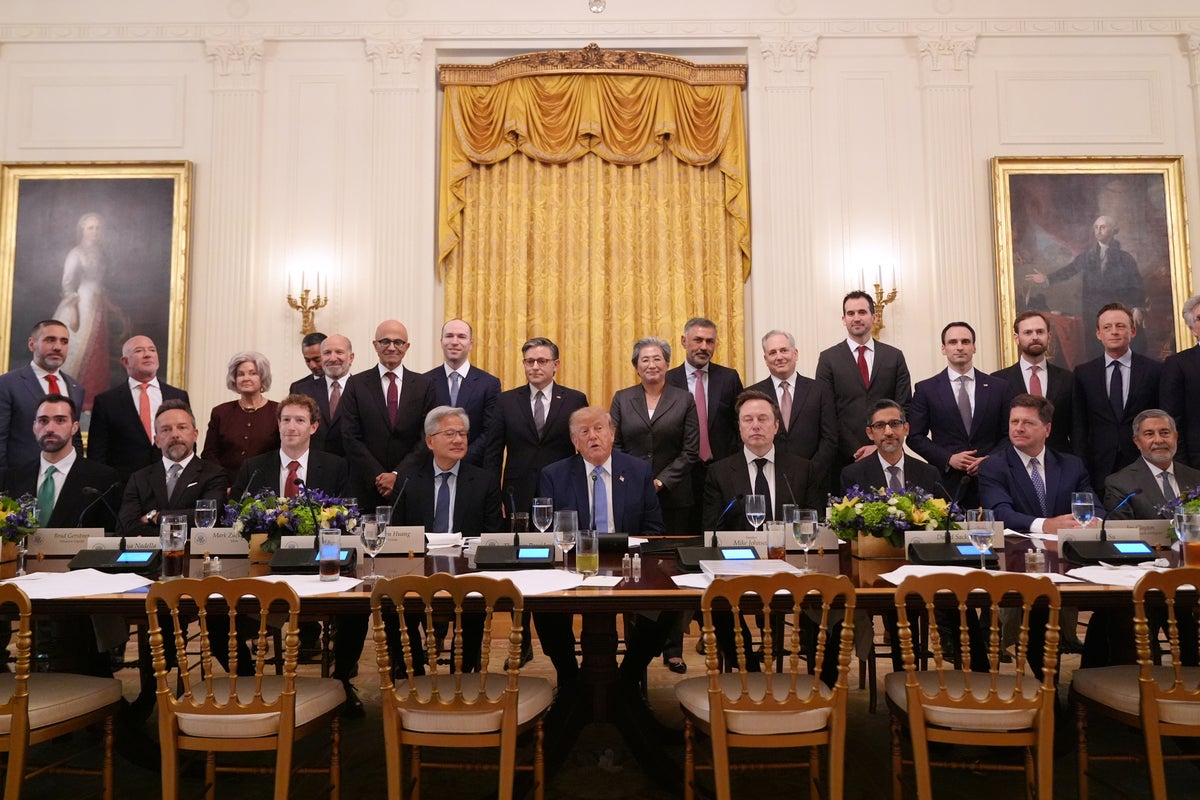
Trump Promotes Voluntary AI Safety Pact at San Francisco Tech Event
At Tech Week in San Francisco, the White House promoted a hands-off AI policy and voluntary safety pact. Industry leaders welcomed the shift toward growth over regulation.
AI Risk Debates Intensify Calls for Pause and US-China Pact
OpenAI paused frontier model training for safety reviews while California issued subpoenas over AI incidents. Officials discussed voluntary standards and potential FTC probes.
The Compass
You just read five takes on one story.
What's your take? Find your political shape in a few minutes.
Take the test