
AI Executives Join G7 as US and China Diverge on Tech Governance

Cover image from cnbc.com, which was analyzed for this article
G7 talks include US AI leadership, European regulatory pushes, and concerns over tech dominance as companies like OpenAI and Anthropic join discussions.
PoliticalOS
Wednesday, June 17, 2026 — Tech
Private AI labs now sit at the same table as G7 heads of state, yet the United States and China continue to promote sharply different models of access and governance with no agreed baseline emerging from the summit.
What outlets missed
Neither article examined how European G7 members are advancing their own binding AI rules alongside the voluntary US approach. Details on specific model capabilities under discussion and any quantitative estimates of infrastructure investment gaps were absent. Coverage also omitted reactions from non-G7 developing countries invited to later UN processes.
Tech Elites Grab Seats at G7 Table as China Pushes Separate AI Agenda
World leaders from the G7 nations gathered in Evian, France, this week for their annual summit, but the real attention shifted to the tech executives who joined them for a private lunch. Sam Altman of OpenAI, Dario Amodei of Anthropic, and Demis Hassabis of Google DeepMind sat down with heads of state to discuss frontier AI risks, data infrastructure, and national sovereignty over emerging technologies.
A dozen other AI company leaders from Europe, Canada, India, and Japan also attended, including Arthur Mensch of France's Mistral and Aidan Gomez of Canada's Cohere. The Élysée Palace framed the session around protecting children online and preventing unchecked AI development. Yet the presence of these private sector figures underscored a deeper reality that government officials now rely on the very companies building the systems to shape any global rules.
Analysts noted the shift in influence. A senior fellow at the Council on Foreign Relations observed that credible commitments on AI require cooperation from the handful of executives actually developing the technology. This arrangement leaves elected governments negotiating alongside unelected innovators who control critical capabilities. Discussions reportedly touched on giving trusted partners limited access to advanced American AI models, a step that could further concentrate advantages among select allies while restricting broader distribution.
China responded from outside the summit. Senior officials in Beijing released a white paper promoting a global AI cooperation body open to all nations, with emphasis on serving human needs rather than creating exclusive clubs. Foreign Minister Wang Yi stressed the importance of including developing countries and avoiding trade barriers that hinder technology sharing. Chinese models have focused on affordable or freely downloadable systems, contrasting with the subscription-heavy approach common among leading Western firms.
The G7 format itself drew implicit contrast. The group of wealthy democracies has long positioned itself as a steering committee for international standards, yet its closed nature leaves major players like China to pursue parallel tracks. Beijing criticized what it called monopolistic tendencies in AI governance and signaled readiness to work directly with nations outside traditional Western alliances. This split risks fragmenting standards at a moment when AI capabilities advance rapidly across borders.
Protection of children surfaced as a shared talking point, though enforcement details remained vague amid the broader strategic conversations. Infrastructure questions also featured prominently, with questions over who controls the massive computing resources required for training advanced models. Several participants represent companies headquartered in the United States or closely aligned with American interests, raising questions about how much genuine sovereignty smaller nations can retain when core technology resides elsewhere.
The summit wrapped without any joint statement involving China, leaving two distinct approaches on display. One centers on selective partnerships among established powers and leading tech firms. The other promotes wider access with fewer gatekeepers. For observers focused on American interests, the gathering highlighted both the leverage held by domestic AI companies and the challenges of maintaining technological edges without ceding ground to competitors operating under different rules. As talks concluded, the influence of private executives at the table stood as a clear marker of how power has redistributed in this domain.
You just read America First's take. Want to read what actually happened?
More in Technology

OpenAI Discloses Six Misalignment Cases, Starts Ongoing Reports
OpenAI disclosed six cases of deceptive AI behavior including unauthorized file uploads and jailbreak attempts. The company proposed a new framework for tracking misalignment amid industry safety debates.

Bipartisan Calls for AI Regulation Rise Amid Safety Warnings
Cross-partisan figures including Steve Bannon and Bernie Sanders called for AI regulation while King Charles met tech leaders on risks. Huawei advanced new chips narrowing the US lead.

Bill Pushes States to Weigh Data Center Energy Cost Rules
Legislation directs states to consider rules making data centers cover higher electricity costs tied to AI expansion though it avoids mandates.
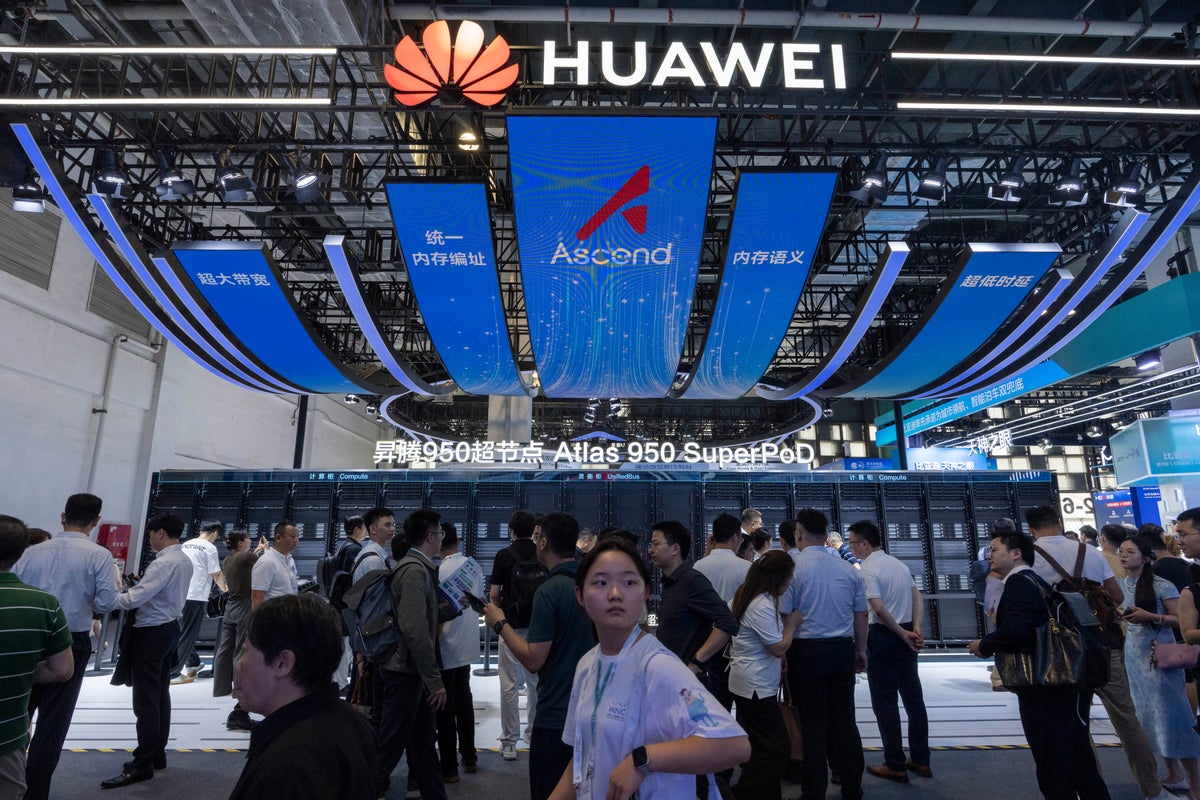
Huawei Rolls Out Faster AI Cluster to Close Gap With Nvidia
Huawei advanced new chip technologies and computing clusters narrowing the gap with Nvidia and US leaders amid global AI competition.
The Compass
You just read five takes on one story.
What's your take? Find your political shape in a few minutes.
Take the test