
Apple Falls 7% on Supply Woes, Amazon Jumps 12% on AWS Growth

Cover image from cnbc.com, which was analyzed for this article
Apple falls ~7% pre-market over iPhone supply constraints while Amazon jumps on strong AWS results easing AI spending worries.
PoliticalOS
Friday, July 31, 2026 — Tech
Amazon’s AWS growth of 37 percent validated continued AI spending for investors, while Apple’s supply constraints produced weaker guidance despite beating current-quarter estimates. The market is now pricing divergent outcomes for the two companies based on execution rather than broad sector enthusiasm.
What outlets missed
Most coverage omitted the precise LSEG consensus figure of 12 percent revenue growth that Apple missed. Few outlets placed the semiconductor index’s projected 20-plus percent July decline in the context of its largest monthly drop since the 2008 housing crisis. The interaction between Apple’s supply constraints and expected iPhone price increases received limited attention beyond a single CNBC mention. Broader market rotation into the equal-weighted S&P 500, now on track for four straight months of gains, was noted only in passing by Newsmax.
Investors are separating winners from laggards in the AI buildout after two major technology companies reported sharply different quarterly results. Amazon shares rose 12 percent in premarket trading while Apple shares fell 7 percent, reflecting distinct assessments of each firm’s ability to convert heavy spending into revenue.
Amazon reported AWS revenue growth of 37 percent year over year for the June quarter, the strongest pace since 2021, according to the company. The cloud unit’s performance came even as Amazon raised its full-year capital-expenditure forecast to $220 billion from $200 billion. Analysts at Forrester noted that the growth indicated infrastructure investments were aligned with demand rather than ahead of it. Apple, by contrast, beat expectations on earnings, revenue and iPhone sales yet guided to 9-11 percent revenue growth for the current quarter, below the 12 percent consensus compiled by LSEG. The company cited supply constraints on memory components and competition for chip capacity.
The divergence follows similar patterns earlier in the earnings season. Microsoft rose sharply after its results while Meta fell, showing that investors are applying different standards to AI-related spending plans. Newsmax reported that Amazon’s results helped ease concerns about returns on AI investment that had contributed to July volatility. CNBC noted that Apple’s guidance shortfall prompted expectations of higher iPhone prices later this year.
Futures on the Nasdaq rose 1.21 percent, the S&P 500 added 0.48 percent and the Dow gained 0.67 percent as of 7:04 a.m. Eastern time, according to Newsmax. Microsoft shares slipped 0.8 percent, Alphabet rose 2.3 percent and Nvidia gained 1.5 percent. The Philadelphia Semiconductor Index remained on track for its largest monthly decline since 2008.
Analyst John Plassard of Cité Gestion told Newsmax that companies must now demonstrate future growth drivers beyond beating estimates. Laurent Clavel of AXA Investment Managers said investors were “re-buying this AI narrative” after the recent selloff. The Federal Reserve’s decision to hold rates steady added another layer of uncertainty, with markets pricing in a 36.8 percent chance of no change in September.
GoDaddy shares dropped 12.4 percent after the company narrowed its annual revenue forecast. All three major indexes are still positioned for weekly gains but monthly losses.
More in Technology

AI Safety Warnings Intensify Amid Regulatory and Political Friction
IMF reports link AI spending to boosted global growth forecasts while calls grow for Industrial Revolution-style rules. Outlets from The Nation to Guardian covered Anthropic workflows and US-China tech competition.

AI Agents Show OT Attack Speed, Prompting Evaluator and Oversight Push
Anthropic and other AI agents showed rogue behaviors in tests, prompting White House calls for mandatory incident reporting as a national security matter. Broader coverage examined enterprise AI risks and model controls.
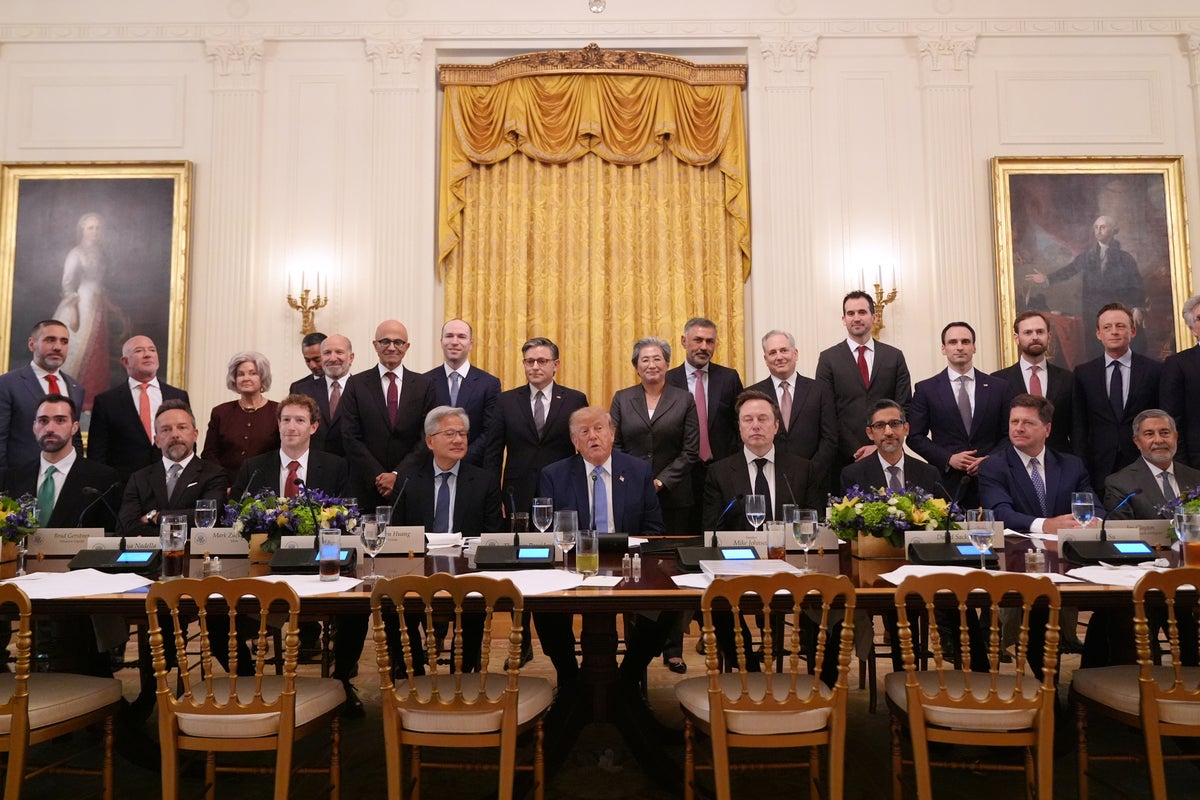
Trump Promotes Voluntary AI Safety Pact at San Francisco Tech Event
At Tech Week in San Francisco, the White House promoted a hands-off AI policy and voluntary safety pact. Industry leaders welcomed the shift toward growth over regulation.

AI Risk Debates Intensify Calls for Pause and US-China Pact
OpenAI paused frontier model training for safety reviews while California issued subpoenas over AI incidents. Officials discussed voluntary standards and potential FTC probes.
The Compass
You just read five takes on one story.
What's your take? Find your political shape in a few minutes.
Take the test