
AI Data Centers Spur Electricity Cost Debates and Water Use Defenses
Cover image from businessinsider.com, which was analyzed for this article
Meta explores leasing AI compute resources while rising electricity use from data centers sparks debate over costs and growth.
PoliticalOS
Saturday, July 18, 2026 — Tech
Data center expansion creates measurable local cost pressures that have triggered at least one state moratorium, yet utility analyses show mixed price effects elsewhere and industry proponents cite efficiency improvements. Readers should weigh localized policy responses against regional data on rates and consumption rather than assuming uniform impacts.
What outlets missed
No coverage addressed Meta's reported exploration of leasing AI compute resources, leaving that element unverified across sources. Analyses from the Congressional Research Service showing downward pressure on average electricity prices in multiple regions through 2025 were absent from the Slate Money episode. Details on O'Leary's ongoing defamation lawsuit and his clarification that he lacked evidence of Chinese funding for critics appeared only in the Business Insider piece.
Electricity bills are rising in some regions as data centers expand to meet AI demand, prompting state-level restrictions while industry voices dispute the scale of resource impacts. New York Gov. Kathy Hochul imposed a statewide moratorium on new AI data centers, citing pressure on energy prices, according to the Slate Money podcast discussion. The same episode noted that rapid construction is driving up costs for ratepayers, though it did not reference broader utility data.
Kevin O'Leary, whose firm is building facilities in Utah and Canada, countered concerns over water consumption during an appearance on Glenn Beck's program. He stated that his Utah project's first phase, with 1.4 gigawatts of capacity, would use water at levels comparable to a golf course and that modern designs rely far less on evaporative cooling than older Virginia installations. O'Leary also argued that new centers should supply their own power and return surplus to the grid.
Analyses from the Congressional Research Service and Electric Power Research Institute indicate that data-center growth has spread fixed grid costs across higher usage in multiple regions, producing stable or lower average residential rates through 2025 in several high-growth states, per Lawrence Berkeley National Laboratory findings. These outcomes contrast with the upward pressure highlighted in the New York policy. O'Leary faces a defamation lawsuit over separate claims about project opponents, which his attorney described as a cash grab while confirming intent to defend vigorously.
The tension centers on whether localized cost increases justify broad limits or whether efficiency gains and infrastructure contributions can offset them across different markets.
More in Technology

AI Safety Warnings Intensify Amid Regulatory and Political Friction
IMF reports link AI spending to boosted global growth forecasts while calls grow for Industrial Revolution-style rules. Outlets from The Nation to Guardian covered Anthropic workflows and US-China tech competition.

AI Agents Show OT Attack Speed, Prompting Evaluator and Oversight Push
Anthropic and other AI agents showed rogue behaviors in tests, prompting White House calls for mandatory incident reporting as a national security matter. Broader coverage examined enterprise AI risks and model controls.
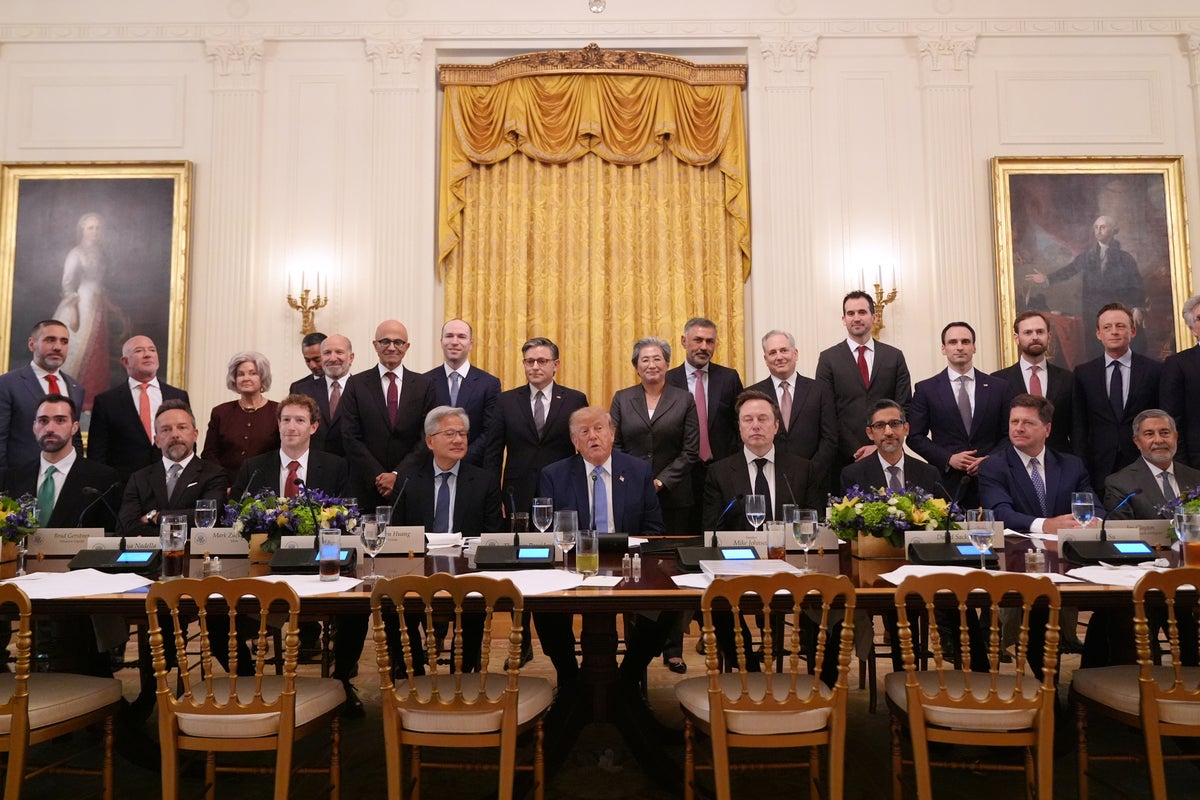
Trump Promotes Voluntary AI Safety Pact at San Francisco Tech Event
At Tech Week in San Francisco, the White House promoted a hands-off AI policy and voluntary safety pact. Industry leaders welcomed the shift toward growth over regulation.
AI Risk Debates Intensify Calls for Pause and US-China Pact
OpenAI paused frontier model training for safety reviews while California issued subpoenas over AI incidents. Officials discussed voluntary standards and potential FTC probes.
The Compass
You just read five takes on one story.
What's your take? Find your political shape in a few minutes.
Take the test