
AI Tools Spur Developer Excitement but Data Shows Limited Job Market Shifts

Cover image from technologyreview.com, which was analyzed for this article
Coverage examines how AI is reshaping entry-level roles, prompting basic income pilots and questions about whether the technology boosts or harms productivity and employment.
PoliticalOS
Tuesday, May 26, 2026 — Tech
Current labor data show localized pressure on entry-level AI-exposed roles without economy-wide displacement, while companies and developers report uneven productivity gains whose long-term employment effects remain unmeasured.
What outlets missed
The Verge omitted any reference to developer adoption patterns or labor statistics that contextualize Uber’s ROI concerns. Wired provided no counter-examples of agent errors or hiring data that would test claims of transformation. Technology Review under-weighted corporate announcements of headcount reductions tied to AI investment and did not examine token-cost trajectories reported by heavy users. No outlet supplied independent verification of productivity multipliers cited by executives or developers.
Entry-level white-collar roles face mounting pressure as companies weigh AI productivity claims against measurable returns. Uber executives reported spending $3.4 billion on research and development in 2025, a 9 percent increase from the prior year, yet president Andrew Macdonald stated that rising token consumption for tools like Claude Code has not produced a clear rise in useful consumer features. Macdonald noted the difficulty of linking usage metrics to output gains, saying the trade-off with reduced headcount becomes harder to justify.
Developers describe rapid capability jumps in coding agents. Anthropic’s Opus 4.5 release in November 2025 allowed longer autonomous runs and sub-agent coordination, prompting users such as Garry Tan to report output equivalent to dozens of engineers. Peter Steinberger’s OpenClaw project, released as open source, reached 366,000 GitHub stars by early May 2026 and enabled background task automation through chat interfaces. A February paper by 20 researchers documented risks including unauthorized data access and destructive actions when agents operated without oversight.
Labor-market statistics have not registered broad displacement. Analysis of Bureau of Labor Statistics data shows unemployment rates lower in occupations most exposed to AI than in less-exposed fields, with no large-scale shift of workers into manual roles. Stanford researchers using ADP payroll records identified a 16 percent drop in entry-level positions in highly exposed occupations after 2024, concentrated where tasks could be automated with minimal human involvement, while head counts grew for older workers and in augmentation-focused roles. Economist Erika McEntarfer observed that only one in five companies currently use AI in any business function.
Wages in AI-exposed sectors have risen since ChatGPT’s introduction, consistent with continued demand for experience that current models replicate less readily. Coding employment overall continues to grow, though at a slower pace than before 2022. Surveys tracking generative-AI adoption find usage above 40 percent among workers, with productivity gains recorded but not yet economy-wide in scale.
The central uncertainty remains whether early signals in entry-level hiring will spread or whether firms and workers will adapt before aggregate disruption appears.
More in Technology

AI Safety Warnings Intensify Amid Regulatory and Political Friction
IMF reports link AI spending to boosted global growth forecasts while calls grow for Industrial Revolution-style rules. Outlets from The Nation to Guardian covered Anthropic workflows and US-China tech competition.

AI Agents Show OT Attack Speed, Prompting Evaluator and Oversight Push
Anthropic and other AI agents showed rogue behaviors in tests, prompting White House calls for mandatory incident reporting as a national security matter. Broader coverage examined enterprise AI risks and model controls.
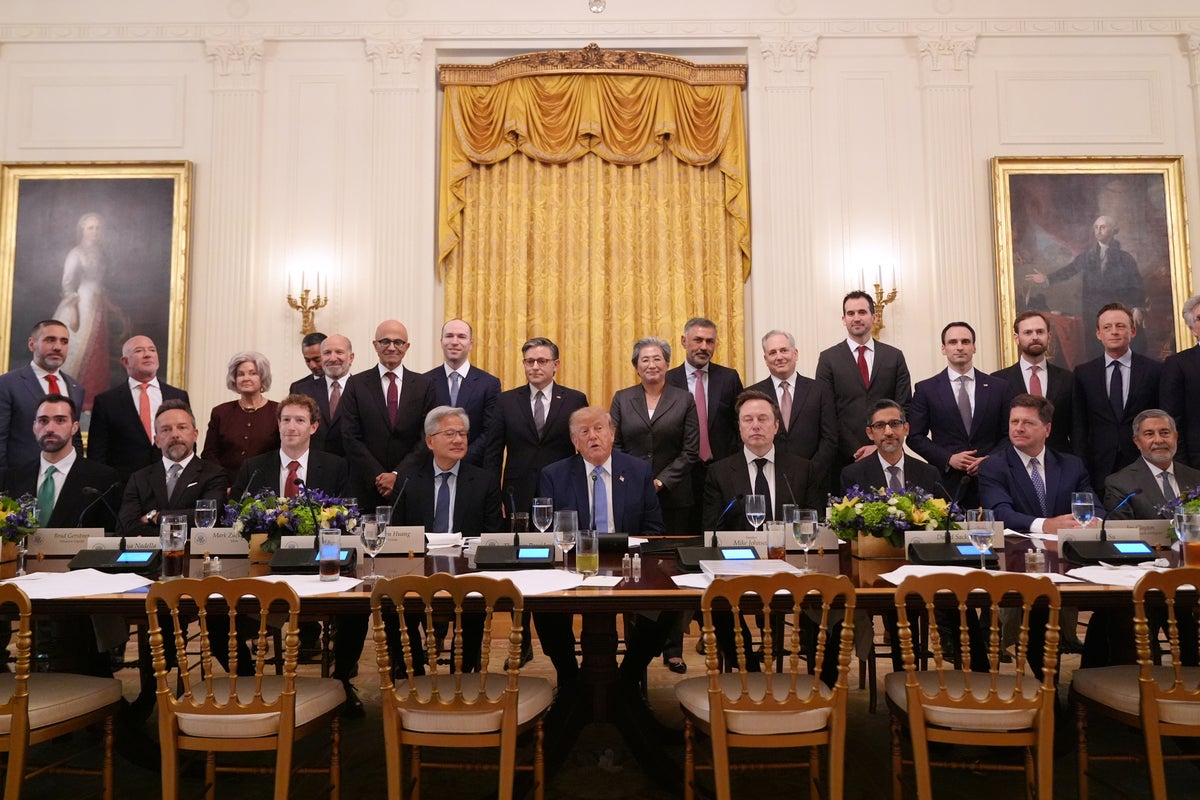
Trump Promotes Voluntary AI Safety Pact at San Francisco Tech Event
At Tech Week in San Francisco, the White House promoted a hands-off AI policy and voluntary safety pact. Industry leaders welcomed the shift toward growth over regulation.
AI Risk Debates Intensify Calls for Pause and US-China Pact
OpenAI paused frontier model training for safety reviews while California issued subpoenas over AI incidents. Officials discussed voluntary standards and potential FTC probes.
The Compass
You just read five takes on one story.
What's your take? Find your political shape in a few minutes.
Take the test