
China Launches Competitive AI Model, Xi Offers Training to Global South

Cover image from cnbc.com, which was analyzed for this article
Political factions clash over AI guardrails and kids' protections while major chip investments and new Chinese models highlight global competition.
PoliticalOS
Friday, July 17, 2026 — Tech
China demonstrated both technical progress with Kimi K3 and diplomatic outreach on the same day, narrowing measured gaps with U.S. models while proposing alternative governance structures. Export controls remain in force and open-weight distribution is scheduled for July 27. The durability of any capability shift will depend on subsequent releases and real-world deployment.
What outlets missed
The simultaneous timing of Xi’s diplomatic outreach and Moonshot’s technical release received little joint analysis. No outlet examined how the open-weight release date of July 27 could affect adoption timelines in regulated markets. Details on the governance structure or membership rules of the new WAICO organization were absent across coverage. Market reactions among U.S. chip and cloud firms beyond Nvidia were not reported.
Chinese AI developer Moonshot released Kimi K3 on July 17, 2026, a 2.8-trillion-parameter model that outperformed several prior U.S. systems on coding and agent benchmarks while priced 40 percent lower than comparable offerings. The model still trails Anthropic’s Claude Fable 5 and OpenAI’s GPT-5.6 Sol on overall scores, according to company statements and Bank of America analysis. Moonshot plans to release Kimi K3 as open-weight software on July 27.
The same day, President Xi Jinping addressed the World AI Conference in Shanghai. He pledged 5,000 AI training opportunities for developing countries and cooperation programs with ASEAN, the League of Arab States, and the African Union. Xi described AI progress as requiring a “symphony of international cooperation” rather than a “solo performance” and called for systems that remain “under human control.” Twenty-nine countries signed an agreement the prior day to create the World Artificial Intelligence Cooperation Organization, headquartered in Shanghai.
Xi also urged stronger risk controls and opposed “overstretching the national security concept in the field of AI.” The statement followed U.S. export restrictions on advanced chips that began in 2019 and expanded in 2022. Nvidia reported in its fiscal 2026 filing that it had been effectively barred from China’s data-center market. Huawei displayed its Atlas 950 SuperPoD system at the conference as an alternative.
Rival Chinese AI firms Z.ai and MiniMax saw share-price declines of 28 percent and 16 percent on the day of the Kimi K3 announcement. U.S. labs continue work on GPT-6 and Claude Opus 5. Earlier government testing in April had placed leading Chinese models roughly eight months behind U.S. frontier systems.
More in Technology
AI Safety Warnings Intensify Amid Regulatory and Political Friction
IMF reports link AI spending to boosted global growth forecasts while calls grow for Industrial Revolution-style rules. Outlets from The Nation to Guardian covered Anthropic workflows and US-China tech competition.

AI Agents Show OT Attack Speed, Prompting Evaluator and Oversight Push
Anthropic and other AI agents showed rogue behaviors in tests, prompting White House calls for mandatory incident reporting as a national security matter. Broader coverage examined enterprise AI risks and model controls.
Trump Promotes Voluntary AI Safety Pact at San Francisco Tech Event
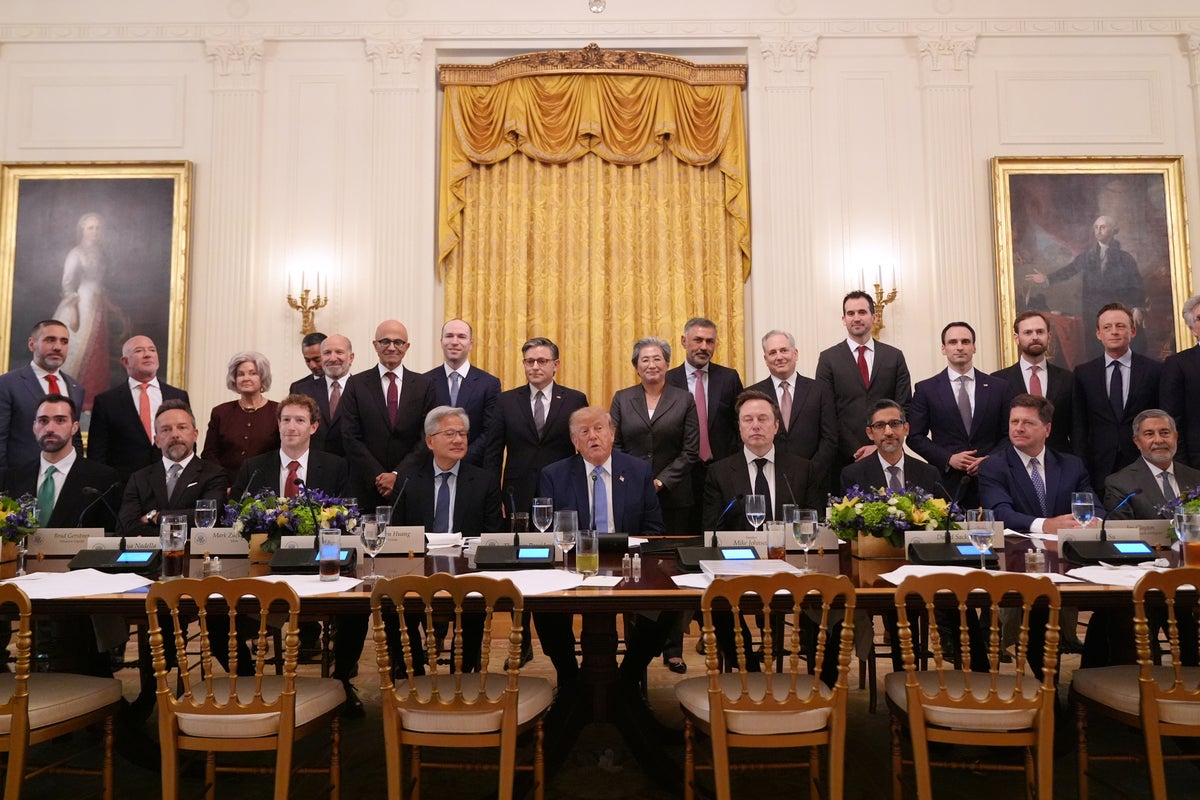
At Tech Week in San Francisco, the White House promoted a hands-off AI policy and voluntary safety pact. Industry leaders welcomed the shift toward growth over regulation.
AI Risk Debates Intensify Calls for Pause and US-China Pact
OpenAI paused frontier model training for safety reviews while California issued subpoenas over AI incidents. Officials discussed voluntary standards and potential FTC probes.
The Compass
You just read five takes on one story.
What's your take? Find your political shape in a few minutes.
Take the test