
AI Competition Frames Trump-Xi State Dinner Amid CEO Divide
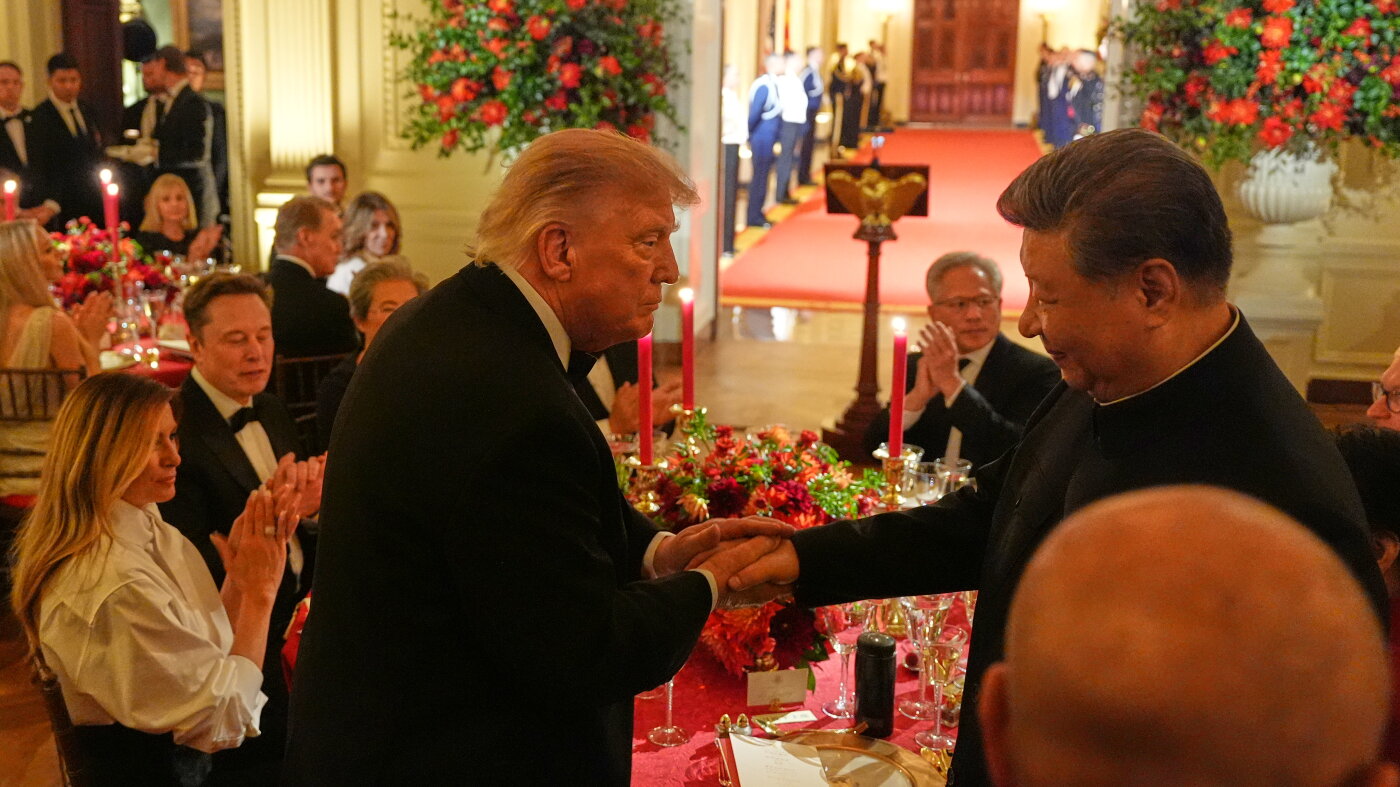
Cover image from npr.org, which was analyzed for this article
Tech leaders including Altman, Musk, Huang, and Bezos attended as the leaders discussed AI risks, regulation, and the US-China technology race during the summit.
PoliticalOS
Friday, September 25, 2026 — Tech
The state dinner displayed American technology leadership and the absence of Chinese counterparts in equal measure. That visual record underscores how the U.S.-China relationship has narrowed to competition over artificial intelligence and related strategic technologies, with few remaining bridges across the divide.
What outlets missed
Neither outlet supplied details on the substance of the AI discussions beyond naming the topic. The NPR account noted that Taiwan, trade, and AI were addressed during business hours but provided no outcomes or proposals. The New York Times piece referenced the broader technology competition yet omitted any reference to specific U.S. entity-list actions between 2018 and 2020 that directly affected which Chinese firms could attend such events. Both accounts also left unexamined the extent to which American companies remain dependent on Chinese manufacturing capacity even as they lobby against further Chinese access to advanced U.S. technology.
The United States and China are locked in a contest over artificial intelligence that now shapes every high-level encounter between their leaders. At the White House state dinner on September 24, 2026, that contest was visible in who attended and who did not.
President Trump hosted Xi Jinping for the formal meal after the two men had already discussed Taiwan, trade, and artificial intelligence during the day. American technology executives filled many of the seats: OpenAI’s Sam Altman, Nvidia’s Jensen Huang, Amazon’s Jeff Bezos, Tesla’s Elon Musk, Meta’s Mark Zuckerberg, Microsoft’s Satya Nadella, and others. No comparable group of Chinese chief executives appeared. In 2015, Xi had brought Alibaba’s Jack Ma and Tencent’s Pony Ma to Washington; this time the Chinese side sent none.
The contrast reflects policy choices made over the past decade. Successive U.S. administrations placed tariffs on Chinese goods, added firms to the Commerce Department entity list, and restricted exports of advanced chips and investment in certain Chinese sectors. Beijing responded with export controls on rare-earth materials and its own investment screening rules. Chinese companies that once sought U.S. market access now face higher barriers, especially in AI, robotics, and electric vehicles. American firms still view China as important—80 percent of U.S.-China Business Council members called the market “very important” or “important” in a 2026 survey—but they compete against Chinese companies that have moved from customers to rivals.
Trump and Xi each used their toasts to emphasize personal ties and future cooperation. Trump noted that the two countries “represent different systems” yet can “build a relationship that promotes prosperity and security.” Xi replied that both nations pursue ambitious national goals that “can surely be mutually reinforcing.” No commercial agreements were announced at the dinner. Xi had told American executives earlier in the day that China welcomes their investment while hoping Chinese firms receive fair treatment in the United States.
The guest list and the empty chairs therefore illustrated the same underlying fact: the commercial relationship that once bridged political differences has narrowed to a smaller set of sectors where each side still sees advantage, while the race to lead in artificial intelligence continues without a shared regulatory framework.
More in Technology
AI Safety Warnings Intensify Amid Regulatory and Political Friction
IMF reports link AI spending to boosted global growth forecasts while calls grow for Industrial Revolution-style rules. Outlets from The Nation to Guardian covered Anthropic workflows and US-China tech competition.

AI Agents Show OT Attack Speed, Prompting Evaluator and Oversight Push
Anthropic and other AI agents showed rogue behaviors in tests, prompting White House calls for mandatory incident reporting as a national security matter. Broader coverage examined enterprise AI risks and model controls.
Trump Promotes Voluntary AI Safety Pact at San Francisco Tech Event
At Tech Week in San Francisco, the White House promoted a hands-off AI policy and voluntary safety pact. Industry leaders welcomed the shift toward growth over regulation.
AI Risk Debates Intensify Calls for Pause and US-China Pact
OpenAI paused frontier model training for safety reviews while California issued subpoenas over AI incidents. Officials discussed voluntary standards and potential FTC probes.
The Compass
You just read five takes on one story.
What's your take? Find your political shape in a few minutes.
Take the test