
Trump Switched Planes Secretly Over Iran Threat, Leaving Cabinet on Decoy
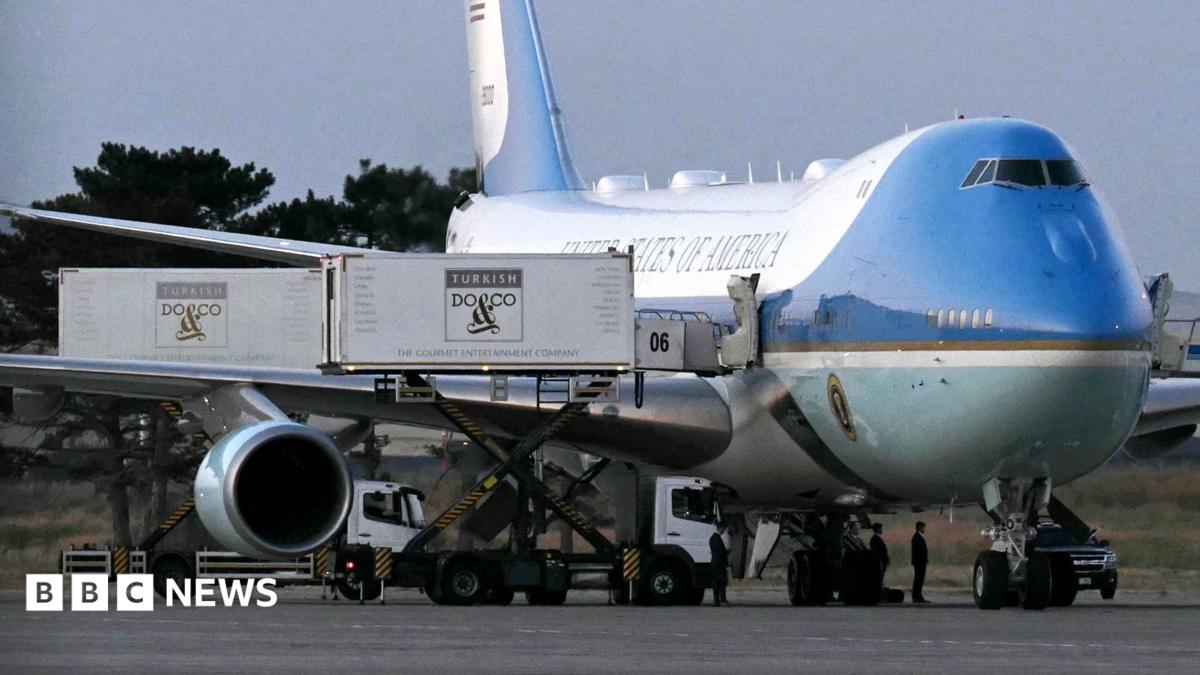
Cover image from bbc.co.uk, which was analyzed for this article
Trump revealed a secret decoy plane switch due to an Iranian threat on Air Force One, with new leaks raising questions about the incident's handling. Coverage includes cabinet members remaining on the decoy flight.
PoliticalOS
Thursday, August 13, 2026 — Politics
The central unresolved question is how much weight to give the disputed Israeli-provided threat versus standard Secret Service caution when deciding who travels on which aircraft. Readers should note that the decoy carried officials in the line of succession and that advance secrecy is routine for such movements, even when it leaves reporters uninformed.
What outlets missed
Most coverage omitted the verified 38-day duration and subsequent ceasefire of the related Operation Epic Fury against Iran, leaving readers without context on how the threat episode fit into a short, concluded campaign. Few outlets detailed the full history of Iranian threats dating to the 2020 Soleimani strike and the January 2026 killing of Ayatollah Khamenei, which Secret Service Director Sean Curran linked to the current elevated threat level. The BBC alone noted the line-of-succession rationale for keeping Rubio and Bessent on the decoy, while others downplayed how standard limited-disclosure protocols for high-risk movements constrain advance notice to journalists.
A credible but disputed Iranian threat prompted President Trump to exit Air Force One via a catering truck at Ankara airport on July 8 and board a separate C-32A military jet, turning the original aircraft into a decoy that carried Secretary of State Marco Rubio, Treasury Secretary Scott Bessent, Deputy Chief of Staff Stephen Miller, Communications Director Steven Cheung and the White House press pool back toward the United States. The switch occurred after Trump had boarded the primary plane following the NATO summit; the decoy retained the Air Force One call sign while the president flew in parallel to RAF Mildenhall for refueling before rejoining the larger jet. CBS News first reported that Rubio and Bessent knew of the plan and stayed aboard to preserve the line of succession behind Vice President JD Vance. Trump later stated that Secret Service and military advisers directed the move because the alternative plane offered equal safety and that he simply followed their instructions. The Washington Post added that the CIA received the initial warning from Israel yet assessed it with low confidence and conveyed that skepticism to Trump’s team, though unnamed officials cited three prior near-misses with the president as reason to proceed anyway. A former official described the Israeli reporting as part of a pattern some viewed as intended to shape decisions rather than solely inform them. Trump was accompanied on the smaller aircraft by Defense Secretary Pete Hegseth, executive assistant Natalie Harp, Deputy Chief of Staff Dan Scavino and Oval Office operations director Walt Nauta. The episode echoed a 2000 Clinton trip to Pakistan that also used a decoy jet, though in that case the White House Correspondents’ Association was briefed in advance. White House Correspondents’ Association president Jacqui Heinrich later met administration officials and requested future protocols to protect independent coverage and the historical record. No public evidence has confirmed whether the decoy plane faced any actual risk during the flight.
More in Politics

Federal Agents Search Omar Home in Ongoing Immigration Probe
Homeland Security agents searched the Minnesota Democrat's DC residence in a criminal probe, prompting accusations of political intimidation from Omar and Democratic leaders. Coverage spans left-leaning outlets like NPR, BBC, and The Guardian alongside right-leaning criticism from The Federalist and Daily Wire.

Trump Diesel Import Plan Draws Pushback Over Russia Ties
The weekend agreement drew bipartisan congressional pushback and criticism from Ukraine's Zelenskyy, with analysts downplaying US fuel price impacts. Right-leaning outlets like National Review, Dispatch, and Washington Examiner questioned its legality and effectiveness.

Independents Test Voter Appetite for Middle Ground in 2026 Midterms
Nearly 200 independents are running in competitive races as voters weigh ballot measures on housing costs in states like Massachusetts. Left-leaning coverage from NYT, NPR, and Guardian highlights turnout and key races while right outlets focus on GOP strategy.

Trump Rallies in Alaska, Ohio to Bolster GOP Senate Candidates
The president rallied in Wasilla for Sen. Dan Sullivan and faced empty seats at an Ohio event amid midterm concerns. Outlets across the spectrum covered the trips as signals of GOP vulnerability weeks before Election Day.
The Compass
You just read five takes on one story.
What's your take? Find your political shape in a few minutes.
Take the test