
Alaska Primary Sends Sullivan, Peltola to Senate General

Cover image from theguardian.com, which was analyzed for this article
Sen. Dan Sullivan and Democrat Mary Peltola advanced in the Senate race while a Democratic scion and others moved forward in the governor contest. Ranked-choice voting produced surprises in a jungle primary format. Both left and right outlets covered the outcomes and implications for fall races.
PoliticalOS
Wednesday, August 19, 2026 — Politics
The Senate matchup between Sullivan and Peltola will proceed under ranked-choice voting, with the same-name candidate’s low share making his advancement unlikely. Democrats see Peltola as their strongest recruit in a state Trump carried by double digits. The governor race produced an early Democratic lead in a contest to replace term-limited Republican Gov. Dunleavy.
What outlets missed
Most coverage omitted the precise vote margin separating the fourth-place finisher from the fifth, which determines whether Dan J. Sullivan reaches the general election. Few reports noted that Peltola outraised Sullivan by $6 million while ending the period with less cash on hand. Coverage rarely connected the Senate and governor primaries through the shared Begich family political history that spans both races. No outlet examined turnout differences between the two contests or compared them with prior Alaska primaries under the same system.
Alaska voters will decide control of a U.S. Senate seat in November after a top-four primary produced a matchup between incumbent Republican Dan Sullivan and former Democratic representative Mary Peltola. The race is one of several that could determine which party holds the majority for the final two years of President Donald Trump’s term.
The state’s system places all candidates on a single primary ballot and advances the top four finishers to a ranked-choice general election. With roughly 80 percent of votes counted, Peltola led with 48 percent and Sullivan followed at 42.8 percent. A second Republican named Dan J. Sullivan, a retired teacher and Forest Service employee, placed third with 2.4 percent. Two additional candidates trailed further behind.
Dan J. Sullivan’s presence on the ballot prompted lawsuits and investigations. Republicans argued the filing was intended to siphon votes from the incumbent through name confusion. The state supreme court allowed him to remain on the ballot. Federal prosecutors issued subpoenas as part of an inquiry into whether the candidacy formed part of a coordinated effort to mislead voters. Both the Peltola campaign and Dan J. Sullivan have denied any involvement in such a plan.
Peltola, the first Alaska Native to serve in Congress, won a special House election in 2022 and a full term later that year before losing re-election by three points in 2024. She has raised $18 million compared with Sullivan’s $12 million. Sullivan, first elected in 2014, has emphasized support for oil development, military installations, and veterans.
In the governor’s race, former state representative Jonathan Kreiss-Tomkins and former state senator Tom Begich, both Democrats, finished first and second among 17 candidate pairs. Two additional pairs will advance once final tallies are complete. Term-limited Republican Gov. Michael Dunleavy cannot run again.
The November ballot will therefore feature at least two Democrats and two Republicans in each statewide contest under ranked-choice rules that allow voters to rank preferences and redistribute votes after lower candidates are eliminated.
More in Politics

Federal Agents Search Omar Home in Ongoing Immigration Probe
Homeland Security agents searched the Minnesota Democrat's DC residence in a criminal probe, prompting accusations of political intimidation from Omar and Democratic leaders. Coverage spans left-leaning outlets like NPR, BBC, and The Guardian alongside right-leaning criticism from The Federalist and Daily Wire.

Trump Diesel Import Plan Draws Pushback Over Russia Ties
The weekend agreement drew bipartisan congressional pushback and criticism from Ukraine's Zelenskyy, with analysts downplaying US fuel price impacts. Right-leaning outlets like National Review, Dispatch, and Washington Examiner questioned its legality and effectiveness.

Independents Test Voter Appetite for Middle Ground in 2026 Midterms
Nearly 200 independents are running in competitive races as voters weigh ballot measures on housing costs in states like Massachusetts. Left-leaning coverage from NYT, NPR, and Guardian highlights turnout and key races while right outlets focus on GOP strategy.
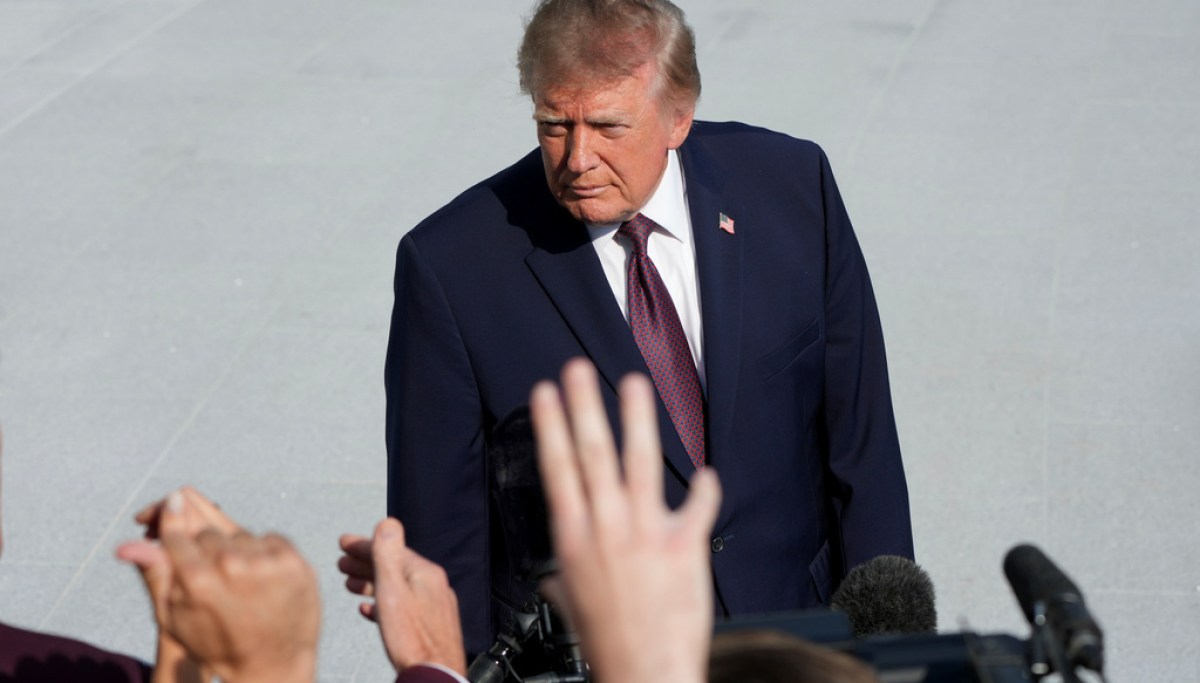
Trump Rallies in Alaska, Ohio to Bolster GOP Senate Candidates
The president rallied in Wasilla for Sen. Dan Sullivan and faced empty seats at an Ohio event amid midterm concerns. Outlets across the spectrum covered the trips as signals of GOP vulnerability weeks before Election Day.
The Compass
You just read five takes on one story.
What's your take? Find your political shape in a few minutes.
Take the test