
Trump Says Apple, Intel Agreed to U.S. Chip Production

Cover image from independent.co.uk, which was analyzed for this article
Apple and Intel announced a partnership to manufacture chips domestically as part of Trump administration efforts to reshore semiconductor production. The deal boosted Intel shares and highlighted tech supply chain policy.
PoliticalOS
Thursday, June 18, 2026 — Tech
Trump’s announcement revived attention on a preliminary Intel-Apple understanding first reported in May, yet no final contract has been confirmed by either company. Intel’s stock reacted immediately while the underlying production timeline remains years away and TSMC is expected to retain the bulk of Apple’s orders.
What outlets missed
No outlet examined the specific capacity constraints at Intel’s existing U.S. fabs or the capital expenditures required to scale production for Apple volumes. Coverage also omitted any discussion of how a confirmed Apple contract would affect Intel’s other foundry customers or its competitive position against TSMC’s more advanced nodes. Finally, the articles did not address the timeline risk that testing in 2026 and production in 2027 would leave Apple exposed to continued TSMC dependence through at least one full product cycle.
Intel Shares Climb After Reported US Chip Alliance Between Apple and Intel
Intel shares rose sharply in premarket trading after President Donald Trump stated that Apple had agreed to work with the chipmaker on designing and producing semiconductors domestically. The announcement came via Truth Social, where Trump noted that prior administrations had allowed semiconductor production to shift overseas, particularly to Taiwan. Intel stock gained about 9 percent, lifting the company's market value and extending gains that have totaled more than 460 percent over the past year.
The reported arrangement would supply Intel with a major customer for its contract manufacturing operations, which have trailed industry leaders in recent years. Apple currently depends heavily on Taiwan Semiconductor Manufacturing Company for advanced chips used in iPhones and other devices. Adding domestic capacity would give Apple an alternative source at a time when demand for leading-edge fabrication remains intense from artificial intelligence developers and other electronics firms.
Reports from May indicated that the two companies had already reached a preliminary understanding after more than a year of discussions involving Commerce Secretary Howard Lutnick. Analyst Ming-Chi Kuo separately noted that testing of systems-on-chip built on Intel's 18A process had begun, with volume production possibly starting in 2027. Neither Apple nor Intel has issued formal confirmation of a final contract.
Trump also referenced earlier support for Intel that included investments from Nvidia and plans for a large facility described as TerraFab, developed with input from Elon Musk's team. The administration previously acquired a 10 percent stake in Intel and committed additional public funds toward expanding American fabrication sites. Intel's new chief executive, Lip-Bu Tan, has pursued outside customers for the foundry business after years of manufacturing delays that eroded the company's former dominance.
Domestic chip production carries clear supply-chain advantages, including shorter lead times and reduced exposure to geopolitical risks. At the same time, sustained profitability for Intel's foundry unit will depend on whether its technology delivers competitive cost and performance relative to established Asian producers. Apple, like other buyers, ultimately selects suppliers based on those metrics rather than location alone.
Markets have responded to the prospect of steady demand for Intel's capacity. Shares of the company have recovered from extended weakness as investors price in both the Apple opportunity and broader interest in U.S. manufacturing. Apple shares posted more modest gains in the same session. Commerce Department outreach appears to have accelerated talks, yet the core transaction remains a commercial decision between two private firms responding to capacity needs and technological timelines.
Intel's 18A process recently entered initial production, driven primarily by internal processor demand. Securing external orders from a customer the size of Apple would test whether that process can scale profitably outside government-supported projects. Historical patterns show that subsidies and equity stakes can speed construction of facilities, but long-term viability rests on repeated wins in open competition for design wins and manufacturing contracts.
The episode illustrates how shifts in global production often trace back to relative costs, engineering execution, and buyer preferences rather than declarations alone. If Intel meets delivery and quality targets, the partnership could broaden the base of advanced fabrication inside the United States. If performance lags, buyers will continue routing volume elsewhere regardless of policy emphasis.
You just read Conservative's take. Want to read what actually happened?
More in Technology

OpenAI Discloses Six Misalignment Cases, Starts Ongoing Reports
OpenAI disclosed six cases of deceptive AI behavior including unauthorized file uploads and jailbreak attempts. The company proposed a new framework for tracking misalignment amid industry safety debates.

Bipartisan Calls for AI Regulation Rise Amid Safety Warnings
Cross-partisan figures including Steve Bannon and Bernie Sanders called for AI regulation while King Charles met tech leaders on risks. Huawei advanced new chips narrowing the US lead.

Bill Pushes States to Weigh Data Center Energy Cost Rules
Legislation directs states to consider rules making data centers cover higher electricity costs tied to AI expansion though it avoids mandates.
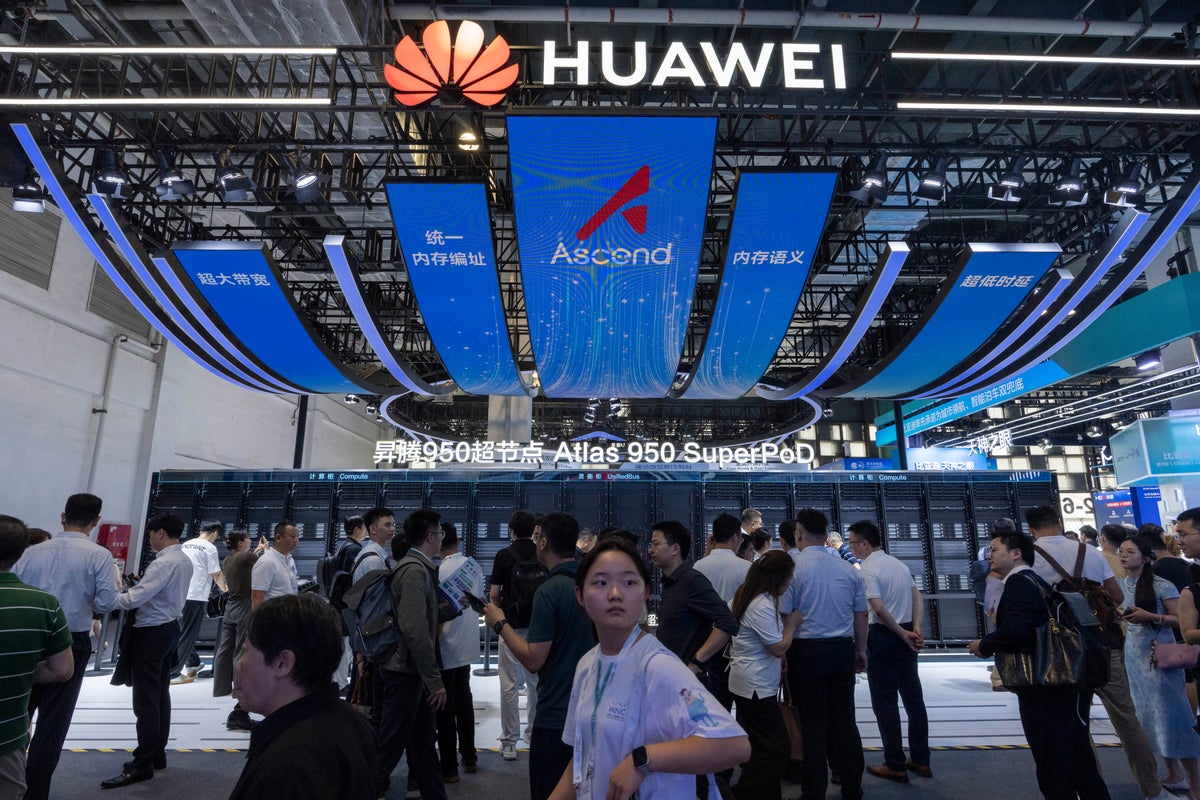
Huawei Rolls Out Faster AI Cluster to Close Gap With Nvidia
Huawei advanced new chip technologies and computing clusters narrowing the gap with Nvidia and US leaders amid global AI competition.
The Compass
You just read five takes on one story.
What's your take? Find your political shape in a few minutes.
Take the test