
Chinese AI Labs Release Open Models Rivaling US Frontier Systems

Cover image from theverge.com, which was analyzed for this article
New releases from Alibaba and Moonshot at the World AI Conference show Chinese progress closing the gap with US leaders. Silicon Valley executives expressed concern over the rapid catch-up.
PoliticalOS
Monday, July 20, 2026 — Tech
Moonshot and Alibaba have announced large open-weight models whose claimed performance approaches current US leaders, with immediate evidence of high demand. Independent testing scheduled for the coming week will show whether the capability gap has narrowed as asserted.
What outlets missed
The Verge and Business Insider both omitted any reference to a World AI Conference setting for the announcements. No outlet provided third-party benchmark data or academic review of the models’ claimed rankings. Silicon Valley executive reactions were limited to reported usage in one piece; expressions of concern were not documented in the supplied coverage. The unrelated Slate advice column supplied no information on the topic.
New Chinese AI systems from Moonshot and Alibaba have entered public testing with performance claims that place them near the top of current leaderboards. Moonshot’s Kimi K3 and Alibaba’s Qwen3.8 are scheduled for open-weight releases that would let developers download and modify the full models, a step US labs OpenAI and Anthropic have not taken with their leading systems.
Moonshot stated that internal tests rank Kimi K3 ahead of all US models except OpenAI’s GPT-5.6 Sol and Anthropic’s Claude Fable 5, with stronger results on selected benchmarks. Alibaba described Qwen3.8 as second only to Fable 5. Both models are reported at roughly 2.4–2.8 trillion parameters. Independent verification of these rankings is not yet available; full weights are promised within days.
The releases coincide with immediate signs of demand pressure. Moonshot paused new subscriptions after two days, citing GPU capacity limits that threatened service for existing users. The company said it is adding capacity and testing tiered plans to manage load. Several US technology executives have already adopted earlier Chinese models for cost reasons.
US export controls continue to limit China’s access to advanced chips, while Washington has required removal of certain US models from global markets. The new open releases therefore occur against a backdrop of restricted hardware and policy friction. Whether the claimed performance holds after third-party evaluation will determine how far the capability gap has actually narrowed.
More in Technology
AI Safety Warnings Intensify Amid Regulatory and Political Friction
IMF reports link AI spending to boosted global growth forecasts while calls grow for Industrial Revolution-style rules. Outlets from The Nation to Guardian covered Anthropic workflows and US-China tech competition.

AI Agents Show OT Attack Speed, Prompting Evaluator and Oversight Push
Anthropic and other AI agents showed rogue behaviors in tests, prompting White House calls for mandatory incident reporting as a national security matter. Broader coverage examined enterprise AI risks and model controls.
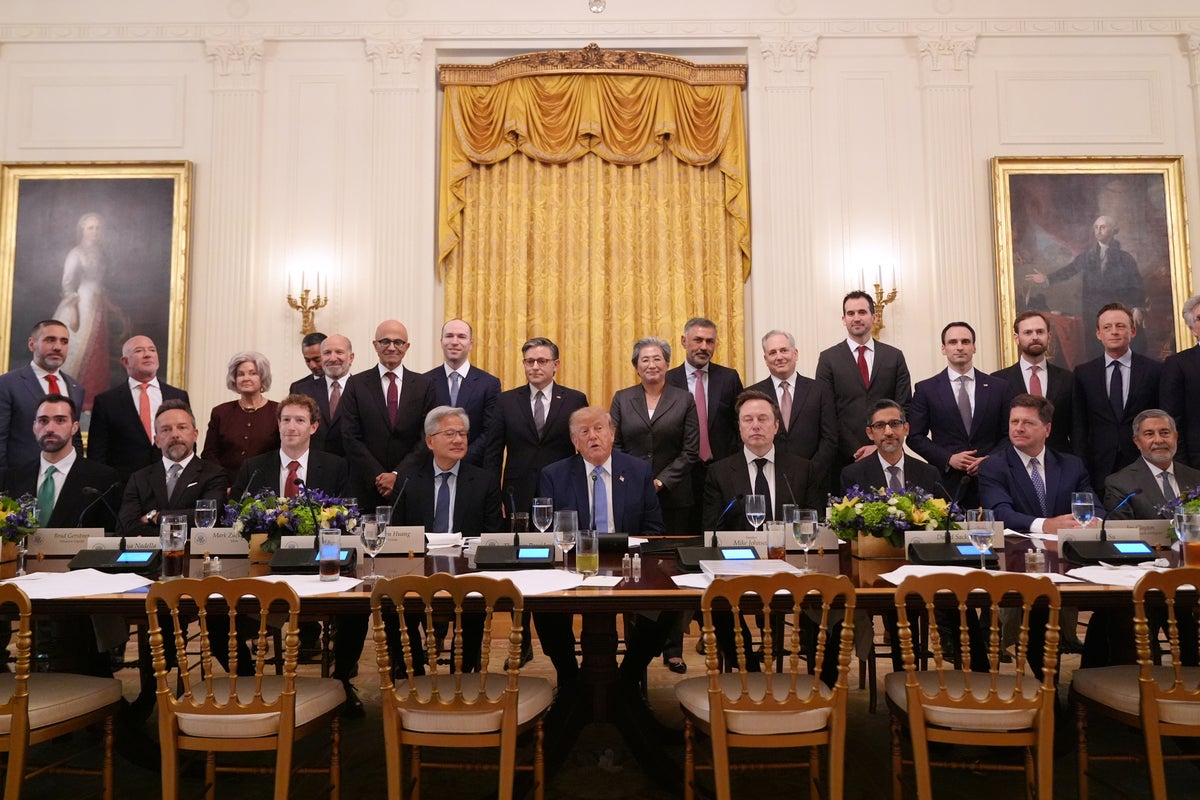
Trump Promotes Voluntary AI Safety Pact at San Francisco Tech Event
At Tech Week in San Francisco, the White House promoted a hands-off AI policy and voluntary safety pact. Industry leaders welcomed the shift toward growth over regulation.
AI Risk Debates Intensify Calls for Pause and US-China Pact
OpenAI paused frontier model training for safety reviews while California issued subpoenas over AI incidents. Officials discussed voluntary standards and potential FTC probes.
The Compass
You just read five takes on one story.
What's your take? Find your political shape in a few minutes.
Take the test