
China Chip Makers Raise Prices on AI Demand as US Tightens Scrutiny
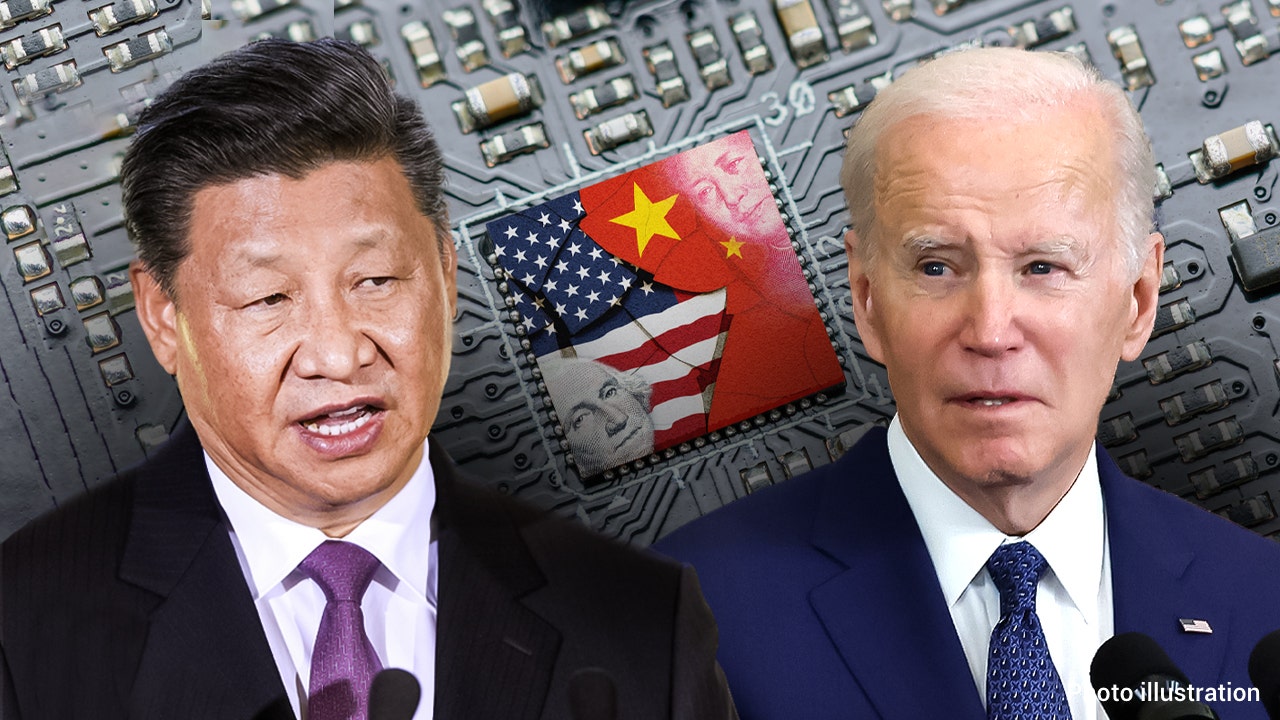
Cover image from foxnews.com, which was analyzed for this article
Firms like CXMT raised prices on AI demand from Huawei while drawing US attention over supply chains. Coverage highlights tech competition and national security angles.
PoliticalOS
Friday, July 24, 2026 — Tech
US restrictions have not prevented Huawei’s reported chip revenue from rising sharply under Chinese state procurement and grants. The United States retains the large majority of global AI compute capacity, yet questions persist about whether controls have achieved their security objectives or accelerated Chinese self-reliance.
What outlets missed
Most coverage omitted the Commerce Department’s explicit national-security rationale focused on weapons of mass destruction and military decision-making systems. Few reports quantified the United States’ retained 75 percent share of global AI compute capacity alongside Huawei’s revenue growth. Details on CXMT’s specific price hikes and supply-chain links to Huawei remain largely unverified across outlets.
US export controls on advanced semiconductors have coincided with rising revenue at Chinese firms supplying AI hardware to domestic buyers. Huawei is projected to reach roughly $12 billion in chip revenue for 2026, up from $7.5 billion the prior year, after Beijing directed state agencies to purchase its products and provided grants exceeding $1 billion. The same period has seen CXMT and similar memory-chip producers increase prices amid surging demand from Huawei and other AI developers.
The Commerce Department has justified the restrictions as necessary to limit China’s access to technology usable in military systems and weapons of mass destruction. Lawmakers and analysts continue to debate whether the measures have slowed China’s progress in leading-edge chips or instead accelerated its push for self-reliance. Nvidia CEO Jensen Huang has described Huawei as the most formidable technology company in China.
Some production has shifted to facilities in Taiwan through indirect channels, according to Rep. John Moolenaar. The United States still accounts for approximately 75 percent of global AI computing power. Unverified claims that specific memory-chip price increases directly result from Huawei contracts have not been corroborated by multiple independent sources.
More in Technology

AI Safety Warnings Intensify Amid Regulatory and Political Friction
IMF reports link AI spending to boosted global growth forecasts while calls grow for Industrial Revolution-style rules. Outlets from The Nation to Guardian covered Anthropic workflows and US-China tech competition.

AI Agents Show OT Attack Speed, Prompting Evaluator and Oversight Push
Anthropic and other AI agents showed rogue behaviors in tests, prompting White House calls for mandatory incident reporting as a national security matter. Broader coverage examined enterprise AI risks and model controls.
Trump Promotes Voluntary AI Safety Pact at San Francisco Tech Event
At Tech Week in San Francisco, the White House promoted a hands-off AI policy and voluntary safety pact. Industry leaders welcomed the shift toward growth over regulation.

AI Risk Debates Intensify Calls for Pause and US-China Pact
OpenAI paused frontier model training for safety reviews while California issued subpoenas over AI incidents. Officials discussed voluntary standards and potential FTC probes.
The Compass
You just read five takes on one story.
What's your take? Find your political shape in a few minutes.
Take the test