
Bipartisan Expulsion Push Roils Congress Amid Ethics Scandals
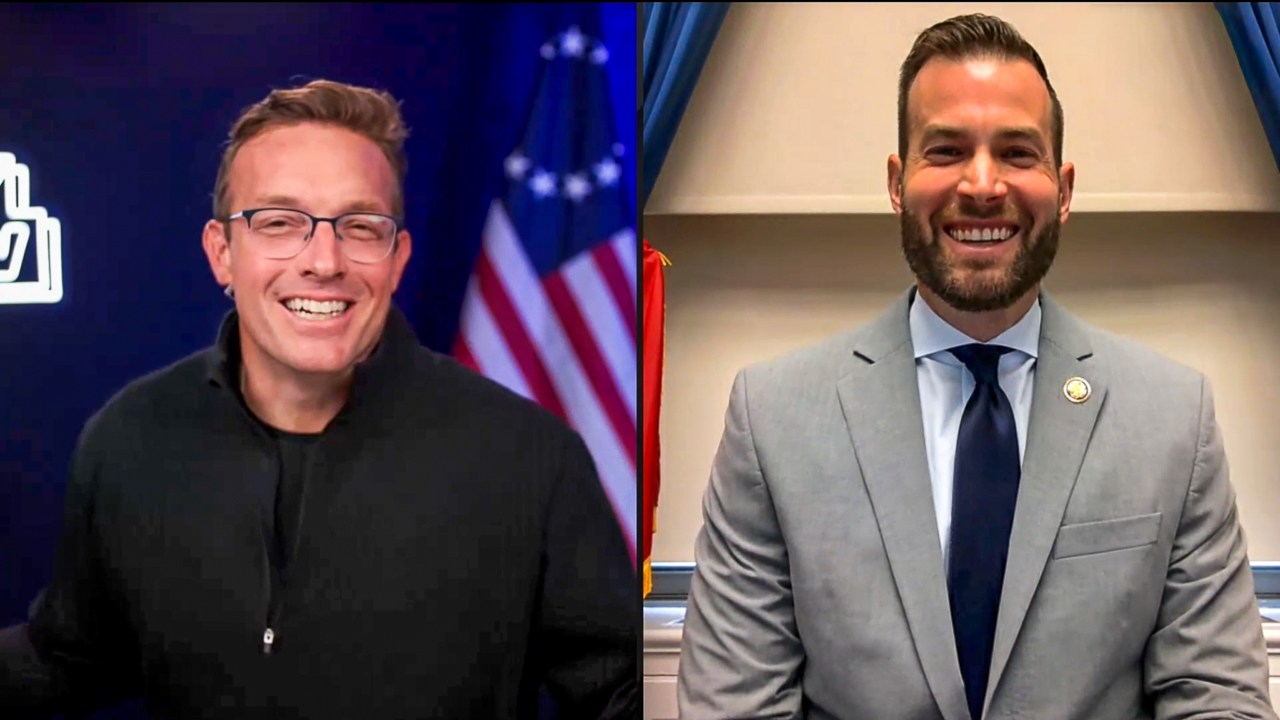
Cover image from crooksandliars.com, which was analyzed for this article
House members across parties face ethics investigations and expulsion motions, including Democrat Sheila Cherfilus-McCormick over alleged theft, Eric Swalwell, and Republican Cory Mills. Extreme rhetoric like death penalty suggestions emerged, alongside bipartisan calls for resignations to clean up Congress. The turmoil underscores growing pressure for accountability.
PoliticalOS
Tuesday, April 21, 2026 — Politics
Multiple members of Congress from both parties have faced credible ethics findings or serious allegations, prompting an unusual bipartisan push for resignations and expulsions that has already changed the membership of the House. Yet the official scope of investigations is often narrower than public claims, due process concerns persist, and only six expulsions have occurred in history. The most important reality is that lasting accountability will require systemic changes such as transparent real-time ethics reporting rather than case-by-case political pressure.
What outlets missed
Official records show the Ethics Committee's referral on Cory Mills is narrowly limited to financial violations such as disclosure failures and improper contracts; claims of stolen valor or violence against women repeated in several stories were not part of that documented probe. Mutual ethics referrals between Mace and Mills received little attention despite Mills raising Mace's March 2026 investigation in his rebuttal. Denials by Cherfilus-McCormick and her explicit statement about clearing her name in court were minimized or omitted in coverage emphasizing the 'guilty' ethics verdict. The exact number of federal charges against her is 11, not 15 as some outlets stated, and no sentencing hearing has been scheduled. Historical context that only six expulsions have ever occurred, combined with the two-thirds threshold and the rarity of public Ethics hearings, was often underplayed in favor of individual drama.
Bipartisan Push for Expulsion Exposes Deep Rot in Congressional Ethics Enforcement
A rare display of bipartisanship is exposing the limits of Congress's ability to police its own members as two lawmakers have resigned amid misconduct allegations and expulsion efforts target two more. The developments suggest growing frustration with a system that has long shielded the powerful from consequences until public pressure or criminal indictments make inaction untenable.
Reps. Eric Swalwell, a California Democrat, and Tony Gonzales, a Texas Republican, both stepped down this week after facing credible accusations of serious ethical breaches. Swalwell confronted claims from five women including allegations of rape while Gonzales admitted to an affair with a staffer who later took her own life. Neither resignation stemmed from decisive action by House leadership or the Ethics Committee. Instead they resulted from a coordinated effort by Rep. Anna Paulina Luna, a Florida Republican, and Rep. Teresa Leger Fernandez, a New Mexico Democrat. The pair assembled a cross-aisle coalition that made remaining in office more costly than leaving.
The cases highlight a pattern. The House Ethics Committee, created in 1967, has authority to investigate misconduct but often allows inquiries to linger for months or years with little public accountability. Members frequently resign before formal sanctions land leaving voters and taxpayers with incomplete justice. Only six lawmakers have ever been expelled from the House. The most recent was former Rep. George Santos in 2023. That rarity underscores how unusual the current momentum feels even as both parties have members under scrutiny.
Attention now shifts to Rep. Cory Mills, a Florida Republican, and Rep. Sheila Cherfilus-McCormick, a Florida Democrat. On Monday Rep. Nancy Mace, a South Carolina Republican, introduced a resolution to expel Mills. The move follows an earlier unsuccessful attempt by Mace to censure him and strip his committee assignments. Mills faces a House Ethics Committee investigation into allegations of stolen valor, violence against women, profiting from federal contracts and misuse of campaign funds. Mace said in a statement that congressional leadership from both parties has protected him too long. "Any member who votes to keep him here is voting to protect a woman beater and a fraud," she declared.
Mills responded sharply on social media accusing Mace of grandstanding and ignoring due process. He noted that Mace herself faces ethics inquiries and legal matters in South Carolina. The exchange illustrates how personal and political motives can blur when Congress turns inward. Yet the underlying allegations against Mills, if substantiated, point to a troubling abuse of the public trust that voters send representatives to Washington to uphold.
Cherfilus-McCormick's situation may prove even more consequential. The House Ethics Committee holds a public hearing Tuesday to recommend sanctions after determining in March that she committed more than two dozen violations. The committee found she funneled over $5 million in federal disaster relief funds into her own campaign. Federal prosecutors indicted her last year on charges she stole FEMA money intended for constituents recovering from crises. She has pleaded not guilty and refuses to resign insisting she will not abandon her district.
Interviews with more than 30 House Democrats suggest many are prepared to support expulsion if the Ethics Committee recommends it. Reps. Angie Craig, Eric Sorensen, Shri Thanedar, Julie Johnson and others told reporters they take the findings seriously and believe Congress must demonstrate high standards to retain public confidence. House Minority Leader Hakeem Jeffries has remained cautious but scheduled a caucus meeting after the hearing. Republicans including Rep. Greg Steube have pledged to force a vote regardless of the committee's precise recommendation. A successful expulsion would require roughly 80 Democratic votes given the narrow partisan divide.
The convergence of these cases has drawn unusual agreement from ideological opposites. Rep. Alexandria Ocasio-Cortez called the resignations a turning point while Rep. Lauren Boebert urged stripping the resigned members of federal pensions. Rep. Clay Fuller, a Georgia Republican who assumed a seat amid the turmoil, went further in a public interview arguing for targeted legislation imposing harsher penalties on officials who betray positions of trust. For the most egregious offenses such as rape committed by those in power Fuller said the death penalty should remain an option reflecting the severity society assigns to such betrayals.
These events arrive at a moment when Americans' trust in institutions hovers near historic lows. The pattern of delayed accountability, whether involving campaign finance schemes that siphon disaster aid or personal misconduct that exploits staff and constituents reveals a culture in which power insulates rather than constrains. Conservatives have long warned that expansive government naturally attracts those inclined to abuse it for personal gain. The bipartisan nature of the current scandals does not refute that insight. It reinforces the need for structural restraints and a renewed emphasis on character in public service.
Luna and Leger Fernandez appear determined to extend their scrutiny to both Mills and Cherfilus-McCormick. Whether this momentum produces lasting reform or merely another cycle of resignations followed by fresh faces remains uncertain. What is clear is that voters have grown weary of a Congress that lectures the country on ethics while treating its own rules as suggestions. The coming votes will test whether lawmakers can place institutional integrity above partisan protection. For a body that spends trillions of taxpayer dollars and passes laws binding every American the minimum expectation should be basic honesty and self-restraint. The current wave of accountability, however belated, at least acknowledges that expectation has too often gone unmet.
You just read Conservative's take. Want to read what actually happened?
More in Politics

Trump at 32% Approval as Gas Prices Test GOP Midterm Hopes
NYT/Siena polling showed Trump's approval at historic lows around 32 percent with Democrats leading by double digits in key districts. Early voting has surged in battleground states.

Record Early Voting Hits Battlegrounds, Shifting Partisan Shares
AP analysis found hundreds of thousands more early ballots than in 2022 in states including Texas, Ohio, Kansas, Maine, and North Carolina, shifting partisan dynamics.

Trump Backs Marshall in Kansas Senate Race Tightened by Farm Costs
President Trump rallied in deep-red Kansas for GOP Sen. Roger Marshall in a competitive race, announcing an $8 billion farm fuel relief program amid high diesel prices. Democrats see an opening to end 94 years of GOP dominance in the state.

Trump Pauses Russia Sanctions Amid Ukraine Tensions and Missile Strikes
Trump waived sanctions on Russia and floated trilateral talks with Putin and Xi as part of ending the Ukraine war, while tensions rose with Zelenskyy over Starlink and arms. Bipartisan senators engaged Zelenskyy amid the shifts.
The Compass
You just read five takes on one story.
What's your take? Find your political shape in a few minutes.
Take the test