
House Rejects Bid to Curb Trump's Iran Powers as 60-Day Clock Ticks

Cover image from npr.org, which was analyzed for this article
Democrats face questions on challenging Trump's Iran war decisions, sidestepping past pledges to refuse illegal orders as the House delays a war powers vote. The conflict's midterm implications and MAGA support are under discussion amid intensifying tensions. Lawmakers navigate political risks in responding to the administration.
PoliticalOS
Saturday, April 18, 2026 — Politics
The single most important reality is that the constitutional tension over war powers remains unresolved. Congress has once again declined to force withdrawal from an active military campaign against Iran even as the 60-day War Powers clock nears expiration. With casualties reported on all sides, fragile ceasefire talks underway and midterms approaching, both branches are choosing political caution over decisive clarity, leaving U.S. forces in limbo and voters to judge the outcome later.
What outlets missed
Most coverage omitted or downplayed the precise origins of the conflict: U.S.-Israeli strikes on February 28, 2026, under Operation Epic Fury that killed Supreme Leader Ali Khamenei following Iranian proxy actions. Casualty figures, including roughly 2,000 Iranian deaths, 13 U.S. service members and losses among Israeli and Gulf partners, appeared inconsistently and were rarely aggregated. The status of ceasefire talks, Trump's claim that a deal is 'very close,' and Iran's declaration that the Strait of Hormuz had reopened also received uneven or no attention. Finally, the exact legal mechanics and approaching May 1 withdrawal deadline under the War Powers Resolution were subordinated to partisan framing in nearly every outlet.
House Rejects Bid to Restrict Trump Amid Iran Military Campaign
The House of Representatives this week turned back a Democratic effort to curtail President Donald Trump's conduct of military operations against Iran, underscoring the practical limits lawmakers face once American forces are committed to hostilities. The war powers resolution failed by the narrowest of margins, 213 to 214, the second such defeat in recent weeks as the U.S.-Israeli campaign against Tehran enters its seventh week. The outcome reflects a bipartisan recognition, however reluctant on one side, that the executive branch holds primary responsibility for directing forces once engaged.
Democrats framed the measure as essential oversight of what they called an unauthorized conflict. Yet even after three Democrats who had previously voted against the resolution switched sides, the effort still fell short. Republicans countered that attempting to rewrite the rules in the middle of active operations risks signaling weakness to adversaries and endangers troops in the field. The floor debate grew sharp, but both parties reaffirmed support for the personnel carrying out the mission.
That rhetorical unity on the troops contrasts with earlier Democratic rhetoric. Just months ago, six lawmakers with military backgrounds, including Sen. Elissa Slotkin of Michigan, Sen. Mark Kelly of Arizona, and Reps. Chrissy Houlahan, Jason Crow, Chris Deluzio, and Maggie Goodlander, publicly urged service members to "refuse illegal orders" if they believed directives violated the Constitution. In the current conflict, those voices have gone quiet on that specific point. Democratic leaders now emphasize that responsibility rests with the president alone.
"The troops are in no way to blame for this illegal war," Sen. Richard Blumenthal of Connecticut said. "We support the troops always. They're following orders," added Rep. Darren Soto of Florida. When asked how their earlier calls to disobey orders apply now, the six lawmakers did not respond to inquiries. The shift highlights a recurring pattern in which constitutional concerns about military authority tend to intensify or recede depending on which party occupies the White House.
The operations, dubbed Operation Epic Fury by the administration, include precision strikes on Iranian military targets and a naval blockade of the Strait of Hormuz. These actions followed years of Iranian aggression through proxy militias, attacks on shipping, and rapid advances toward nuclear weapons capability. The administration notified Congress consistent with the War Powers Resolution of 1973, which allows the president 60 days of action before formal authorization is required. Critics argue the blockade and sustained campaign exceed that window; supporters note that the statute has always been controversial and that presidents of both parties have interpreted it flexibly when vital interests are at stake.
The narrow House vote comes as the conflict passes the one-month mark. GOP lawmakers argued that pulling back now would squander gains achieved alongside Israeli forces and invite Iran to reconstitute its capabilities. The resolution's sponsors, led by Sen. Cory Booker in the Senate, portrayed the effort as a defense of congressional prerogatives. Yet the repeated failure to attract majority support suggests many lawmakers, including some Democrats, prefer not to tie military hands while hostilities continue.
Beyond Capitol Hill, the war's political reverberations are already shaping calculations for the upcoming midterm elections. Public opinion remains fluid. While many voters credit the administration with confronting a regime that previous diplomacy failed to restrain, others worry about escalation and costs. A notable segment of President Trump's own MAGA base has voiced skepticism about another sustained American commitment in the Middle East. These voices, often dubbed isolationist or America First, argue that resources should focus on the southern border, economic pressures at home, and avoiding the nation-building traps of the past two decades.
Their unease echoes broader debates about the limits of American power. Thomas Sowell has long cautioned that interventions must be judged by trade-offs and empirical results rather than intentions or rhetoric. In this case, the administration presents the campaign as a limited, necessity-driven effort to degrade Iranian nuclear infrastructure and proxy networks rather than an open-ended occupation. Early indications suggest the blockade has already constricted Iran's oil revenue and forced its leadership into defensive postures. Whether these gains endure, and whether they translate into a more stable region, will heavily influence voter judgments in November.
Democrats face their own messaging challenges. Having spent years accusing the previous Trump administration of undermining constitutional norms, they now find themselves challenging military action against a regime widely viewed as a threat by both parties. Their selective emphasis on "illegal" operations, while avoiding renewed calls for troops to refuse orders, risks appearing inconsistent to voters who prioritize clarity and resolve in national security.
The episode also revives perennial questions about the War Powers Resolution itself. Enacted in the shadow of Vietnam over President Nixon's veto, the law has rarely functioned as its authors intended. Presidents routinely interpret their Article II authority broadly, and Congress has seldom mustered the votes to enforce its provisions when American lives are directly engaged. The current narrow defeat, achieved despite intense partisan pressure, suggests institutional inertia favors allowing the executive to see operations through once begun.
As the conflict with Iran intensifies, the political class finds itself balancing constitutional theory against strategic reality. The troops executing policy in hostile waters and airspace deserve clarity, not mixed signals. The narrow House vote indicates that, for now, lawmakers have chosen not to intervene directly. Whether that restraint holds as casualties mount or diplomatic openings emerge will help determine if the midterm elections become a referendum on the wisdom of confronting Iran now or the hazards of appearing to retreat under fire. The coming weeks will test whether partisan habits or sober assessment of national interest ultimately prevail.
You just read Conservative's take. Want to read what actually happened?
More in Politics
Trump at 32% Approval as Gas Prices Test GOP Midterm Hopes
NYT/Siena polling showed Trump's approval at historic lows around 32 percent with Democrats leading by double digits in key districts. Early voting has surged in battleground states.

Record Early Voting Hits Battlegrounds, Shifting Partisan Shares
AP analysis found hundreds of thousands more early ballots than in 2022 in states including Texas, Ohio, Kansas, Maine, and North Carolina, shifting partisan dynamics.
Trump Backs Marshall in Kansas Senate Race Tightened by Farm Costs
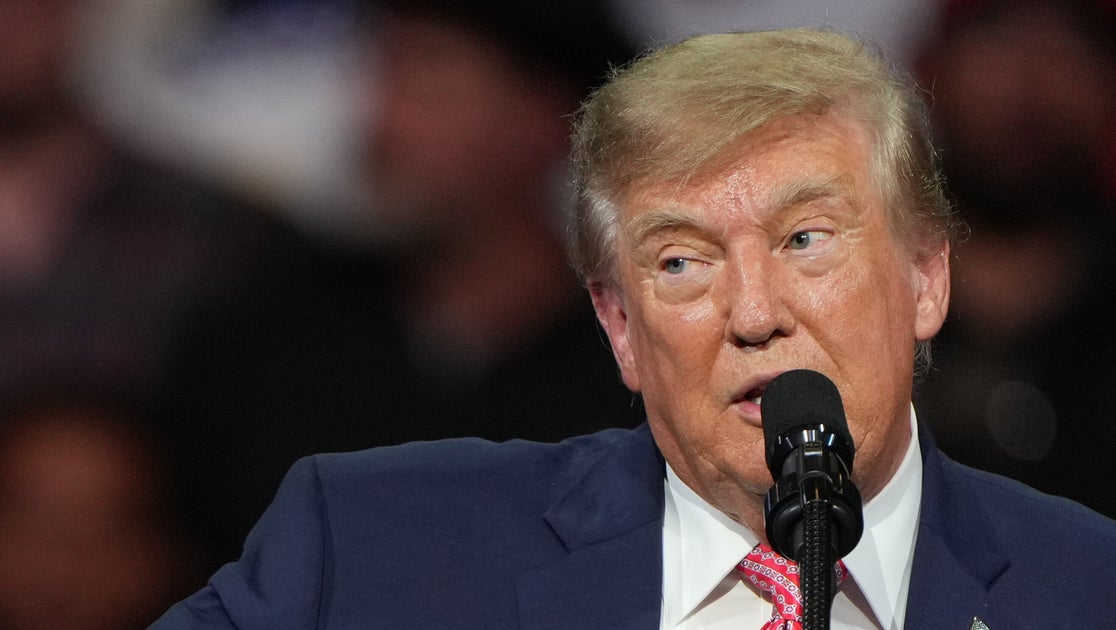
President Trump rallied in deep-red Kansas for GOP Sen. Roger Marshall in a competitive race, announcing an $8 billion farm fuel relief program amid high diesel prices. Democrats see an opening to end 94 years of GOP dominance in the state.

Trump Pauses Russia Sanctions Amid Ukraine Tensions and Missile Strikes
Trump waived sanctions on Russia and floated trilateral talks with Putin and Xi as part of ending the Ukraine war, while tensions rose with Zelenskyy over Starlink and arms. Bipartisan senators engaged Zelenskyy amid the shifts.
The Compass
You just read five takes on one story.
What's your take? Find your political shape in a few minutes.
Take the test