
Cuban Artist Otero Alcántara Reaches Miami After Prison Exile
Cover image from npr.org, which was analyzed for this article
Prominent Cuban artist and dissident Otero Alcantara, released after five years in prison, has arrived in the United States following his exile from the island.
PoliticalOS
Sunday, July 19, 2026 — Politics
Otero Alcántara’s conditional release underscores the Cuban government’s use of exile to remove prominent critics while hundreds of other prisoners remain. His arrival in Miami brings renewed attention to the San Isidro Movement and the unresolved cases of fellow detainees such as Maykel Castillo Pérez.
What outlets missed
Neither outlet supplied the precise statutory language under which the Cuban court convicted Otero Alcántara or explained how those statutes define contempt and symbol desecration. The higher end of political-prisoner estimates, 1,281 from Prisoners Defenders as of May 2026, appeared only in the Newsmax account and was not cross-checked against contemporaneous Reuters or CNN reporting. Otero Alcántara’s April 2026 guest essay in The New York Times, in which he described painting as the activity that kept him alive in prison, received no mention in either dispatch.
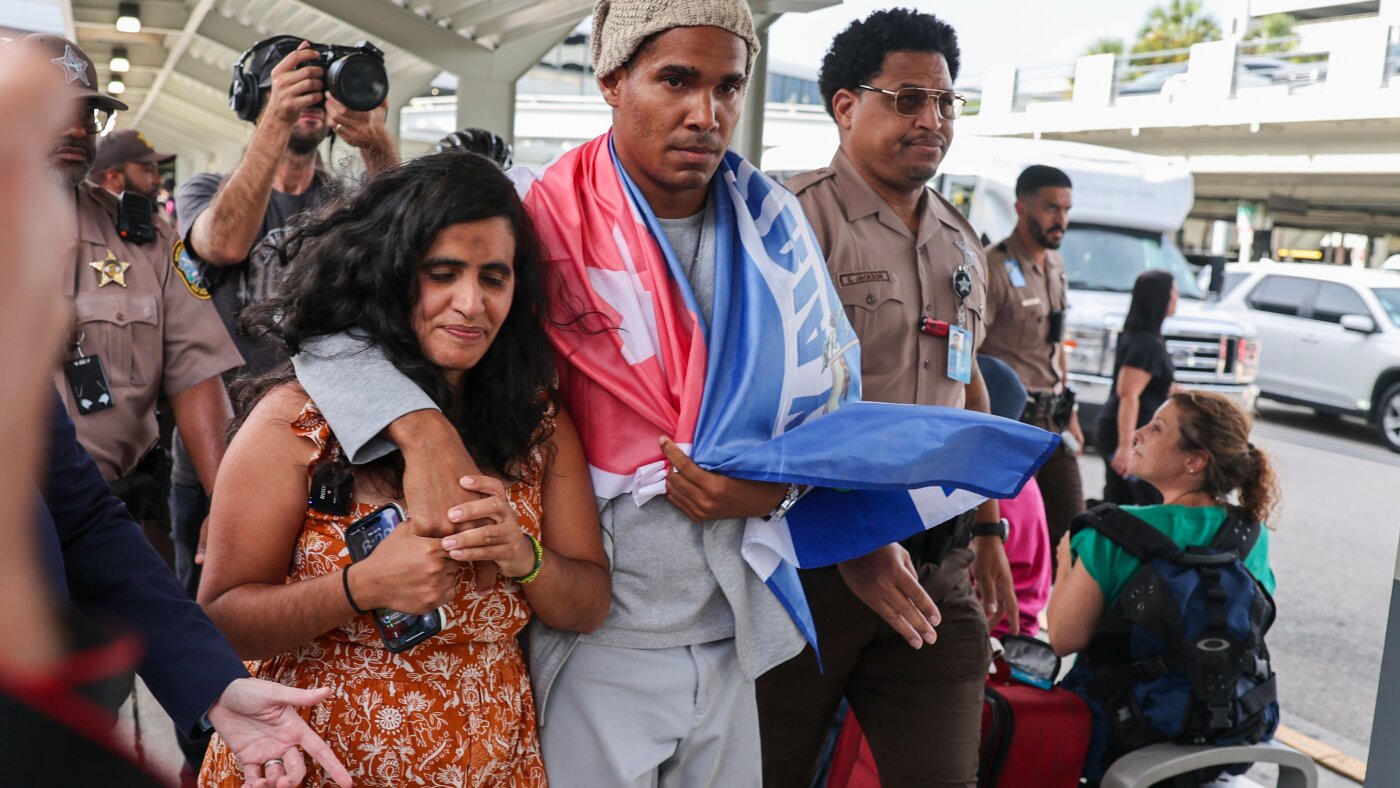
Luis Manuel Otero Alcántara stepped onto American soil in Miami on July 18, 2026, five years after Cuban authorities detained him during nationwide protests. His release came only after he agreed to permanent exile, a condition that ended his imprisonment but removed him from the island where his art had challenged official authority.
The 38-year-old self-taught artist and co-founder of the San Isidro Movement had been sentenced in 2022 to five years on charges of public disorder, contempt, and disrespect toward national symbols. Human rights groups including Amnesty International had designated him a prisoner of conscience. He spent the term in a maximum-security facility, according to statements from his supporters. Cuban courts rejected those characterizations and treated the offenses as standard violations under the criminal code.
Advocates lost contact with Otero Alcántara in the final days of his sentence. He was moved on July 7, 2026, from prison to a state security facility two days before his term ended, and his location remained unknown until he boarded a flight from Havana. The United States granted him parole earlier that week, according to a social media account run by his friends. Upon landing he visited the Shrine of Our Lady of Charity, where supporters draped him in a flag bearing the words “Patria y Vida,” the title of a song for which he received a Latin Grammy nomination.
Otero Alcántara carried with him a broken statue of the Virgin Mary that he intends to restore. He told those gathered that he would continue his work and called the moment the result of collective efforts. Fellow artist Maykel Castillo Pérez remains imprisoned, and supporters expressed hope that the release would increase pressure for his freedom as well. Between 700 and 1,281 political prisoners are reported to remain in Cuban custody, according to tallies cited by human rights organizations and U.S. officials.
The arrival occurred against a backdrop of heightened U.S.-Cuba tensions. Secretary of State Marco Rubio issued a statement welcoming Otero Alcántara and urging the release of additional prisoners. Otero Alcántara’s departure fits a pattern in which Cuban authorities have allowed prominent critics to leave rather than complete their sentences on the island.
More in Politics

Federal Agents Search Omar Home in Ongoing Immigration Probe
Homeland Security agents searched the Minnesota Democrat's DC residence in a criminal probe, prompting accusations of political intimidation from Omar and Democratic leaders. Coverage spans left-leaning outlets like NPR, BBC, and The Guardian alongside right-leaning criticism from The Federalist and Daily Wire.

Trump Diesel Import Plan Draws Pushback Over Russia Ties
The weekend agreement drew bipartisan congressional pushback and criticism from Ukraine's Zelenskyy, with analysts downplaying US fuel price impacts. Right-leaning outlets like National Review, Dispatch, and Washington Examiner questioned its legality and effectiveness.

Independents Test Voter Appetite for Middle Ground in 2026 Midterms
Nearly 200 independents are running in competitive races as voters weigh ballot measures on housing costs in states like Massachusetts. Left-leaning coverage from NYT, NPR, and Guardian highlights turnout and key races while right outlets focus on GOP strategy.
Trump Rallies in Alaska, Ohio to Bolster GOP Senate Candidates
The president rallied in Wasilla for Sen. Dan Sullivan and faced empty seats at an Ohio event amid midterm concerns. Outlets across the spectrum covered the trips as signals of GOP vulnerability weeks before Election Day.
The Compass
You just read five takes on one story.
What's your take? Find your political shape in a few minutes.
Take the test