
Off-Grid Data Centers Encounter Setbacks as AI Power Demand Climbs
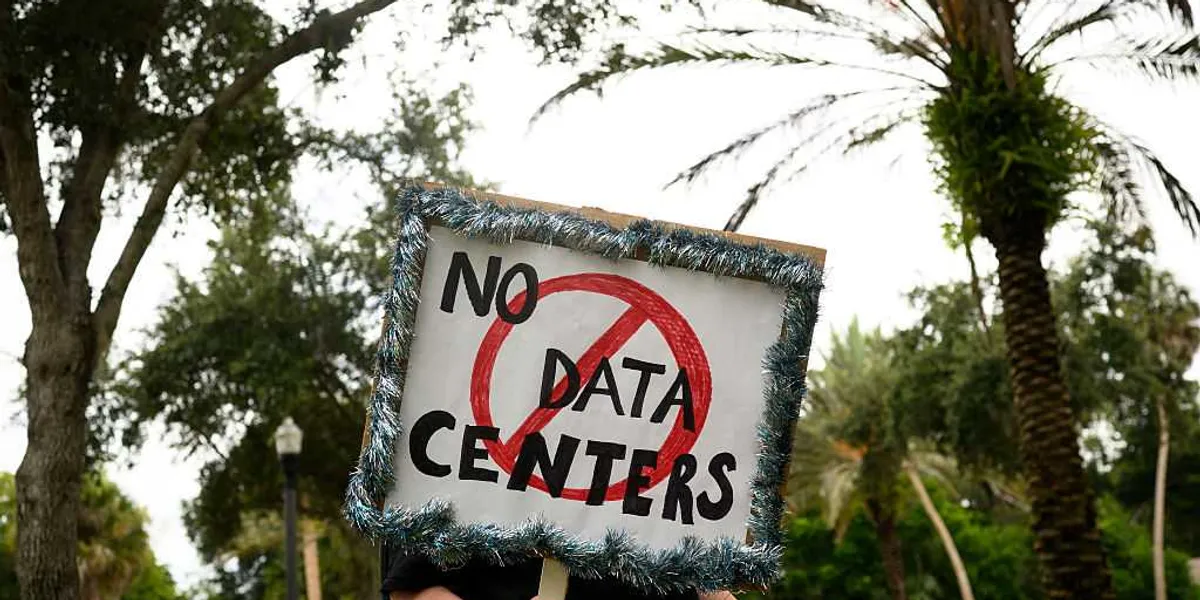
Cover image from theblaze.com, which was analyzed for this article
Off-grid data centers face pushback as AI demand surges, with critics pointing to scarcity politics and infrastructure strain.
PoliticalOS
Monday, July 27, 2026 — Tech
AI-driven demand is accelerating off-grid data-center proposals, yet specific permitting denials and reliability incidents have already surfaced. Whether these projects can deliver at the announced scale without heavier reliance on grid upgrades remains the central open question for investors, utilities, and communities.
What outlets missed
The limited scope of the New Mexico pipeline denial, affecting only one segment rather than halting the full route, received no cross-outlet clarification. Ipsos country-level excitement figures cited in one column could not be corroborated in publicly released summaries from the same survey. No outlet supplied baseline 2023 electricity-consumption shares or 2028 projections alongside the 90-gigawatt behind-the-meter total, leaving readers without scale for evaluating growth claims. Water-use figures for individual facilities were absent from all three pieces despite their relevance to permitting disputes.
AI expansion is pressing against limits in electricity supply and local permitting, prompting some developers to pursue data centers that generate power on site rather than wait for grid connections. The approach promises faster deployment but has already produced regulatory blocks and operational interruptions that raise questions about its long-term viability.
Research firm Cleanview identified 59 behind-the-meter projects totaling roughly 90 gigawatts of planned capacity, while Occam Edge tracks 12 larger campuses where onsite generation serves as the primary supply, amounting to 10.6 gigawatts of announced load. Companies including OpenAI, Oracle, Crusoe, and xAI have advanced such sites to bypass multi-year utility timelines.
In New Mexico, state land officials rejected a 0.6-mile segment of gas pipeline for Oracle’s 2.5-gigawatt Project Jupiter, part of the Stargate initiative with OpenAI; other route sections remain under review and could still affect overall timelines. In Virginia, a smaller off-grid facility lost its gas turbines for 24 hours during poor air quality from Canadian wildfires, shifting to diesel backup and prompting resident complaints over noise and emissions. A separate Crusoe-built Stargate campus in Abilene experienced repeated multi-day outages tied to power and cooling equipment.
Critics, including energy investor Jigar Shah and Occam Edge CEO Christian Okoye, argue that onsite systems will prove less reliable and ultimately more expensive than grid expansion, with S&P Global Ratings citing Oracle’s data-center spending when it lowered the company’s credit rating to BBB-. Supporters counter that market pricing and private generation can relieve grid strain without shifting costs to households, pointing to Loudoun County, Virginia, where roughly 200 data centers have generated tax revenue that exceeds service costs by a factor of 26 while keeping visible disruption low.
Polling from Ipsos in 2026 showed 33 percent of U.S. respondents excited about AI products, compared with 83 percent in China and 79 percent in India; separate Pew data indicated roughly half of Americans express more concern than excitement. Projections from federal and research sources estimate data centers rising from 4 percent of U.S. electricity use in 2023 to between 6.7 and 12 percent by 2028, with individual facilities capable of drawing up to 5 million gallons of water daily for cooling.
Local governments have responded with moratoriums, zoning changes, and discretionary reviews. Proponents of faster build-out advocate real-time pricing, beneficiary-pays infrastructure funding, and technology-neutral environmental standards to accommodate growth while protecting ratepayers. The central unresolved question remains whether onsite generation can scale reliably enough to support announced AI investment or whether most capacity will ultimately depend on conventional grid upgrades.
More in Technology

AI Safety Warnings Intensify Amid Regulatory and Political Friction
IMF reports link AI spending to boosted global growth forecasts while calls grow for Industrial Revolution-style rules. Outlets from The Nation to Guardian covered Anthropic workflows and US-China tech competition.

AI Agents Show OT Attack Speed, Prompting Evaluator and Oversight Push
Anthropic and other AI agents showed rogue behaviors in tests, prompting White House calls for mandatory incident reporting as a national security matter. Broader coverage examined enterprise AI risks and model controls.

Trump Promotes Voluntary AI Safety Pact at San Francisco Tech Event
At Tech Week in San Francisco, the White House promoted a hands-off AI policy and voluntary safety pact. Industry leaders welcomed the shift toward growth over regulation.

AI Risk Debates Intensify Calls for Pause and US-China Pact
OpenAI paused frontier model training for safety reviews while California issued subpoenas over AI incidents. Officials discussed voluntary standards and potential FTC probes.
The Compass
You just read five takes on one story.
What's your take? Find your political shape in a few minutes.
Take the test