
Democrats Weigh Senate Flips Amid Redistricting Losses and Trump Comments

Cover image from newrepublic.com, which was analyzed for this article
Party strategists assess prospects for flipping the Senate amid low Trump approval ratings. Internal debates continue over messaging and candidate recruitment.
PoliticalOS
Saturday, May 16, 2026 — Politics
Democrats confront concrete map losses in Virginia and internal divisions over tactics while Trump privately downplays midterm stakes. Success hinges on whether recruitment and messaging can overcome redistricting shifts before November.
What outlets missed
The Virginia Supreme Court opinion rested on a specific two-session requirement for constitutional amendments that was violated once early voting started, a procedural detail omitted from most commentary. No outlet provided state-by-state projections of how many additional House seats could shift under ongoing redistricting efforts beyond Virginia. Federal Election Commission rules prohibiting super PAC coordination with candidates received no mention, leaving readers without context for reported concerns over the $347 million in pro-Trump funds. The unrelated Supreme Court mifepristone ruling was included in one outlet despite having no bearing on midterm electoral mechanics.
Supreme Court Conservatives Signal Fresh Assault on Abortion Rights
The Supreme Court’s decision to preserve telehealth access to mifepristone has done little to reassure abortion advocates that the right to the procedure is secure. Justices Clarence Thomas and Samuel Alito used their dissent to outline a clear path for restricting medication abortion nationwide, reviving long-dormant restrictions and underscoring how the 2022 Dobbs ruling continues to reshape reproductive health care.
In the Thursday ruling, the court allowed the current distribution of the abortion pill to stand. Data shows medication abortions now account for roughly two-thirds of all procedures in the United States. Far more residents of states with near-total bans obtained the pills through telehealth last year than traveled across state lines for in-person care. Abortions overall have risen since Dobbs, largely because of this remote option.
Thomas and Alito saw the outcome differently. Alito labeled the result a “scheme” designed to evade the court’s earlier decision ending the constitutional right to abortion. Thomas went further, arguing that the 1873 Comstock Act still bars the mailing of any drug used to produce an abortion. He described the companies involved as engaged in a “criminal enterprise” and said they should not receive relief based on lost profits. The law, which once targeted “obscene” materials, has not been enforced for decades against medication abortion, yet the dissent treats it as a live weapon.
Reproductive Equity Now interim co-executive director Claire Teylouni called the immediate threat to mifepristone access over for now. She added that the language in the dissents makes plain the danger remains. Advocates note that any future administration sympathetic to Thomas’s reading could direct federal agencies to enforce the Comstock Act against the U.S. mail, effectively ending the main method of abortion in states that already ban the procedure.
The same week, parallel developments illustrated how institutional power is being used to limit democratic outcomes on other fronts. In Virginia, the state Supreme Court rejected voter-approved congressional maps after Democrats spent heavily to pass them through referendum. Governor Abigail Spanberger responded by expressing disappointment and focusing on voter education rather than pursuing available legislative remedies, such as adjusting judicial retirement rules before the budget deadline. Critics argue this reflects a recurring pattern in which Democrats accept adverse rulings without countering institutional capture.
Meanwhile, reports from inside the White House suggest President Trump has privately expressed indifference about the 2026 midterms, noting that the party in power usually loses seats. Some Republican candidates worry that the president’s $347 million super PAC could remain largely untapped even as state-level gerrymandering efforts accelerate in GOP-controlled legislatures. Those same efforts follow a series of legal victories that have eased redistricting advantages for Republicans.
Taken together, the developments point to a period in which conservative institutions test the boundaries of prior rulings while progressive responses remain fragmented. The Comstock Act language in the Supreme Court dissent provides a ready blueprint for further restrictions if political conditions shift. How Democrats choose to confront both judicial and electoral pressure will determine whether access to abortion and fair representation can be defended or will continue to erode.
You just read Progressive's take. Want to read what actually happened?
More in Politics

Trump Defends Ramaswamy Ad Using Estranged Mother in Ohio Race
President Trump defended a GOP nominee's ad featuring a Democratic opponent's estranged mother, calling it powerful, while drawing criticism from some Republicans including Ohio Gov. Mike DeWine. The ad has sparked internal GOP tensions ahead of midterms.

Federal Raid Targets Omar Amid Unresolved Name and Marriage Allegations
Agents searched Rep. Ilhan Omar's DC residence over immigration fraud allegations; she called it bizarre. Reports and commentary questioned her birth name and past marriage details.

Supreme Court Upholds New Hampshire Student ID Voting Ban
The Supreme Court upheld New Hampshire's ban on student IDs as valid voter identification just before midterms, affecting a tight Senate race.
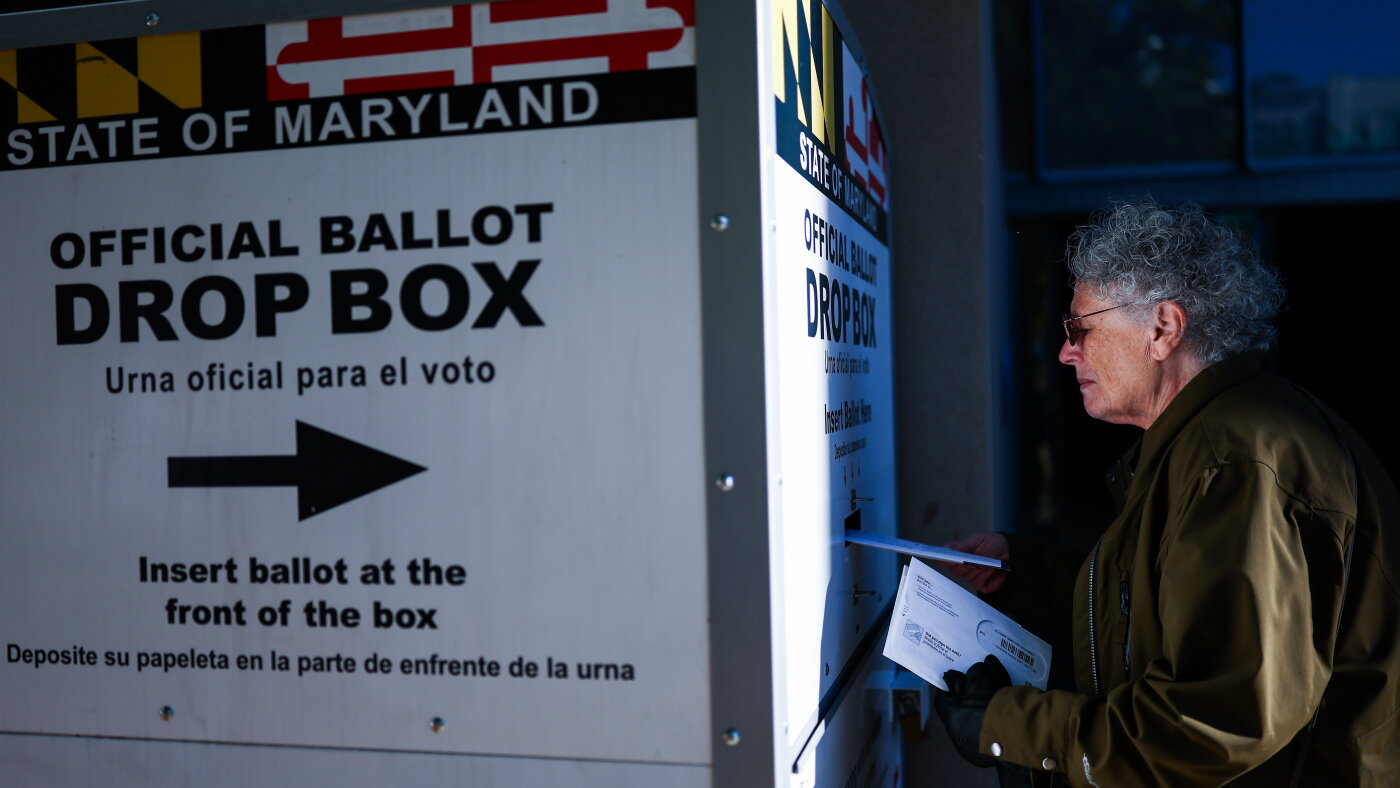
Early Voting Hits 21 Million as Most Trust Midterm Accuracy
Millions have already voted early as parties make final appeals amid $1.4 billion in ad spending; polls show confidence in election accuracy.
The Compass
You just read five takes on one story.
What's your take? Find your political shape in a few minutes.
Take the test