
DHS Funding Lapse Triggers TSA Quits, Risks Travel Chaos and Deportations
Cover image from foxnews.com, which was analyzed for this article
The White House warned of a looming Homeland Security funding lapse risking TSA staffing shortages with over 1,000 quits and deportation slowdowns ahead of peak travel. Speaker Johnson faces pressure from Trump and Senate GOP to act amid party infighting. GOP rebels threaten to block related bills.
PoliticalOS
Wednesday, April 29, 2026 — Politics
A real funding lapse since mid-February has produced over 1,000 TSA departures and placed both airport security and deportation operations on borrowed time, with emergency measures set to expire in early May. Speaker Johnson must navigate genuine policy rifts inside his conference over surveillance, agriculture, and immigration spending to pass a solution before the House calendar collapses. Contingency authorities exist, yet prolonged uncertainty will compound staffing gaps that cannot be fixed quickly, directly affecting travelers and enforcement priorities this summer.
What outlets missed
Most coverage omitted the precise trigger for the mid-February lapse: failed negotiations over supplemental funding for ICE and CBP in the wake of shootings involving federal agents, a detail available in congressional statements and timelines. Outlets also underplayed documented DHS contingency plans that permit essential TSA screening and certain enforcement activities to continue using prior-year funds during lapses. The specific scale of impact on deportations received only vague White House mentions; no outlet provided verified numbers on slowed removals or current ICE capacity. Finally, variation in World Cup visitor projections (five to ten million) was often presented as a single alarming figure without noting the estimates' range or sourcing.
GOP Chaos Risks Travel Meltdown as TSA Bleeds Officers Ahead of World Cup
More than a thousand TSA officers have walked off the job since the Department of Homeland Security funding crisis began in mid-February, creating serious gaps in airport security just weeks before the United States hosts the FIFA World Cup and the usual summer travel rush. The agency confirmed the losses Monday, warning that the departures have “significantly decreased TSA’s ability to meet passenger demand.” Each new hire needs four to six months of training, meaning the damage will not be repaired quickly.
The timing could hardly be worse. The State Department expects up to ten million international visitors for the World Cup, which will be staged in eleven American host cities. Travelers already dealt with long security lines last month while TSA employees worked without reliable pay. President Trump stepped in earlier this month, directing the department to use funds from the “One Big Beautiful Bill” package to cover payroll. Homeland Security Secretary Markwayne Mullin told Fox News that the emergency money will run dry the first week of May if Congress fails to act. After that, the familiar scenes of frustrated families stuck in endless checkpoint queues could return with a vengeance.
This is not an abstract budget dispute. It is the direct result of lawmakers’ inability to do their most basic job. The funding lapse began after Congress could not reach agreement on keeping the department operational. Now the consequences are landing on ordinary Americans who simply want to board a plane without spending half their day in line. Airport security is one of the few places where most citizens directly encounter the federal government. When that system breaks, the pain is immediate and visible.
The trouble in Washington runs deeper. On Tuesday, House Speaker Mike Johnson faced open revolt from within his own conference as the Rules Committee advanced a procedural measure to bring three major bills to the floor: an extension of Section 702 spy powers under FISA, a new farm bill, and a party-line budget resolution to fund parts of DHS. Several conservative members made clear they may vote against even allowing debate, threatening to bring the House to a standstill.
Rep. Chip Roy of Texas described the current state of House Republican affairs bluntly as a “crap show.” Rep. Lauren Boebert announced she is a firm “no” on the procedural vote after her amendments were blocked. Rep. Nancy Mace signaled she could join the opposition. Leadership tried to buy peace with side deals. Privacy-minded members were offered a ban on central bank digital currency attached to the FISA extension. Rural lawmakers were promised year-round sales of the E15 ethanol gasoline blend. Neither concession appears to have locked down the votes.
The rebellion comes at the exact moment the TSA is bleeding manpower. Critics of the FISA extension argue the surveillance program has been abused against American citizens for years. Farm-state members complain the agriculture legislation does not go far enough for their districts. Whatever the merits of those complaints, the practical effect is that funding for actual border and aviation security remains in limbo while politicians maneuver.
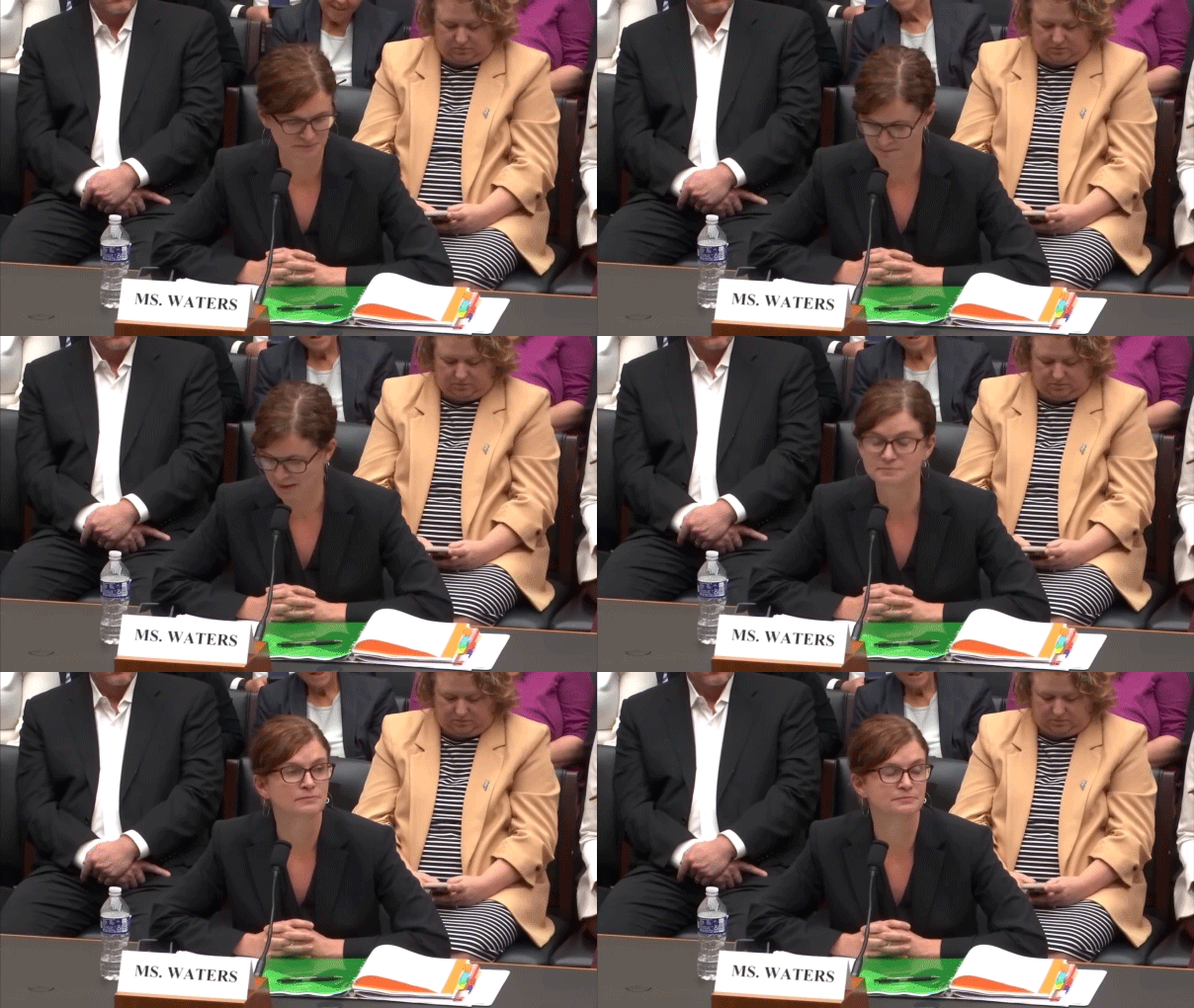
In a separate but revealing moment on Capitol Hill Tuesday, the same dysfunction and tension played out in a House Judiciary subcommittee hearing. Rep. Brandon Gill, a freshman Republican from Texas viewed as a rising star in conservative circles, pressed abortion scholar Jessica Waters on her public advocacy for “reproductive rights.” Gill asked directly which abortion procedure Waters considered her “favorite,” then walked through the mechanical details of suction abortions that use vacuum pressure 29 times stronger than a household vacuum to tear apart and remove a developing child.
Waters, a senior scholar at American University who specializes in abortion regulation, refused to answer. She repeated only that she supports “patients having access to the full realm of reproductive healthcare.” Gill’s pointed questioning drew immediate attention online, with many viewers praising his refusal to let a witness hide behind euphemisms on a procedure that ends a human heartbeat. The exchange underscored how raw cultural issues remain even as the House stumbles over must-pass funding legislation.
Taken together, the scenes from Washington paint a picture of a Republican majority that campaigned on competence and border security but now risks allowing internal divisions to create visible chaos for the traveling public. The DHS funding bill is supposed to prevent exactly the staffing shortages now hitting TSA checkpoints. Instead, the measure is bundled with spy-power renewals and agriculture policy that many conservatives view as flawed or insufficient.
If the procedural vote fails or the underlying bills collapse, the funding patch Trump authorized will expire and the TSA attrition problem will grow worse. Millions of fans descending on American cities for the World Cup will encounter the result: longer lines, frustrated security officers, and the nagging sense that Washington cannot manage even routine government functions. Summer family vacations could face the same bottlenecks.
Lawmakers on both sides have spent months pointing fingers over border security and spending priorities. The American people, meanwhile, simply want to get through an airport without missing their flight and without being lectured about “reproductive healthcare” that avoids plain English. The coming days will show whether House Republicans can overcome their internal “crap show” long enough to fund the basic operations that keep daily life moving. If they cannot, the consequences will be measured in missed connections, irate travelers, and another round of stories about a government that demands compliance but cannot deliver competence.
You just read America First's take. Want to read what actually happened?
More in Politics

Trump Defends Ramaswamy Ad Using Estranged Mother in Ohio Race
President Trump defended a GOP nominee's ad featuring a Democratic opponent's estranged mother, calling it powerful, while drawing criticism from some Republicans including Ohio Gov. Mike DeWine. The ad has sparked internal GOP tensions ahead of midterms.
Federal Raid Targets Omar Amid Unresolved Name and Marriage Allegations
Agents searched Rep. Ilhan Omar's DC residence over immigration fraud allegations; she called it bizarre. Reports and commentary questioned her birth name and past marriage details.

Supreme Court Upholds New Hampshire Student ID Voting Ban
The Supreme Court upheld New Hampshire's ban on student IDs as valid voter identification just before midterms, affecting a tight Senate race.
Early Voting Hits 21 Million as Most Trust Midterm Accuracy
Millions have already voted early as parties make final appeals amid $1.4 billion in ad spending; polls show confidence in election accuracy.
The Compass
You just read five takes on one story.
What's your take? Find your political shape in a few minutes.
Take the test