
DHS Funding Lapse Triggers TSA Quits, Risks Travel Chaos and Deportations
Cover image from foxnews.com, which was analyzed for this article
The White House warned of a looming Homeland Security funding lapse risking TSA staffing shortages with over 1,000 quits and deportation slowdowns ahead of peak travel. Speaker Johnson faces pressure from Trump and Senate GOP to act amid party infighting. GOP rebels threaten to block related bills.
PoliticalOS
Wednesday, April 29, 2026 — Politics
A real funding lapse since mid-February has produced over 1,000 TSA departures and placed both airport security and deportation operations on borrowed time, with emergency measures set to expire in early May. Speaker Johnson must navigate genuine policy rifts inside his conference over surveillance, agriculture, and immigration spending to pass a solution before the House calendar collapses. Contingency authorities exist, yet prolonged uncertainty will compound staffing gaps that cannot be fixed quickly, directly affecting travelers and enforcement priorities this summer.
What outlets missed
Most coverage omitted the precise trigger for the mid-February lapse: failed negotiations over supplemental funding for ICE and CBP in the wake of shootings involving federal agents, a detail available in congressional statements and timelines. Outlets also underplayed documented DHS contingency plans that permit essential TSA screening and certain enforcement activities to continue using prior-year funds during lapses. The specific scale of impact on deportations received only vague White House mentions; no outlet provided verified numbers on slowed removals or current ICE capacity. Finally, variation in World Cup visitor projections (five to ten million) was often presented as a single alarming figure without noting the estimates' range or sourcing.
GOP House Chaos Deepens TSA Crisis as Funding Revolt Looms Over World Cup Travel
House Republicans are confronting a self-inflicted crisis that has already stripped more than 1,000 Transportation Security Administration officers from the federal workforce and now threatens to make summer travel even more chaotic. The standoff, playing out in plain view this week, mixes familiar intraparty warfare with the real-world consequences of prolonged funding uncertainty at the Department of Homeland Security.
The TSA has lost more than 1,000 officers since a DHS funding lapse began in mid-February, according to the agency. That attrition comes at a particularly bad moment. The United States is preparing to host the FIFA World Cup, with the State Department anticipating as many as 10 million international visitors traveling through 11 host cities. Each new TSA recruit needs four to six months of training. The staffing gaps are already showing up in longer security lines at airports nationwide.
The funding lapse forced TSA employees to work without pay for weeks. President Trump directed the department to tap emergency funds from the “One Big Beautiful Bill” package earlier this month. Homeland Security Secretary Markwayne Mullin warned last week that even those resources could be exhausted by the first week of May if Congress does not act. Should that happen, the familiar scenes of travelers missing flights and frustrated officers working without guaranteed pay could return just as leisure and international travel peak.
The immediate legislative vehicle meant to address part of this problem is itself in jeopardy. On Tuesday, the House Rules Committee advanced a procedural measure to bring forward three major bills: a three-year extension of Section 702 of the Foreign Intelligence Surveillance Act, a new farm bill, and a party-line budget resolution aimed at funding portions of the Department of Homeland Security. Speaker Mike Johnson needs near-unanimous Republican support to move the package forward, but conservative holdouts are signaling they may withhold it.
Rep. Chip Roy of Texas described the current atmosphere in the House as a “crap show.” Rep. Lauren Boebert of Colorado has already declared herself a “no” on the procedural vote. Rep. Nancy Mace of South Carolina indicated she could join the opposition after the Rules Committee blocked amendments she and Boebert had filed. Leadership attempted to buy peace with two side deals: a ban on central bank digital currency to satisfy privacy conservatives skeptical of FISA, and permission for year-round sales of E15 ethanol fuel to placate rural members wary of the farm bill. Those concessions have not closed the gap.
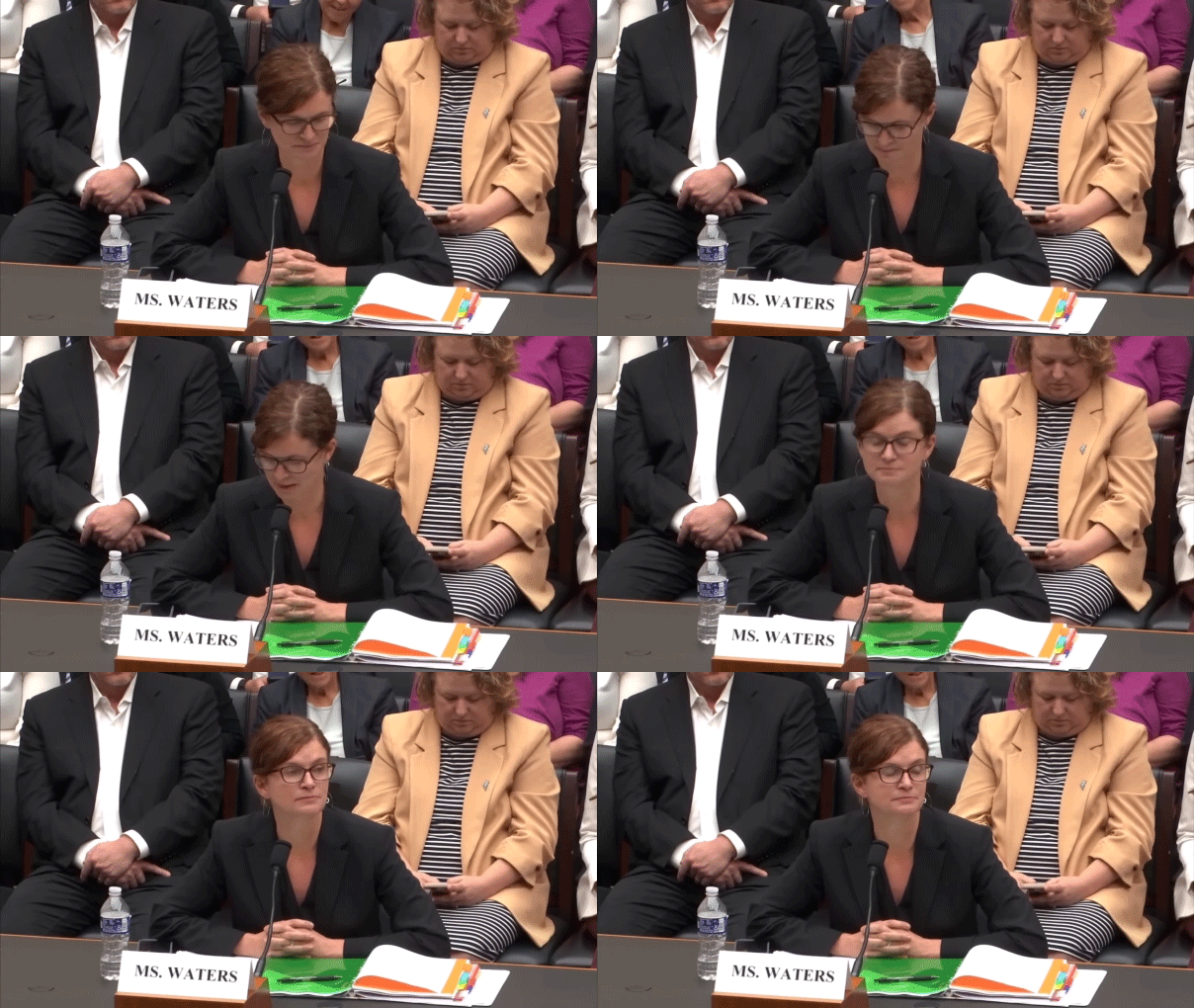
The dysfunction is not limited to floor procedure. On the same day the Rules Committee met, a House Judiciary subcommittee hearing on abortion descended into a pointed exchange that illustrated how cultural issues continue to consume bandwidth. Rep. Brandon Gill, a Texas Republican seen as a rising voice in the party, pressed Jessica Waters, a scholar at American University who studies reproductive rights, to name her “favorite” type of abortion procedure. Gill described in graphic detail the mechanics of suction abortions before Waters responded that she supports patients having access to the full range of reproductive health care. The moment spread quickly on social media, drawing praise from conservatives who viewed it as holding an advocate accountable.
The juxtaposition is striking. While one corner of the House debates the intricacies of abortion procedures in charged language, another part of the same conference is deadlocked over whether to fund the agency responsible for screening millions of passengers each week. The FISA extension, farm bill, and DHS funding measure were already difficult lifts. Now they are entangled with broader grievances over spending, surveillance powers, and the direction of the Republican conference barely four months into the new Congress.
Travel industry officials and airport operators have grown increasingly concerned. Long security lines do not merely inconvenience vacationers; they create bottlenecks that ripple through the entire aviation system. The TSA’s own warnings make clear that the loss of experienced officers cannot be reversed quickly. Training pipelines are finite, and morale has suffered after weeks of uncertainty.
For now, the immediate pressure sits on Speaker Johnson. He must find a way to deliver enough votes to prevent a floor defeat that would signal even deeper paralysis. The calendar is unforgiving. May arrives in days. World Cup preparations are accelerating. Summer travel bookings are already heavy. The question is whether the narrow politics of the House Republican conference can accommodate the operational needs of the agencies that keep daily life functioning.
The funding lapse that began in February was the result of lawmakers failing to reach agreement on baseline DHS appropriations. What started as a budgeting impasse has become a staffing emergency. If the current procedural measure collapses, the cycle could repeat. More officers could leave. Training backlogs would grow. And the consequences would land not in abstract policy debates but in the concrete experience of passengers stuck in endless checkpoint lines while the country tries to project competence on the global stage.
How the House resolves this test will reveal whether the current Republican majority can manage the basic functions of government or whether the centrifugal forces inside the conference will continue to pull policy away from the practical realities facing airports, farms, and intelligence agencies. The travelers lining up at security this summer may not follow the intricacies of Rules Committee votes or amendment disputes, but they will feel the outcome directly.
You just read Liberal's take. Want to read what actually happened?
More in Politics
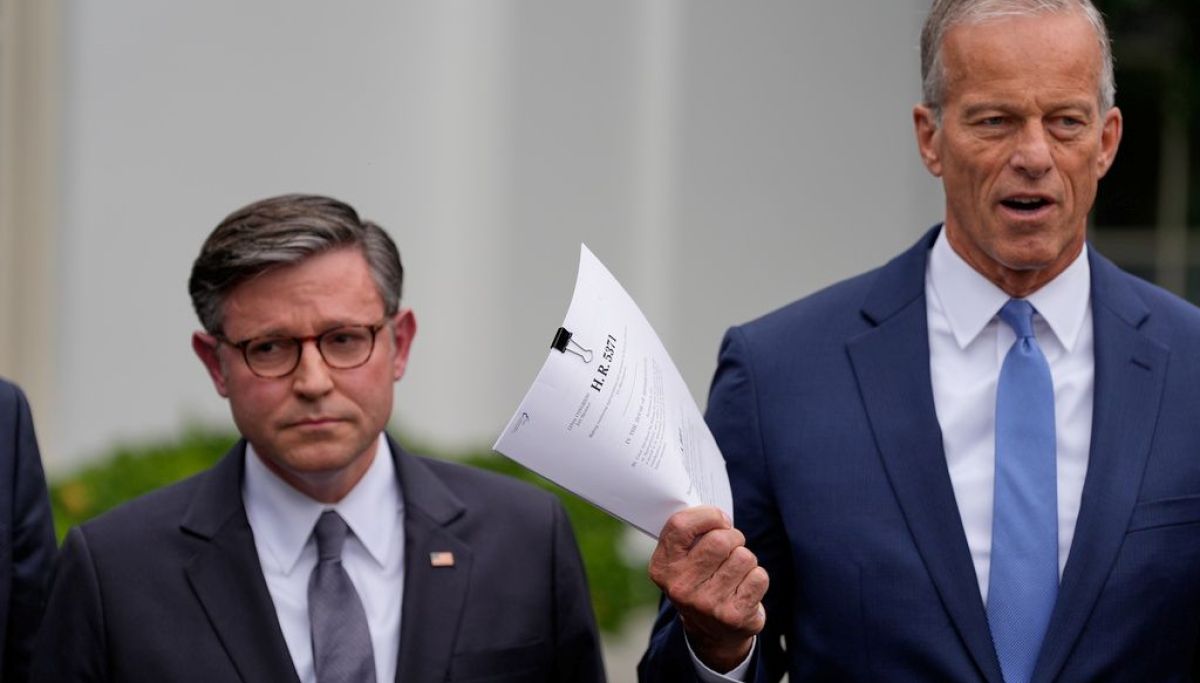
Trump at 32% Approval as Gas Prices Test GOP Midterm Hopes
NYT/Siena polling showed Trump's approval at historic lows around 32 percent with Democrats leading by double digits in key districts. Early voting has surged in battleground states.

Record Early Voting Hits Battlegrounds, Shifting Partisan Shares
AP analysis found hundreds of thousands more early ballots than in 2022 in states including Texas, Ohio, Kansas, Maine, and North Carolina, shifting partisan dynamics.
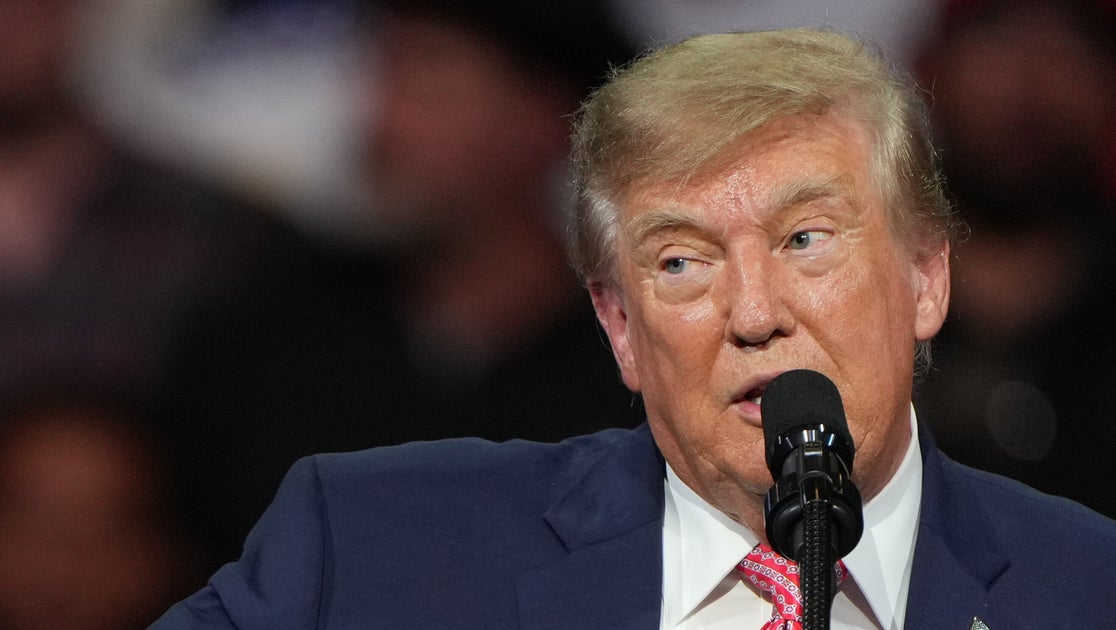
Trump Backs Marshall in Kansas Senate Race Tightened by Farm Costs
President Trump rallied in deep-red Kansas for GOP Sen. Roger Marshall in a competitive race, announcing an $8 billion farm fuel relief program amid high diesel prices. Democrats see an opening to end 94 years of GOP dominance in the state.

Trump Pauses Russia Sanctions Amid Ukraine Tensions and Missile Strikes
Trump waived sanctions on Russia and floated trilateral talks with Putin and Xi as part of ending the Ukraine war, while tensions rose with Zelenskyy over Starlink and arms. Bipartisan senators engaged Zelenskyy amid the shifts.
The Compass
You just read five takes on one story.
What's your take? Find your political shape in a few minutes.
Take the test