
Ebola Outbreak Tests US Global Health Capacity After Funding Cuts
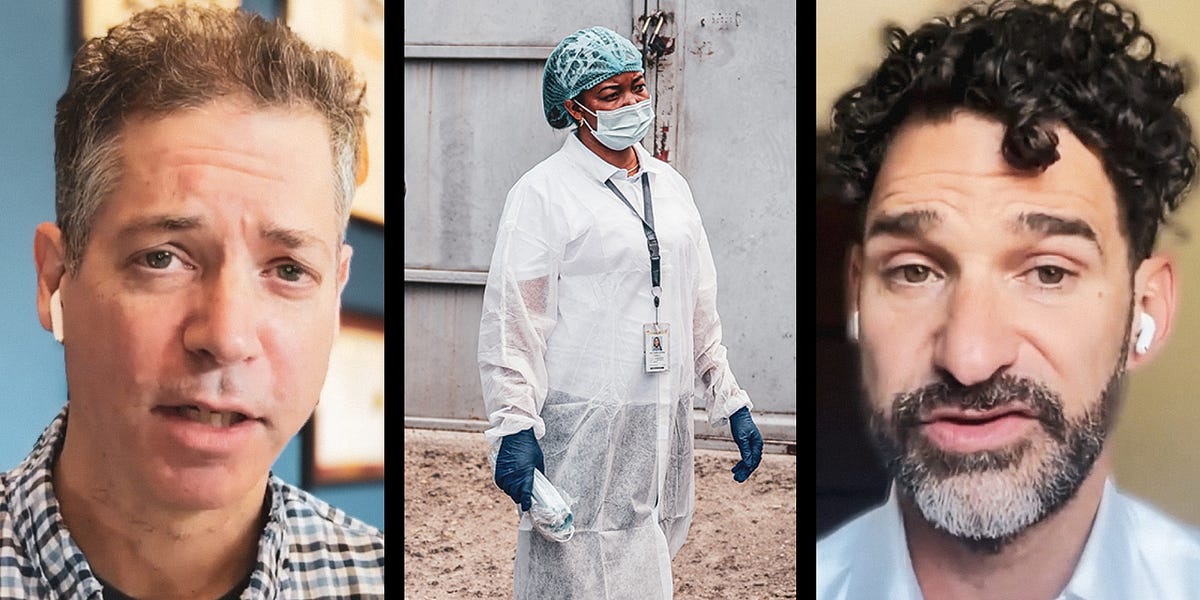
Cover image from thebulwark.com, which was analyzed for this article
Experts warn funding cuts have left the US unable to contain a new Ebola strain, with travel disruptions already occurring. The outbreak is raising alarms about reduced international health aid.
PoliticalOS
Thursday, May 21, 2026 — Politics
The outbreak has exposed real reductions in US global health infrastructure, yet the United States continues limited surveillance and treatment support on the ground. Whether these narrower efforts can substitute for earlier broad-based networks remains the central unresolved question.
What outlets missed
Most coverage omitted the specific CDC screening protocols implemented on May 18, 2026, and the administration's claim that 130 CDC personnel remain active in the region. Few outlets detailed the administration's stated rationale for restructuring USAID or exiting the WHO, such as performance reviews and funding reallocations. Little attention was given to the Africa CDC's explicit call against fear-driven travel restrictions or to the fact that African scientists had already sequenced the new strain. The range of case and death counts reported across sources was rarely reconciled.
US Withdrawal from Global Health Efforts Leaves Ebola Outbreak Unchecked in Africa
Health experts are warning that the United States is effectively standing aside as a rare and deadly strain of Ebola spreads through central Africa, with suspected cases now exceeding 480 and deaths nearing 140 across the Democratic Republic of the Congo, Uganda and potentially South Sudan. The Bundibugyo variant, which has no available vaccine or cure, was declared a public health emergency of international concern by the World Health Organization shortly after detection, bypassing the usual review process because of the evident risks in one of the world's most fragile health systems.
The outbreak appears to have gone undetected for months before surfacing in April, according to Kristian Andersen, a professor of immunology and microbiology at Scripps Research. Officials in the region report two confirmed cases and one death in Uganda, with concerns mounting over possible further spread into South Sudan. Contact tracing and basic containment measures remain the primary tools available, yet the sudden absence of longstanding American support has left local responders short of resources and coordination.
The US Agency for International Development, which had been the second-largest source of foreign assistance to the DRC, was dismantled in the past year, resulting in thousands of layoffs across US health agencies and the abrupt cancellation of scientific research programs. Matthew Kavanagh, director of the Center for Global Health Policy and Politics at Georgetown University, described the withdrawal of funding with zero notice as disruptive to even the most basic public health functions in the country. The DRC's already strained system now faces the task of managing the outbreak largely on its own.
Secretary of State Marco Rubio has publicly faulted the WHO for what he called a delayed identification of the virus. WHO Director General Tedros Adhanom Ghebreyesus responded that such comments reflect a misunderstanding of how the organization operates, noting that it provides technical support to national governments that hold primary responsibility for surveillance. Tedros emphasized that countries should prioritize proven public health steps such as tracing rather than broad travel restrictions, after the US moved this week to bar non-citizens who had been in the affected nations within the previous 21 days.
Dr. Craig Spencer, an emergency physician and Ebola survivor from the 2014 outbreak, has joined other infectious disease specialists in expressing heightened concern over this particular flare-up. The variant's characteristics and the political instability in the region combine to create conditions that could allow wider transmission if containment falters. Experts also point to planned changes at the President's Emergency Plan for AIDS Relief that would reduce the Centers for Disease Control and Prevention's role in global HIV programs as further evidence of a broader retreat from international health partnerships.
The cumulative effect of these policy shifts, according to multiple analysts, has left critical networks for rapid detection and response weakened at precisely the moment they are needed most. While the US has historically played a leading role in past Ebola responses, current efforts show little sign of comparable engagement. The result is a widening gap between the scale of the threat and the resources being mobilized to meet it.
You just read Progressive's take. Want to read what actually happened?
More in Politics

Trump at 32% Approval as Gas Prices Test GOP Midterm Hopes
NYT/Siena polling showed Trump's approval at historic lows around 32 percent with Democrats leading by double digits in key districts. Early voting has surged in battleground states.

Record Early Voting Hits Battlegrounds, Shifting Partisan Shares
AP analysis found hundreds of thousands more early ballots than in 2022 in states including Texas, Ohio, Kansas, Maine, and North Carolina, shifting partisan dynamics.

Trump Backs Marshall in Kansas Senate Race Tightened by Farm Costs
President Trump rallied in deep-red Kansas for GOP Sen. Roger Marshall in a competitive race, announcing an $8 billion farm fuel relief program amid high diesel prices. Democrats see an opening to end 94 years of GOP dominance in the state.

Trump Pauses Russia Sanctions Amid Ukraine Tensions and Missile Strikes
Trump waived sanctions on Russia and floated trilateral talks with Putin and Xi as part of ending the Ukraine war, while tensions rose with Zelenskyy over Starlink and arms. Bipartisan senators engaged Zelenskyy amid the shifts.
The Compass
You just read five takes on one story.
What's your take? Find your political shape in a few minutes.
Take the test