
Swalwell Resigns Congress After Sexual Misconduct Allegations
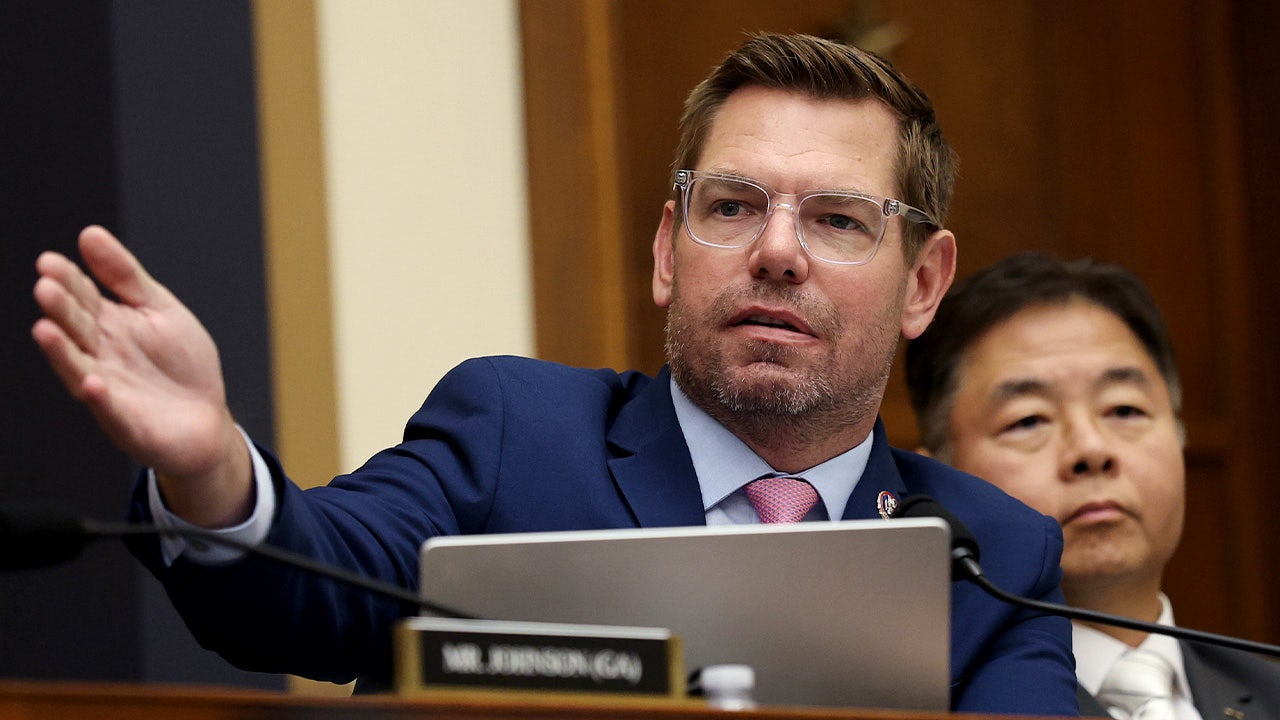
Cover image from foxnews.com, which was analyzed for this article
Accusers detailed assaults by Rep. Swalwell in a CBS interview, fearing reprisal. GOP rivals exploit the claims to question his fitness. The scandal intensifies scrutiny on his lightweight career.
PoliticalOS
Tuesday, April 14, 2026 — Politics
Multiple women have accused Rep. Eric Swalwell of sexual misconduct, prompting his rapid exit from Congress and the California governor's race in April 2026. He denies the most serious claims while acknowledging past misjudgments, and a House Ethics Committee probe is underway. The single most important reality is that long-circulating rumors became public allegations with enough political force to end a career, yet many specifics remain unverified across outlets and full evidence will emerge only through formal review.
What outlets missed
Most outlets underplayed or omitted Swalwell's explicit vow to fight the allegations with evidence, framing his exit solely as an admission rather than a contested decision. The formal opening of the House Ethics Committee probe, confirmed by AP, WTOP and Reuters, received minimal detail despite offering the primary institutional avenue for reviewed findings. Coverage also largely ignored the broader context of simultaneous expulsion discussions involving Republican members facing their own allegations, which several outlets noted only in passing. Specific claims of a Manhattan DA investigation appeared exclusively in one report and could not be independently verified. Finally, the precise mechanics of how accusers connected via an influencer and social media in just 11 days were downplayed, leaving the organic spread of the story underexplored.
Eric Swalwell Resigns From Congress as Sexual Misconduct Allegations Catch Up to a Longtime Partisan Warrior
Eric Swalwell's political career ended this week much as it was lived: in the glare of cable news, surrounded by accusations that he had long avoided. The California Democrat announced Monday he would resign his House seat and had already abandoned his bid for governor, citing a desire not to distract from his party's work. The decision came after multiple women accused him of sexual misconduct, including claims of sexual assault and sending unsolicited explicit images. Swalwell has denied the allegations, calling them false and politically timed to damage his gubernatorial prospects. Yet the accumulating accounts from former staffers and others suggest a pattern that many in Washington had heard about for years but rarely aired publicly.
Two of the accusers spoke to CBS News on Tuesday, describing a congressman who operated with a sense of impunity. Ally Sammarco, whose allegations were first reported by CNN, said Swalwell appeared to have been "pushed into a corner" and chose resignation "to save face." Annika Albrecht, coming forward publicly for the first time, was more pointed: justice would not be complete, she said, until Swalwell "can't ever harm a woman ever again" and faces consequences for those he has hurt. Both women described fear of speaking out against a sitting member of Congress. "He thought he was untouchable," Albrecht told CBS, a sentiment echoed by Cheyenne Hunt, an influencer who has also accused Swalwell of misconduct.
The charges carry particular sting because Swalwell positioned himself as one of the loudest Democratic voices demanding accountability during the Brett Kavanaugh confirmation hearings. In 2018 he repeatedly urged colleagues to "believe survivors," praising the credibility of Christine Blasey Ford and insisting that subsequent accusers deserved their stories heard. Those statements resurfaced quickly this week, underscoring the gap between the standards Swalwell applied to Republicans and the scrutiny he avoided at home. The Daily Caller noted the obvious #MeToo boomerang. Where Swalwell once tweeted that certain details could only be remembered by a survivor, he now faces his own accusers describing incidents that allegedly occurred when women were too intoxicated to consent.
The swiftness of his collapse surprised few insiders. Andrew Yang, who competed against Swalwell in the 2020 Democratic presidential primary, offered a blunt postmortem on social media. Yang described his former rival as a "lightweight" who was neither an intellect nor a deep policy thinker. He recounted how Swalwell opened his debate performance by challenging Joe Biden to "pass the torch," only to be confronted by Biden during a commercial break. Days later Swalwell dropped out. In the years that followed, Yang wrote, Swalwell became a reliable cable news presence, especially on MSNBC and CNN, delivering Democratic talking points while building his social media profile. When Biden's age became a liability in 2024 and Dean Phillips mounted a primary challenge, Swalwell was notably absent. Loyalty to the party line, Yang suggested, proved a more reliable path than courage.
That portrait aligns with a broader critique that has trailed Swalwell for years. He was never known as a legislative heavy hitter. His fame derived instead from television hits, viral social media moments, and an aggressive posture toward Republicans. The Federalist and other outlets have long portrayed him as emblematic of a certain kind of performative Democrat: quick to condemn opponents, slower to examine his own conduct. Townhall columnist Derek Hunter captured the schadenfreude on the right, writing that it was "hard not to laugh" at Swalwell's downfall. Hunter noted that journalists were now admitting they had heard stories of Swalwell's aggression and infidelity for years. The reluctance to report those accounts earlier raises familiar questions about how power, partisanship, and access shape what becomes news in Washington.
Few prominent Democrats called for Swalwell's resignation once the allegations gained traction. Rep. Andy Ogles, a Republican, floated the possibility of a quid pro quo involving expulsions on both sides of the aisle. The relative silence from Swalwell's own party stands in contrast to the aggressive posture many Democrats took toward Republican figures caught in similar scandals. That discrepancy is not merely political theater. It points to deeper institutional problems in how Congress polices its members, particularly when the accused belong to the majority party's dominant ideological faction.
Swalwell's exit creates an opening in a competitive California district and removes one of the House's more visible, if not always substantive, voices. His gubernatorial bid had already struggled; the allegations appear to have made continuation untenable. Yet the episode leaves larger questions unresolved. The two accusers who spoke to CBS expressed vindication mixed with skepticism that resignation alone constitutes justice. They want further investigation and, presumably, cultural changes that make it less risky for women to come forward against powerful men in politics.
For a Democratic Party that has spent years branding itself as uniquely committed to believing women, the Swalwell matter arrives as an uncomfortable stress test. The pattern of delayed accountability, whispered warnings ignored by journalists, and selective outrage is familiar across both parties. What distinguishes this case is how long the rumors circulated without consequence. In an era when institutions already face skepticism, the spectacle of a congressman who once lectured the country about moral clarity being forced out by the very standards he championed invites cynicism.
Swalwell leaves office insisting the claims against him are fabricated. His accusers maintain they are telling the truth about experiences that left lasting damage. The public may never receive a definitive legal resolution. What is already clear is that a political career built heavily on television performances and partisan combat could not withstand the weight of multiple women's accounts once they finally broke into daylight. The episode reveals less about one man's failings than about the durable protections that have long shielded the powerful in Washington, protections that appear to be weakening but remain far from dismantled.
You just read Liberal's take. Want to read what actually happened?
More in Politics
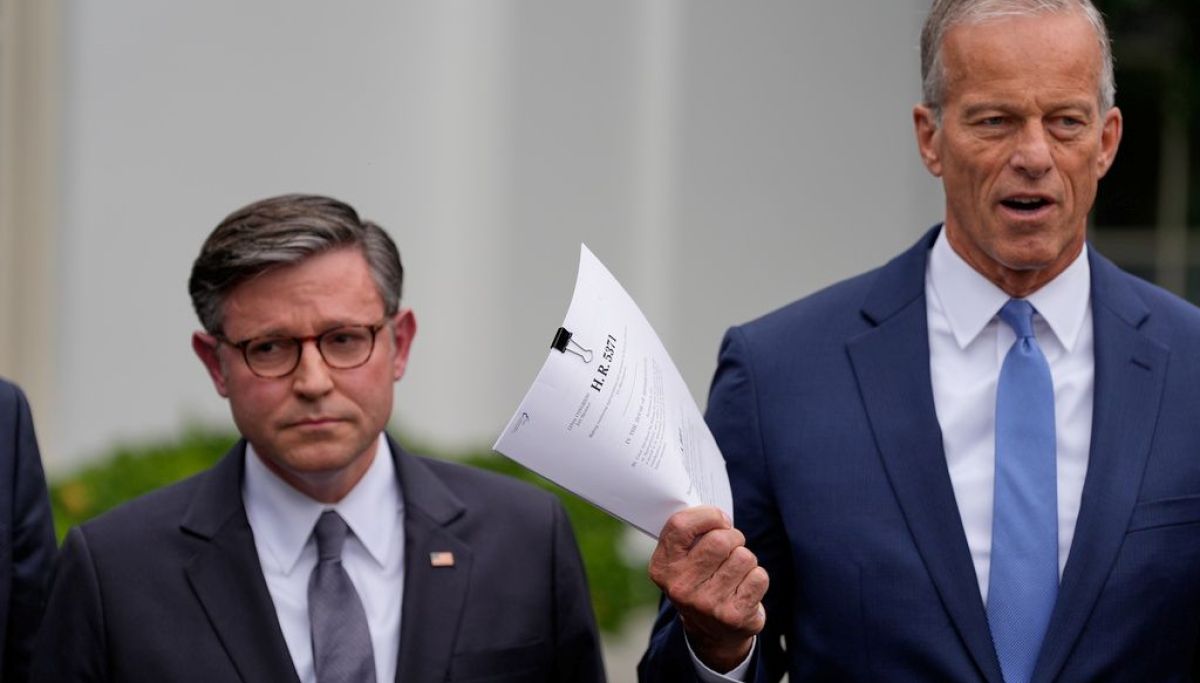
Trump at 32% Approval as Gas Prices Test GOP Midterm Hopes
NYT/Siena polling showed Trump's approval at historic lows around 32 percent with Democrats leading by double digits in key districts. Early voting has surged in battleground states.

Record Early Voting Hits Battlegrounds, Shifting Partisan Shares
AP analysis found hundreds of thousands more early ballots than in 2022 in states including Texas, Ohio, Kansas, Maine, and North Carolina, shifting partisan dynamics.
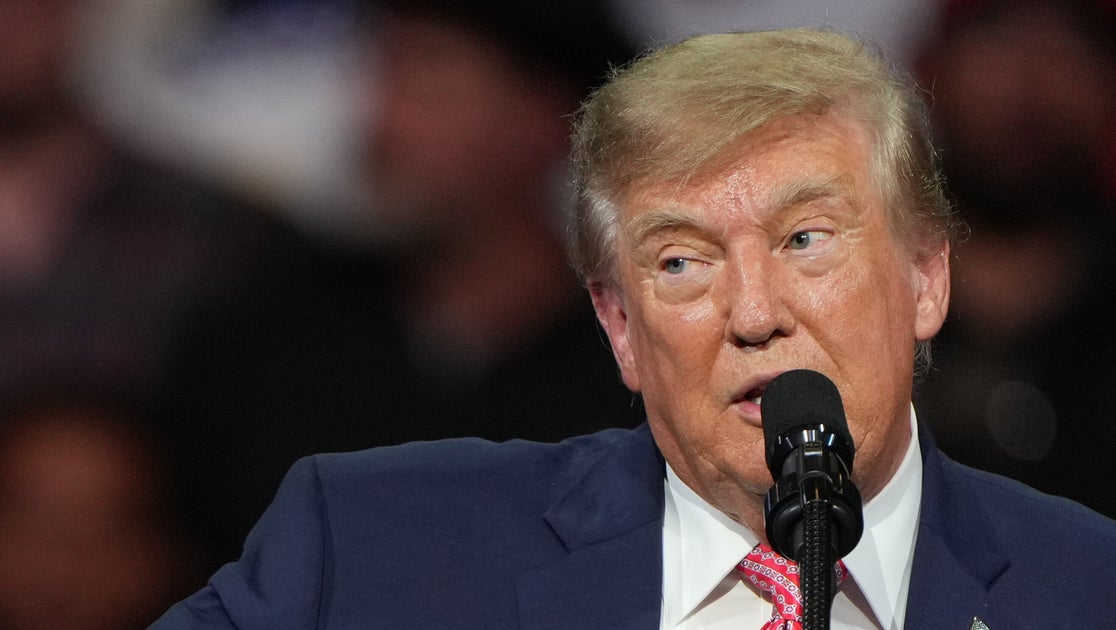
Trump Backs Marshall in Kansas Senate Race Tightened by Farm Costs
President Trump rallied in deep-red Kansas for GOP Sen. Roger Marshall in a competitive race, announcing an $8 billion farm fuel relief program amid high diesel prices. Democrats see an opening to end 94 years of GOP dominance in the state.

Trump Pauses Russia Sanctions Amid Ukraine Tensions and Missile Strikes
Trump waived sanctions on Russia and floated trilateral talks with Putin and Xi as part of ending the Ukraine war, while tensions rose with Zelenskyy over Starlink and arms. Bipartisan senators engaged Zelenskyy amid the shifts.
The Compass
You just read five takes on one story.
What's your take? Find your political shape in a few minutes.
Take the test