
New Fed Chair Warsh Holds Rates Steady, Launches Reviews
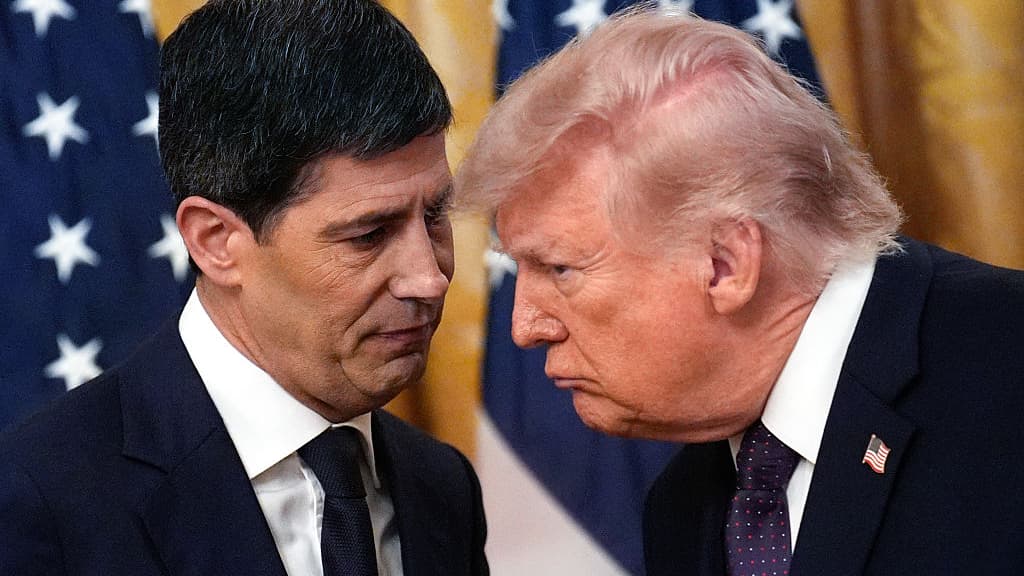
Cover image from businessinsider.com, which was analyzed for this article
New Fed Chair Kevin Warsh led his first FOMC meeting with no rate change, sending hawkish signals to markets. The session occurred amid positive market reactions to the Iran deal and shifting rate expectations.
PoliticalOS
Thursday, June 18, 2026 — Business
Warsh’s debut meeting kept rates unchanged yet shifted emphasis toward internal reviews and a firmer inflation stance, leaving markets to adjust expectations without the detailed guidance they had grown accustomed to receiving.
What outlets missed
Coverage did not independently confirm the precise scope or membership of the five task forces, leaving their potential impact on policy unverified. The role of any recent developments in the Middle East, including an Iran deal, in shaping market expectations around rates received no sourcing across the outlets. No outlet supplied data on how the shorter statement or reduced forward guidance altered trading volumes or volatility measures on the day of the announcement.
New Fed Chair Kevin Warsh Moves to Reshape Central Bank Operations
Kevin Warsh opened his tenure as Federal Reserve chair this week by holding interest rates steady while outlining an ambitious review of how the central bank makes and communicates policy. The approach marks a departure from the forward guidance that defined much of the post-2008 era and instead emphasizes internal reorganization through multiple task forces.
Warsh, a former Fed governor appointed by President Trump, told reporters after the June Federal Open Market Committee meeting that leadership changes create opportunities to reassess practices. He announced five task forces involving outside consultants that will examine monetary policy frameworks, economic forecasting, communications, use of technology including artificial intelligence, and broader operational questions. Recommendations are due by the end of the year.
The move aligns with Warsh's earlier work. In 2014 he conducted a review of transparency practices at the Bank of England that produced recommendations aimed at improving accountability without sacrificing independence. His current emphasis on process over immediate policy shifts suggests a belief that the Fed's existing tools for guiding markets may have reached diminishing returns.
Market participants had expected the new chair to ease policy more quickly. Instead, Warsh struck a firm line on inflation control and left open the possibility of future rate increases if price pressures persist. This stance appeared more hawkish than some investors anticipated from a Trump appointee, though it also reflected the committee's decision to maintain current rates amid still-elevated inflation readings.
The institutional focus carries both promise and risk. A careful reexamination of how the Fed gathers data and explains decisions could improve policy in an economy where traditional models have struggled with supply shocks and rapid technological change. At the same time, frequent public reviews of core functions can inject uncertainty into markets that already price in every nuance of Fed language. Warsh's stated goal of fewer words and more real-time information will be tested by whether the task forces ultimately produce clearer signals or simply more layers of internal deliberation.
Analysts noted that the announcement placed unusual weight on governance and structure rather than immediate monetary settings. Some described the tone as confident and leadership-oriented, while others questioned whether the scale of review reflects genuine institutional needs or the preferences of an administration inclined toward disruption across independent agencies. The Fed's legal independence remains intact, yet the chair's early agenda signals that its operating culture will face sustained scrutiny.
How these reviews translate into actual policy changes will depend on collaboration with sitting governors and staff. Past efforts to reform central bank communications succeeded when they clarified objectives without adding noise. Warsh's experiment will be judged by whether it produces a more adaptive institution or simply consumes attention that markets would prefer directed at interest rate paths.
You just read Liberal's take. Want to read what actually happened?
More in Business & Economy
Fed Raises Rates 0.25 Points to Fight Inflation Despite Trump Pushback
The Federal Reserve hiked its benchmark rate by 0.25 points in a unanimous vote, its first since 2023, to combat inflation tied to energy shocks. President Trump publicly attacked the decision and called for cuts weeks before midterms.

Stocks Rise, Oil Drops Below $104 After Fed Hike
Stocks pointed higher after the rate hike while Treasury yields eased and oil retreated below $104. Generac shares surged on a data center deal.

Treasury yields hit 19-year high as oil tops $107 on Saudi strikes
The 10-year Treasury yield reached its highest level since 2007 near 5% as oil prices climbed above $100 on Middle East tensions. Markets are pricing in Fed rate hikes and inflation concerns.

Fed rate hike odds climb as inflation lingers from energy shocks
The Federal Reserve hiked its benchmark rate by 0.25 points in a unanimous vote, its first since 2023, to combat inflation tied to energy shocks. President Trump publicly attacked the decision and called for cuts weeks before midterms.
The Compass
You just read five takes on one story.
What's your take? Find your political shape in a few minutes.
Take the test