
New Fed Chair Warsh Holds Rates Steady, Launches Reviews
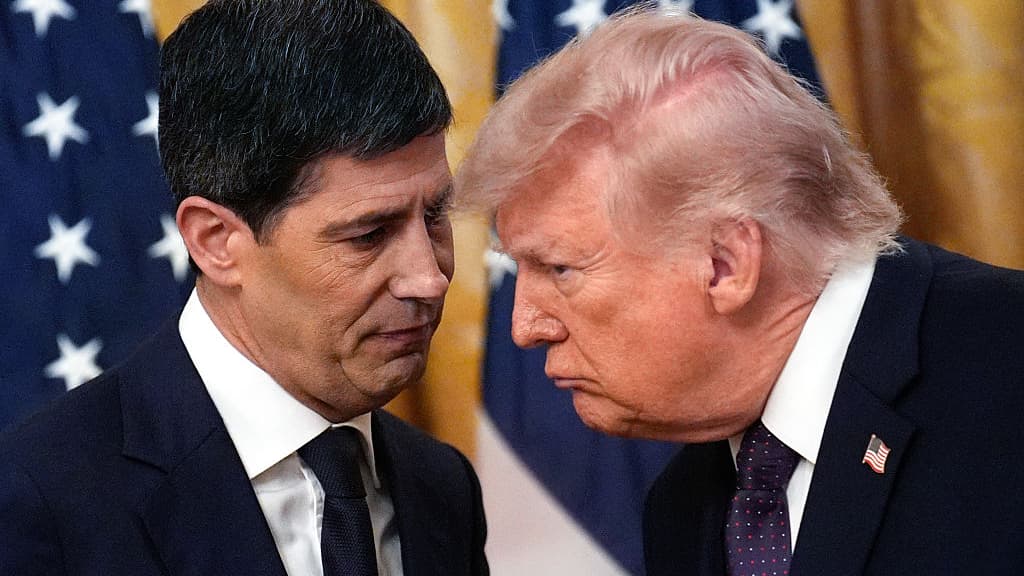
Cover image from businessinsider.com, which was analyzed for this article
New Fed Chair Kevin Warsh led his first FOMC meeting with no rate change, sending hawkish signals to markets. The session occurred amid positive market reactions to the Iran deal and shifting rate expectations.
PoliticalOS
Thursday, June 18, 2026 — Business
Warsh’s debut meeting kept rates unchanged yet shifted emphasis toward internal reviews and a firmer inflation stance, leaving markets to adjust expectations without the detailed guidance they had grown accustomed to receiving.
What outlets missed
Coverage did not independently confirm the precise scope or membership of the five task forces, leaving their potential impact on policy unverified. The role of any recent developments in the Middle East, including an Iran deal, in shaping market expectations around rates received no sourcing across the outlets. No outlet supplied data on how the shorter statement or reduced forward guidance altered trading volumes or volatility measures on the day of the announcement.
New Fed Chair Kevin Warsh Holds Rates Steady Amid Push for Sweeping Internal Changes
Kevin Warsh, President Donald Trump's handpicked successor to lead the Federal Reserve, held interest rates unchanged in his debut policy meeting this week while outlining an ambitious overhaul of how the central bank operates and communicates. The decision to keep rates steady came as Warsh struck a notably firm line on inflation, suggesting the institution's priority remains reining in price pressures rather than easing borrowing costs for households and businesses.
Warsh, a former Fed governor who has advised Trump on economic matters, used the occasion to announce the creation of five task forces drawing on outside consultants. These groups will examine the Fed's forecasting methods, its use of forward guidance, its adoption of artificial intelligence, and broader internal processes. The reviews are expected to produce recommendations by the end of the year. Officials described the effort as a routine leadership transition exercise, yet the scope of the undertaking marks a departure from the more incremental approach taken by Warsh's predecessor, Jerome Powell.
Investors had largely anticipated a dovish tilt from Trump's appointee given the administration's public pressure for lower rates. Instead, Warsh's remarks pointed to continued vigilance against inflation, a stance that aligns more closely with traditional central bank orthodoxy than with recent political demands for rapid easing. Market participants registered surprise at the tone, with some analysts noting that the emphasis on process reforms overshadowed any immediate signals about the path of monetary policy.
Warsh's background includes a 2014 review of transparency practices at the Bank of England, which produced recommendations aimed at strengthening accountability. That experience appears to inform his current focus on how the Fed explains its decisions to markets and the public. Supporters argue that such introspection could modernize an institution often criticized for opaque communication. Critics, however, question whether the timing and breadth of the reviews risk injecting unnecessary uncertainty at a moment when households continue to face elevated costs for housing, food, and other essentials.
The Fed's decision to stand pat leaves the benchmark rate in a range that has persisted for several meetings. While inflation has moderated from its post-pandemic peak, progress has been uneven, and wage gains for many workers have failed to keep pace with cumulative price increases. Warsh's remarks offered little reassurance that near-term relief is forthcoming for borrowers, even as business leaders welcomed the prospect of clearer long-term signals from the central bank.
Task force topics include potential revisions to the Fed's dot plot of rate projections and its reliance on forward guidance, tools that have shaped market expectations in recent years. Warsh indicated the reviews would draw lessons from private-sector practices without spelling out which models might be adopted. The involvement of external consultants has raised questions about the balance between fresh perspectives and the preservation of the Fed's institutional independence from political influence.
Reactions from economists and market participants have been mixed. Some praised the emphasis on updating internal operations as a necessary response to technological change. Others expressed concern that the initiative could divert attention from the core mandate of stable prices and maximum employment. With inflation still above the Fed's 2 percent target and labor market data showing signs of softening, the new leadership's choices will face early scrutiny over whose interests they ultimately serve.
You just read Progressive's take. Want to read what actually happened?
More in Business & Economy
Fed Raises Rates 0.25 Points to Fight Inflation Despite Trump Pushback
The Federal Reserve hiked its benchmark rate by 0.25 points in a unanimous vote, its first since 2023, to combat inflation tied to energy shocks. President Trump publicly attacked the decision and called for cuts weeks before midterms.

Stocks Rise, Oil Drops Below $104 After Fed Hike
Stocks pointed higher after the rate hike while Treasury yields eased and oil retreated below $104. Generac shares surged on a data center deal.

Treasury yields hit 19-year high as oil tops $107 on Saudi strikes
The 10-year Treasury yield reached its highest level since 2007 near 5% as oil prices climbed above $100 on Middle East tensions. Markets are pricing in Fed rate hikes and inflation concerns.

Fed rate hike odds climb as inflation lingers from energy shocks
The Federal Reserve hiked its benchmark rate by 0.25 points in a unanimous vote, its first since 2023, to combat inflation tied to energy shocks. President Trump publicly attacked the decision and called for cuts weeks before midterms.
The Compass
You just read five takes on one story.
What's your take? Find your political shape in a few minutes.
Take the test