
Johnson Unveils 3-Year FISA 702 Plan as April 30 Deadline Looms

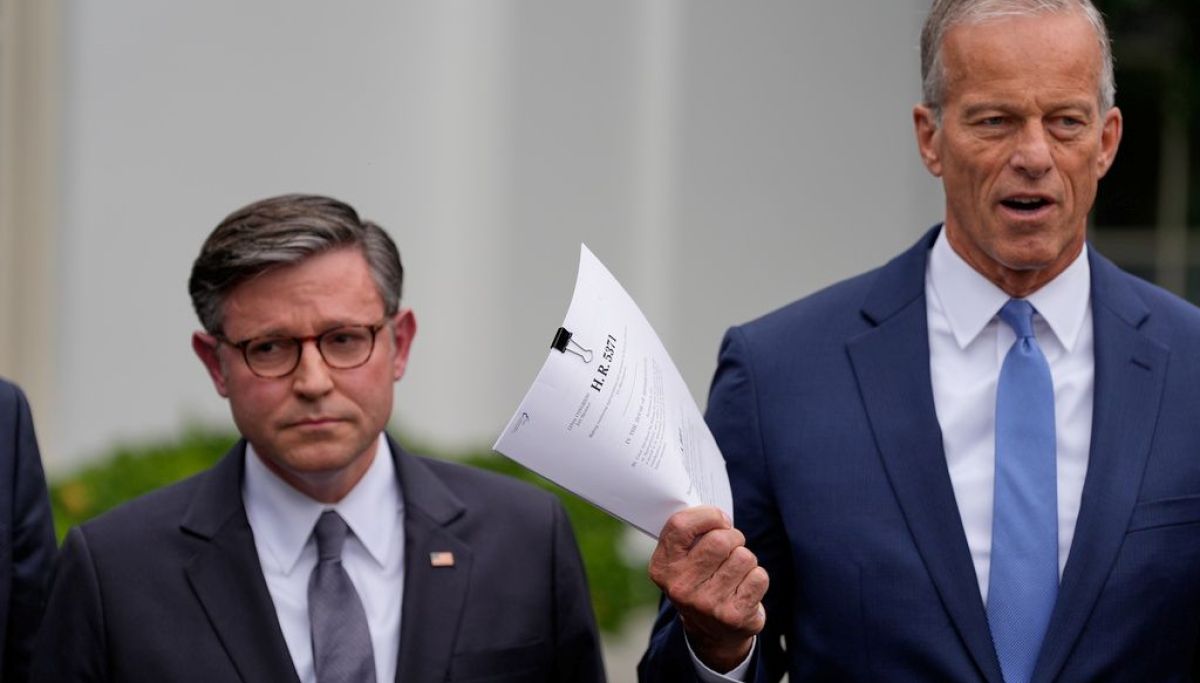
Cover image from thedispatch.com, which was analyzed for this article
After failed votes, Speaker Johnson offers fresh bill to renew surveillance powers by April 30 deadline. GOP battles over curbing abuses in Section 702 persist. Privacy vs security debate heats up.
PoliticalOS
Friday, April 24, 2026 — Politics
Congress must decide by April 30 whether to renew Section 702 with only modest oversight additions or insist on a warrant requirement for queries of Americans' incidentally collected communications. The program has produced both clear national security value according to intelligence officials and repeated FBI compliance violations according to court records. Readers should weigh both sides of that ledger rather than accept any single outlet's emphasis on dysfunction, privacy or threat prevention.
What outlets missed
Most coverage underplayed the scale of the program's documented successes. Annual ODNI assessments credit Section 702 with contributing intelligence that helped disrupt terrorist financing, weapons transfers and planned attacks, though specific counts remain classified and are presented by officials seeking renewal. Coverage also gave little attention to 2024 legislative changes that added FBI query restrictions, mandatory training and outside amici for the FISA Court; these reforms coincided with reported drops in non-compliant searches according to DOJ oversight summaries. Finally, the precise volume of incidental U.S. person collection is not public, yet estimates derived from declassified sampling suggest it affects communications involving hundreds of thousands of foreign targets each year, a context that clarifies both the privacy stakes and the intelligence value without appearing in most reporting.
Mike Johnson Proposes Renewal of Surveillance Powers Despite Privacy Concerns and Recent Setbacks
Speaker Mike Johnson has introduced a new bill to extend Section 702 of the Foreign Intelligence Surveillance Act for five years, a move that comes after two failed votes earlier this month and as the program faces expiration at the end of April. The proposal, released Thursday, closely mirrors earlier versions that could not secure enough support in the House, reflecting the deep tensions within the Republican Party and broader Congress over how to balance national security needs with protections for American citizens' privacy.
Section 702, first enacted in 2008, authorizes intelligence agencies to collect the electronic communications of non-U.S. persons located outside the country. Proponents argue it is a critical tool for tracking terrorists, foreign adversaries and other national security threats. The program has been credited with providing intelligence that has thwarted plots and informed major foreign policy decisions. Yet it has long drawn criticism because it inevitably sweeps up communications involving Americans who are in contact with the roughly 350,000 foreign targets selected each year. Once collected, that data resides in government databases that law enforcement and intelligence officials can search without a warrant in many circumstances.
This "backdoor" access has become the central point of contention. Privacy advocates from both parties have pushed for reforms requiring officials to obtain a court warrant before querying the database for information on U.S. persons, except in true emergencies. They argue that the current system invites abuse, allowing the FBI and other agencies to conduct what amount to warrantless searches of Americans' emails, texts and calls. A 2023 report from the Privacy and Civil Liberties Oversight Board, an independent executive branch watchdog, highlighted these risks, noting that "U.S. person queries and batch queries" pose significant civil liberties concerns and that surveillance can extend "upstream" from nominal foreign targets in ways that pull in even more domestic data.
The board's findings echoed years of documented incidents in which officials improperly searched the database for information on journalists, political figures, protesters and ordinary Americans. Civil liberties groups and some lawmakers contend these practices erode Fourth Amendment protections and undermine public trust in intelligence institutions. Yet defenders, including officials from both the Biden and Trump administrations, counter that adding a warrant requirement would create dangerous friction. They say it could slow responses to urgent threats and that the volume of queries makes individualized court approval impractical. In the current proposal, Johnson appears to have sided with that view, offering only modest changes from the version that failed in overnight votes earlier this month.
The politics surrounding the issue are particularly striking given Republican control of both chambers of Congress and the White House. President Trump, who once criticized expansive surveillance powers during his first term and campaign, has reversed course and now supports a clean or minimally altered renewal. That shift has not quelled opposition from a coalition of libertarian-leaning Republicans and progressive Democrats who have formed an unusual alliance on the issue. The temporary extension of the program until April 30 bought lawmakers time, but the narrow votes and continued resistance suggest that securing final passage will require significant negotiation or procedural maneuvering.
Johnson's latest effort underscores the institutional challenges of reforming complex national security authorities. For nearly two decades, Congress has repeatedly reauthorized Section 702 with only incremental adjustments, even as technology has evolved and the scale of data collection has grown exponentially. The program's defenders point to oversight mechanisms already in place, including FISA Court review of targeting procedures and periodic congressional briefings. Critics respond that those safeguards have proven insufficient, citing internal audits that revealed thousands of improper queries, including some tied to domestic political controversies.
The debate also reveals broader fractures in American governance. One faction within the GOP prioritizes aggressive intelligence gathering and views privacy reforms as naive or dangerous in an era of heightened threats from China, Russia and terrorist networks. Another, influenced by post-Snowden skepticism and a distrust of federal agencies, sees unchecked surveillance as a threat to constitutional liberties that could be turned against domestic opponents. Democrats are similarly divided, with national security veterans wary of changes that might weaken tools they once championed, while newer and more progressive members demand stronger guardrails.
As the April 30 deadline approaches, the stakes extend beyond the specific provisions of Johnson's bill. Failure to renew Section 702 could create intelligence gaps at a moment when global instability is rising. Yet approving it without meaningful reform would represent another missed opportunity to adapt Cold War-era authorities to the realities of digital communication and to address documented overreach. The Privacy and Civil Liberties Oversight Board has recommended tighter controls on queries, more transparency and limits on how incidentally collected American data can be used in ordinary criminal investigations.
Whether Johnson's revised plan can overcome the obstacles that sank its predecessors remains uncertain. House leadership will likely need to navigate amendments, hold difficult whip counts and possibly seek Democratic votes to bridge internal GOP divisions. The outcome will signal how Congress weighs the trade-offs between security and liberty at a time when trust in institutions is low and technological surveillance capabilities continue to expand. For now, the proposal keeps the debate alive, forcing lawmakers to confront once again whether the government's vast data-collection powers serve the public interest or risk undermining the very rights they are meant to protect.
You just read Liberal's take. Want to read what actually happened?
More in Politics
Trump at 32% Approval as Gas Prices Test GOP Midterm Hopes
NYT/Siena polling showed Trump's approval at historic lows around 32 percent with Democrats leading by double digits in key districts. Early voting has surged in battleground states.

Record Early Voting Hits Battlegrounds, Shifting Partisan Shares
AP analysis found hundreds of thousands more early ballots than in 2022 in states including Texas, Ohio, Kansas, Maine, and North Carolina, shifting partisan dynamics.
Trump Backs Marshall in Kansas Senate Race Tightened by Farm Costs
President Trump rallied in deep-red Kansas for GOP Sen. Roger Marshall in a competitive race, announcing an $8 billion farm fuel relief program amid high diesel prices. Democrats see an opening to end 94 years of GOP dominance in the state.

Trump Pauses Russia Sanctions Amid Ukraine Tensions and Missile Strikes
Trump waived sanctions on Russia and floated trilateral talks with Putin and Xi as part of ending the Ukraine war, while tensions rose with Zelenskyy over Starlink and arms. Bipartisan senators engaged Zelenskyy amid the shifts.
The Compass
You just read five takes on one story.
What's your take? Find your political shape in a few minutes.
Take the test