
Florida Approves GOP-Leaning Map as SCOTUS Ruling Reshapes Redistricting
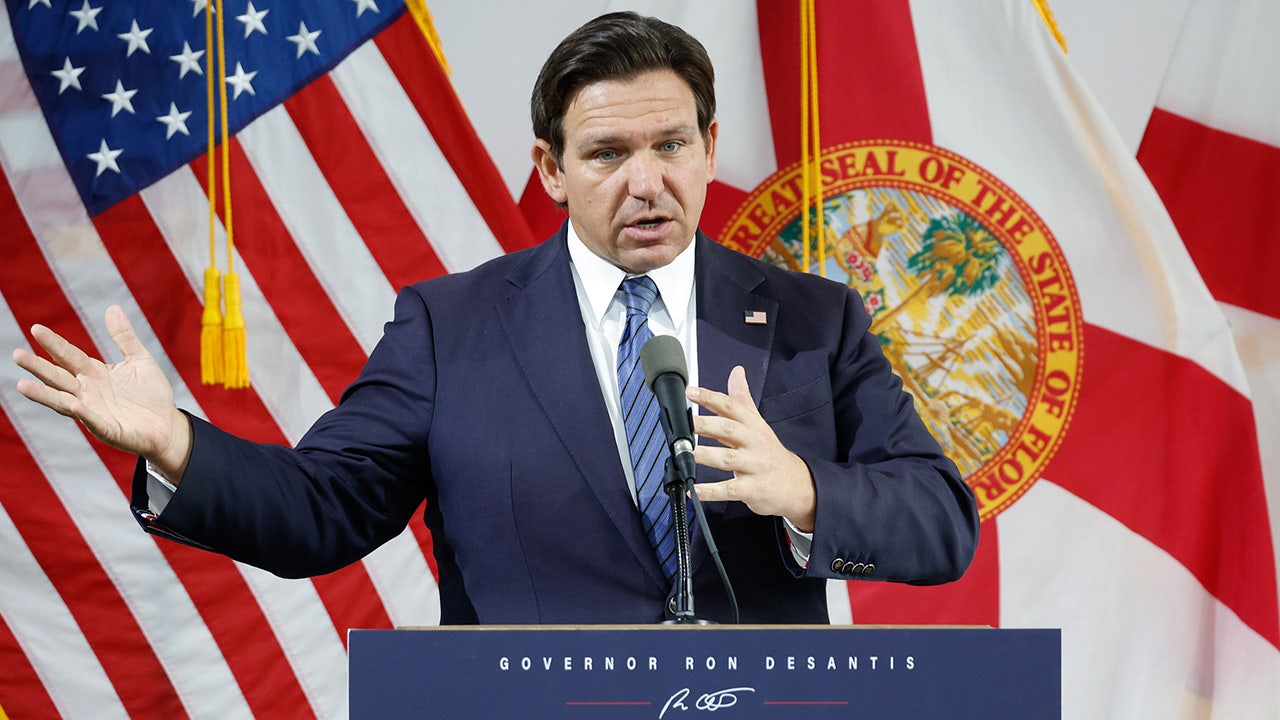
Cover image from foxnews.com, which was analyzed for this article
Florida lawmakers approved a new congressional voting map poised to help Republicans secure additional House seats, leveraging the Supreme Court's recent Voting Rights Act decision. The move boosts DeSantis' redistricting efforts and aligns with potential GOP gains nationwide. Democrats express regret over prior independent commissions now vulnerable.
PoliticalOS
Thursday, April 30, 2026 — Politics
The Supreme Court's narrowing of race-conscious districting under the Voting Rights Act has removed a significant constraint on mapmakers, prompting an immediate wave of partisan redistricting that Florida has now joined. Both parties are exploiting the opening, meaning the story is less about one-sided suppression than a mutual escalation with uncertain effects on minority representation and House balance. The single most important reality is that legal standards for drawing districts have changed, and the resulting maps will face further court tests before the 2026 elections settle the matter.
What outlets missed
Most outlets underplayed the procedural reality that mid-decade redistricting absent new census data has historically invited legal skepticism, yet both parties are now pursuing it aggressively with uncertain court outcomes. Coverage also gave limited attention to Democratic regrets over independent redistricting commissions created after 2010 abuses; several blue states are now moving to bypass or eliminate those commissions to enable their own partisan maps. The precise mechanics of the Supreme Court opinion, which struck down one specific Louisiana map as an unconstitutional racial gerrymander while leaving parts of Section 2 intact, received uneven treatment, with some reports framing the entire decision as eliminating minority protections rather than rebalancing constitutional considerations. Finally, few noted that Black voters and candidates were among those challenging the Louisiana map at issue, complicating the narrative of a simple partisan or racial divide.
Supreme Court Acknowledges Voting Rights Act Success as Florida Advances Colorblind Redistricting
The Supreme Court delivered a significant ruling Wednesday that recognizes the Voting Rights Act of 1965 has largely achieved its core objectives of securing equal access to the ballot box. In a 6-3 decision written by Justice Samuel Alito, the conservative majority concluded that dramatic improvements in Black voter registration and participation rates mean the law no longer requires the same level of race-conscious interventions it once did. This acknowledgment of social progress comes as states pursue new congressional maps that prioritize traditional redistricting criteria over racial balancing.
The decision effectively limits how heavily states must weigh race when drawing district lines to guarantee minority voters can elect candidates of their choice. Alito noted the "vast social change" that has transformed the South and the nation since the Jim Crow era, when the Voting Rights Act was passed amid widespread and often violent suppression of Black voters. What was once a remedy for "insidious and pervasive evil," as earlier courts described it, has succeeded so thoroughly that Black Americans now register and vote at rates comparable to the rest of the electorate. The majority suggested the law has become a victim of its own effectiveness, a perspective that aligns with long-standing arguments that perpetual racial preferences can outlive the problems they were meant to solve.
The ruling arrives at a pivotal moment in a nationwide redistricting battle. Florida Gov. Ron DeSantis this week proposed a new congressional map that could net Republicans four additional seats in the 2026 midterms if approved by the state legislature. The proposal has drawn strong backing from Rep. Byron Donalds, a rising Florida Republican widely viewed as a potential successor to DeSantis in the governor's mansion. Donalds told Fox News Digital that DeSantis "is doing the right thing" and that he fully supports the effort to create maps that better reflect voter preferences without artificial racial engineering.
Donalds dismissed criticism from Democrats, including House Minority Leader Hakeem Jeffries and California Gov. Gavin Newsom. "I don't listen to Hakeem. He's a fake tough guy," Donalds said. "I'm not listening to Gavin. He's a terrible governor, worst in the country." Newsom had expressed hope that Florida's moves would mark the end of aggressive partisan redistricting efforts across states. Jeffries warned that DeSantis's approach might ultimately jeopardize some Republican-held seats. Donalds indicated such concerns would not influence the process.
The Florida effort is part of a broader push encouraged by President Donald Trump. Several states with Republican-led legislatures are examining ways to redraw boundaries following the court's guidance. Analysts suggest the decision could allow Republicans to gain as many as a dozen additional House seats by 2028 through conventional map-drawing that does not subordinate all other factors to racial demographics. This prospect has alarmed Democrats, who argue the changes could reduce Black representation in Congress.
Rep. Sanford Bishop of Georgia, whose district includes a substantial Black population, described the situation as being dealt a difficult hand that must now be played. Harvard law professor Nicholas Stephanopoulos predicted the ruling could produce the largest decline in minority officeholders since Reconstruction. Current data shows the House began this term with 66 Black members, the most diverse Congress in history according to Pew Research Center statistics.
Yet the Supreme Court's opinion pushes back against the notion that racial gerrymandering must remain a permanent feature of American elections. The Voting Rights Act dramatically expanded Black and Hispanic political participation after its passage and 1982 amendments. Registration gaps that once defined Southern politics have narrowed or disappeared in many jurisdictions. The majority's view treats this convergence as evidence of success rather than a signal for endless recalibration of district lines to ensure predetermined racial outcomes.
Critics on the left have framed the decision as a retreat from civil rights protections. The New York Times characterized it as dealing a "coup de grâce" to a landmark achievement of the civil rights movement. The Washington Post described it as inflaming partisan warfare over maps and potentially delivering a windfall of House seats to Republicans. Dissenting justices argued that Congress, not the court, should decide when the law's provisions are no longer necessary.
The practical effect of the ruling will unfold over the coming redistricting cycles. States now have greater flexibility to draw compact districts that respect communities of interest, county lines, and partisan voting patterns without fear that every map must maximize the number of majority-minority districts. In Florida, DeSantis's proposed map appears designed to capitalize on this latitude by creating boundaries that more accurately reflect the state's overall political composition.
Supporters of the changes contend that assuming minority voters require specially crafted districts to have their voices heard carries its own condescending implications. They point to the steady rise in Black elected officials since 1965 as proof that the system has corrected many of its former distortions. Donalds, himself a Black Republican representing a southwest Florida district, embodies the expanding range of political expression among minority voters that the original act helped make possible.
Democrats have signaled they will challenge new maps in court and attempt to mobilize voters around claims of diminished representation. Whether those arguments gain traction after the Supreme Court's clear statement on progress remains uncertain. What is clear is that the legal landscape has shifted toward greater deference to states in determining how best to translate ballots into fair representation.
The decision does not eliminate all protections against intentional discrimination. It simply recognizes that the extraordinary measures justified by the brutal realities of 1965 no longer match the electoral landscape of 2026. As more states follow Florida's lead in adjusting their congressional boundaries, the debate will center on whether maps should reflect current voter behavior or continue enforcing racial quotas conceived under vastly different historical conditions. The Supreme Court has cast its vote for the former, grounding its reasoning in the measurable advances the Voting Rights Act itself produced.
You just read Conservative's take. Want to read what actually happened?
More in Politics

Trump Defends Ramaswamy Ad Using Estranged Mother in Ohio Race
President Trump defended a GOP nominee's ad featuring a Democratic opponent's estranged mother, calling it powerful, while drawing criticism from some Republicans including Ohio Gov. Mike DeWine. The ad has sparked internal GOP tensions ahead of midterms.

Federal Raid Targets Omar Amid Unresolved Name and Marriage Allegations
Agents searched Rep. Ilhan Omar's DC residence over immigration fraud allegations; she called it bizarre. Reports and commentary questioned her birth name and past marriage details.

Supreme Court Upholds New Hampshire Student ID Voting Ban
The Supreme Court upheld New Hampshire's ban on student IDs as valid voter identification just before midterms, affecting a tight Senate race.
Early Voting Hits 21 Million as Most Trust Midterm Accuracy
Millions have already voted early as parties make final appeals amid $1.4 billion in ad spending; polls show confidence in election accuracy.
The Compass
You just read five takes on one story.
What's your take? Find your political shape in a few minutes.
Take the test