
Florida Approves GOP-Leaning Map as SCOTUS Ruling Reshapes Redistricting
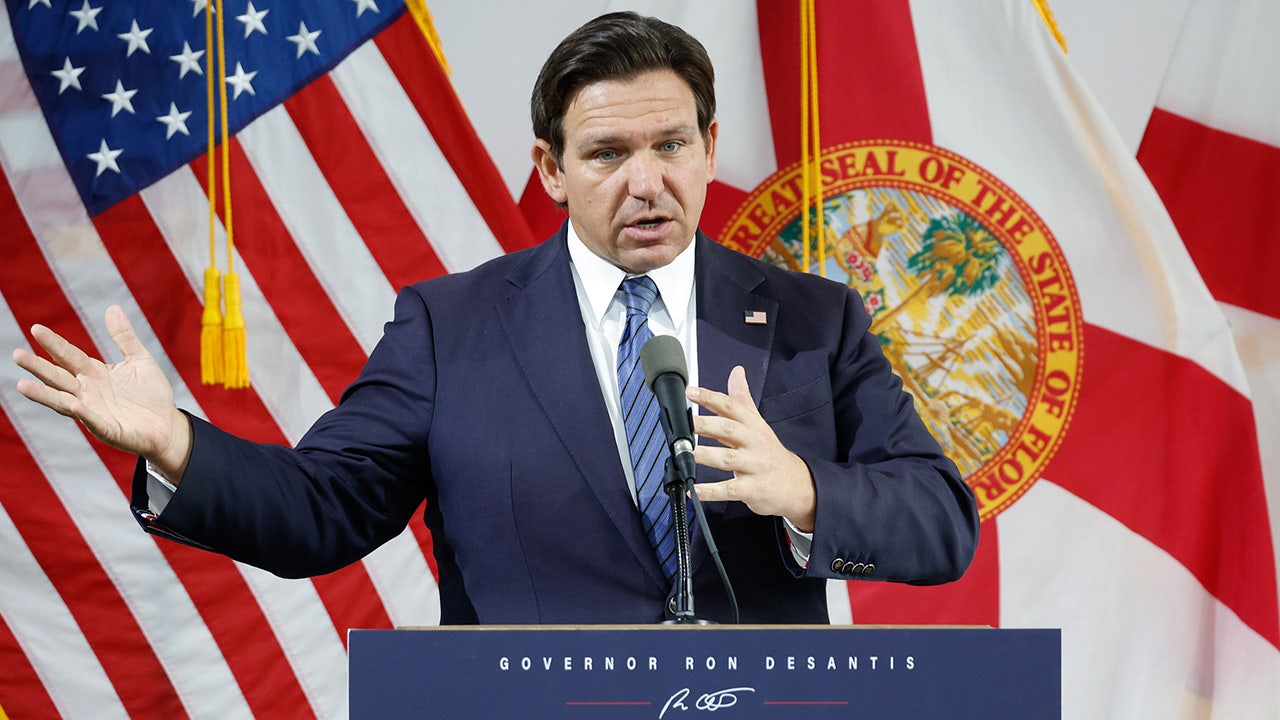
Cover image from foxnews.com, which was analyzed for this article
Florida lawmakers approved a new congressional voting map poised to help Republicans secure additional House seats, leveraging the Supreme Court's recent Voting Rights Act decision. The move boosts DeSantis' redistricting efforts and aligns with potential GOP gains nationwide. Democrats express regret over prior independent commissions now vulnerable.
PoliticalOS
Thursday, April 30, 2026 — Politics
The Supreme Court's narrowing of race-conscious districting under the Voting Rights Act has removed a significant constraint on mapmakers, prompting an immediate wave of partisan redistricting that Florida has now joined. Both parties are exploiting the opening, meaning the story is less about one-sided suppression than a mutual escalation with uncertain effects on minority representation and House balance. The single most important reality is that legal standards for drawing districts have changed, and the resulting maps will face further court tests before the 2026 elections settle the matter.
What outlets missed
Most outlets underplayed the procedural reality that mid-decade redistricting absent new census data has historically invited legal skepticism, yet both parties are now pursuing it aggressively with uncertain court outcomes. Coverage also gave limited attention to Democratic regrets over independent redistricting commissions created after 2010 abuses; several blue states are now moving to bypass or eliminate those commissions to enable their own partisan maps. The precise mechanics of the Supreme Court opinion, which struck down one specific Louisiana map as an unconstitutional racial gerrymander while leaving parts of Section 2 intact, received uneven treatment, with some reports framing the entire decision as eliminating minority protections rather than rebalancing constitutional considerations. Finally, few noted that Black voters and candidates were among those challenging the Louisiana map at issue, complicating the narrative of a simple partisan or racial divide.
Supreme Court Weakens Voting Rights Act Clearing Path for Republican Power Grab
The Supreme Court delivered a sweeping blow to the Voting Rights Act on Wednesday in a ruling that conservatives hailed as recognition of racial progress but that critics say will accelerate a Republican campaign to dilute minority voting power and lock in congressional majorities for years to come. The 6-3 decision sharply limits how race can be considered in drawing congressional maps, handing GOP-led states new tools to dismantle districts where Black and Latino voters have long elected candidates of their choice.
Justice Samuel Alito, writing for the conservative majority, portrayed the landmark 1965 law as a victim of its own success. He argued that the Voting Rights Act had largely eradicated the “insidious and pervasive evil” of racial discrimination in voting, particularly in the South, and that Black voter registration and turnout now roughly match those of white Americans. The law, Alito suggested, had outlived its purpose. Dissenting justices pushed back forcefully, arguing that Congress, not the courts, should decide when a statute designed to protect democracy has run its course.
The practical impact could be enormous. Legal scholars and voting rights advocates warn the ruling will trigger a new wave of aggressive redistricting that breaks up majority-Black and Hispanic districts in favor of maps engineered for partisan Republican advantage. Harvard law professor Nicholas Stephanopoulos called it potentially the largest drop in minority representation in Congress since the end of Reconstruction. At the start of the current term the House had 66 Black members, the most diverse Congress in history. That progress now stands at immediate risk.
The decision lands amid an already heated national redistricting fight. In Florida, Governor Ron DeSantis this week unveiled a new congressional map that could net Republicans four additional seats ahead of the 2026 midterms. If the Republican-controlled state legislature approves it and DeSantis signs it into law, the map would further consolidate GOP power in a state with a rapidly growing and diversifying electorate. The move has drawn sharp condemnation from Democrats who see it as the latest example of map-drawing used as a weapon against communities of color.
Rep. Byron Donalds, a Florida Republican and potential successor to DeSantis in the 2026 gubernatorial race, offered unqualified support. “Governor DeSantis is doing the right thing,” Donalds told Fox News. He dismissed criticism from House Minority Leader Hakeem Jeffries and California Governor Gavin Newsom, calling Jeffries a “fake tough guy” and Newsom the “worst” governor in the country. Donalds said he was uninterested in Democratic warnings that such maneuvers could ultimately backfire.
Democrats and voting rights organizations counter that the Supreme Court has now removed a critical guardrail precisely when it is most needed. The Voting Rights Act, secured through the blood and courage of civil rights activists in Selma and elsewhere, dramatically expanded Black and Latino representation at every level of government after decades of Jim Crow suppression. By constraining the law’s ability to prevent the intentional dilution of minority voting strength, the court has effectively invited state legislatures to engage in what amounts to sophisticated racial gerrymandering under the cover of partisan line-drawing.
The timing is especially damaging for Democrats. While Republicans may not be able to fully exploit the ruling before this fall’s midterms, the decision clears the runway for more dramatic changes before the 2028 elections. Analysts project Republicans could pick up a dozen or more seats nationwide by cracking apart districts that have reliably sent Black Democrats to Washington. Rep. Sanford Bishop of Georgia, whose district could be endangered, captured the mood among many Black lawmakers: “We’ve been dealt a bad hand. We’ve got to play the hand we’re dealt.”
The ruling also inflames broader tensions over democracy and representation. For years Republicans have pursued aggressive redistricting strategies, often defended in court as legitimate exercises in partisan advantage. Democrats have responded with their own map-drawing in states they control, but the scale and the legal backdrop have shifted dramatically with the court’s intervention. Where previous Voting Rights Act precedent required states to avoid diluting minority voting blocs, the new decision gives legislatures far more latitude to prioritize partisan outcomes even when those outcomes predictably reduce Black and Latino influence.
Civil rights leaders expressed dismay that a law once considered the crown jewel of the civil rights movement could be so narrowly construed at a moment when voting restrictions and partisan map manipulation remain live political weapons. The conservative majority’s insistence that racism in voting is largely a relic of the past stands in stark contrast to the experiences of organizers on the ground who continue to fight voter suppression efforts, strict identification laws, and aggressive purges of voter rolls that disproportionately affect communities of color.
Florida’s move under DeSantis now serves as an early test case for how far Republicans intend to push their advantage. Donalds’ enthusiastic endorsement signals that the party views these maneuvers not as controversial power plays but as necessary corrections. Democrats, meanwhile, are framing the Supreme Court decision as the latest chapter in a long conservative project to shrink the electorate that has historically opposed them.
What comes next will play out in statehouses across the country as legislatures redraw maps under the new legal landscape. For millions of Black and Latino voters, the promise of equal representation that the Voting Rights Act once secured now feels more fragile than at any time in the last half-century. The court has spoken. Whether Congress will act to restore stronger protections, as the dissenters urged, remains an open and deeply partisan question.
You just read Progressive's take. Want to read what actually happened?
More in Politics
Trump at 32% Approval as Gas Prices Test GOP Midterm Hopes
NYT/Siena polling showed Trump's approval at historic lows around 32 percent with Democrats leading by double digits in key districts. Early voting has surged in battleground states.

Record Early Voting Hits Battlegrounds, Shifting Partisan Shares
AP analysis found hundreds of thousands more early ballots than in 2022 in states including Texas, Ohio, Kansas, Maine, and North Carolina, shifting partisan dynamics.
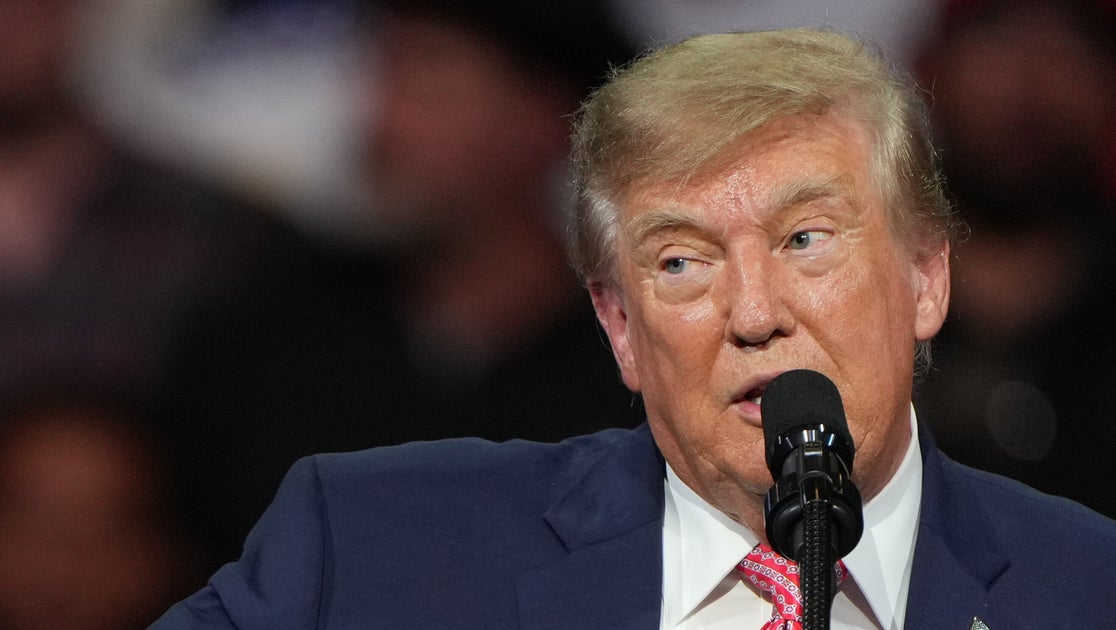
Trump Backs Marshall in Kansas Senate Race Tightened by Farm Costs
President Trump rallied in deep-red Kansas for GOP Sen. Roger Marshall in a competitive race, announcing an $8 billion farm fuel relief program amid high diesel prices. Democrats see an opening to end 94 years of GOP dominance in the state.

Trump Pauses Russia Sanctions Amid Ukraine Tensions and Missile Strikes
Trump waived sanctions on Russia and floated trilateral talks with Putin and Xi as part of ending the Ukraine war, while tensions rose with Zelenskyy over Starlink and arms. Bipartisan senators engaged Zelenskyy amid the shifts.
The Compass
You just read five takes on one story.
What's your take? Find your political shape in a few minutes.
Take the test