
G7 Summit Tests Trump Ties With Allies Over Iran, Ukraine
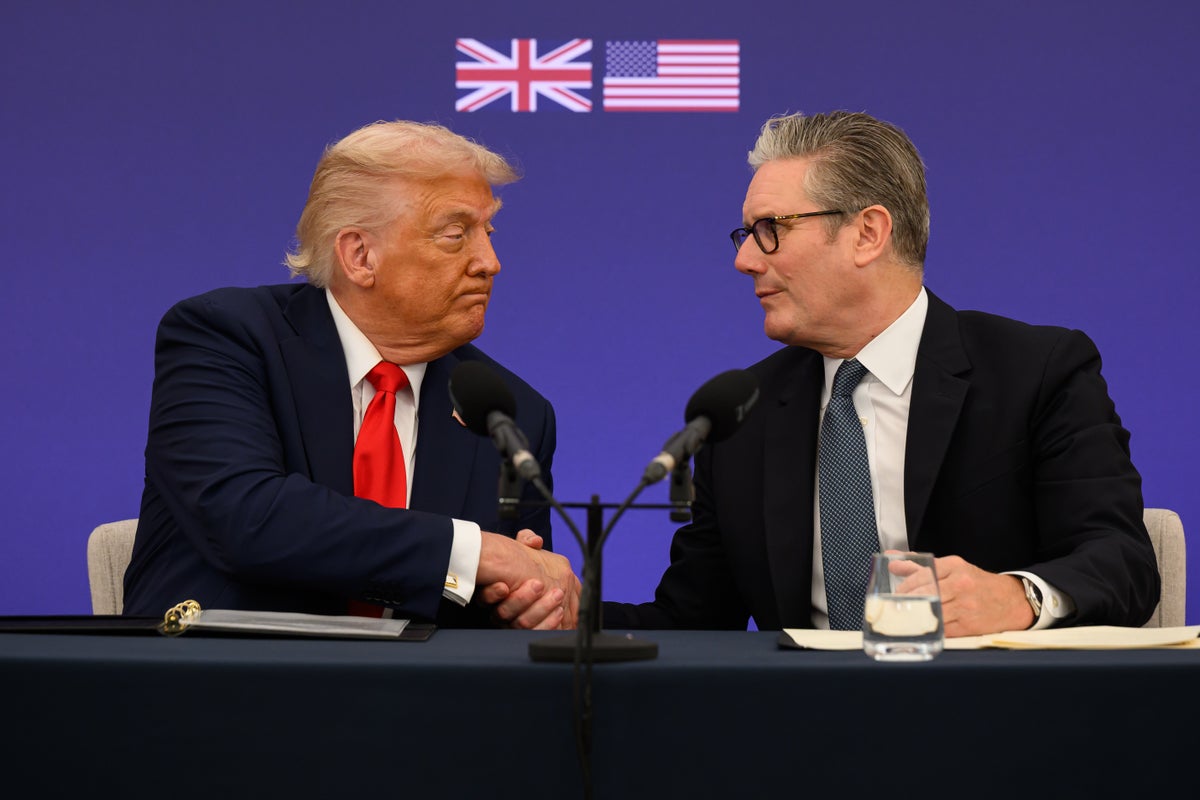
Cover image from independent.co.uk, which was analyzed for this article
World leaders gathered in France for the G7 summit where the US-Iran agreement, Ukraine, and trade disputes dominated discussions. Trump faced pushback from European allies while threatening tariffs on French wine. Coverage includes protests and diplomatic friction.
PoliticalOS
Monday, June 15, 2026 — Politics
The summit’s outcome hinges on whether G7 partners can agree on practical steps to clear the Strait of Hormuz and sustain Ukraine support while managing tariff disputes. European schedule adjustments show active efforts to keep talks on track despite public disagreements. Readers should track whether any joint commitments emerge on de-mining or defense spending rather than the tone of individual remarks.
What outlets missed
Multiple outlets omitted the concrete scheduling changes France made to secure Trump’s full attendance, including shifting the start date for his birthday and adding the Versailles dinner. Few reported the six specific administration goals for the summit that included investment partnerships, Ebola response coordination, and regulatory streamlining for exports. Coverage rarely noted the 20 percent rise in European and Canadian defense spending in 2025 or the administration’s explicit request for G7 participation in strait de-mining once the MOU takes effect.
Trump arrives at G7 facing European allies angered by his Iran war and tariffs
President Donald Trump touched down in France on Monday for the annual Group of Seven summit, where leaders from the United States and its closest democratic partners are set to confront deepening divisions over the three-month-old war with Iran, the grinding conflict in Ukraine and a raft of trade disputes.
The gathering in the lakeside resort of Evian-les-Bains comes days after Trump announced a tentative agreement with Tehran to reopen the Strait of Hormuz in exchange for the lifting of a U.S. blockade. The deal, which still requires further negotiation, has done little to ease friction with European governments that have questioned the legal basis for the American military campaign and complained they were not consulted before strikes began in late February.
Trump is scheduled to hold separate bilateral meetings with the Emir of Qatar and the president of the United Arab Emirates on Monday, followed by a working lunch that will include G7 members and several Middle Eastern leaders. A senior administration official said the Strait of Hormuz would be a central topic, with Iran required to keep the waterway open without tolls before sanctions relief takes effect.
European participants have made clear they remain uneasy about the broader trajectory of U.S. policy. French President Emmanuel Macron, the summit host, has described the American assault on Iran as falling outside the framework of international law. British Prime Minister Keir Starmer and German Chancellor Friedrich Merz have also drawn sharp criticism from Trump for what he called insufficient support. In return, the European leaders have voiced frustration over Trump’s tariff agenda and his insistence that Kyiv should accept a ceasefire on terms favorable to Moscow.
Only Macron is slated for a formal one-on-one session with Trump this week. No bilateral meeting with Ukrainian President Volodymyr Zelensky is currently on the schedule, though officials said the two men could speak on the sidelines during a Tuesday session that will include all G7 leaders and Zelensky. Trump has previously told Zelensky he “doesn’t have the cards,” a remark that has lingered as Ukrainian forces have expanded their use of long-range drones against Russian energy infrastructure.
The personal strains are not limited to policy disagreements. Trump has publicly mocked Starmer’s leadership, questioned the commitment of Italian Prime Minister Giorgia Meloni and made pointed historical references to Japan and Germany. Analysts note that five of the six other national leaders have been targets of Trump’s rhetorical attacks in recent months, leaving only Macron with a scheduled private encounter.
Beyond the immediate conflicts, the agenda includes artificial intelligence, supply-chain security and critical minerals. Yet officials on both sides of the Atlantic expect the Iran and Ukraine dossiers to dominate private conversations. European officials have signaled they will press Trump on energy-price spikes tied to the Hormuz closure and on the risk that renewed tariffs could further destabilize global markets already rattled by the war.
Trump’s delegation, which includes Secretary of State Marco Rubio, arrived after the president attended a mixed-martial-arts event on the White House lawn. Administration officials described the summit as an opportunity to showcase restored American leadership. European diplomats, however, described a more guarded atmosphere in which leaders are seeking to avoid open confrontation while still registering their objections to Washington’s unilateral approach.
The three-day meeting is also expected to feature discussions with invited guests including Indian Prime Minister Narendra Modi, Egyptian President Abdel Fattah el-Sisi and Saudi Crown Prince Mohammed bin Salman, whose attendance remained uncertain as of Sunday. The presence of these leaders underscores the summit’s focus on Middle East diplomacy even as core G7 relationships remain under evident strain.
You just read Progressive's take. Want to read what actually happened?
More in Politics

Judges Block Trump Mail Ballot Rule as Supreme Court Review Looms
Federal judges halted President Trump's executive order restricting mail balloting via USPS. The Supreme Court is expected to review amid ongoing election legal battles.

Trump, Vance Push GOP Midterms With Seven Weeks Left
With seven weeks to Election Day, Trump and Vance are campaigning in key states. GOP faces challenges including voting rule disputes and internal tensions.

States Clash Over Voter Rolls, Mail Rules Ahead of Midterms
Officials train to counter interference while states debate mail voting and oversight. Both parties accuse each other of undermining trust ahead of November.

Hegseth Reforms Prompt Pentagon Doubts Over Trust and Readiness
Defense Secretary's efforts to refocus the military sparked internal pushback and accusations of creating mistrust. Coverage spans major outlets.
The Compass
You just read five takes on one story.
What's your take? Find your political shape in a few minutes.
Take the test