
Trump Claims Hamas Deal on Phased Gaza Disarmament
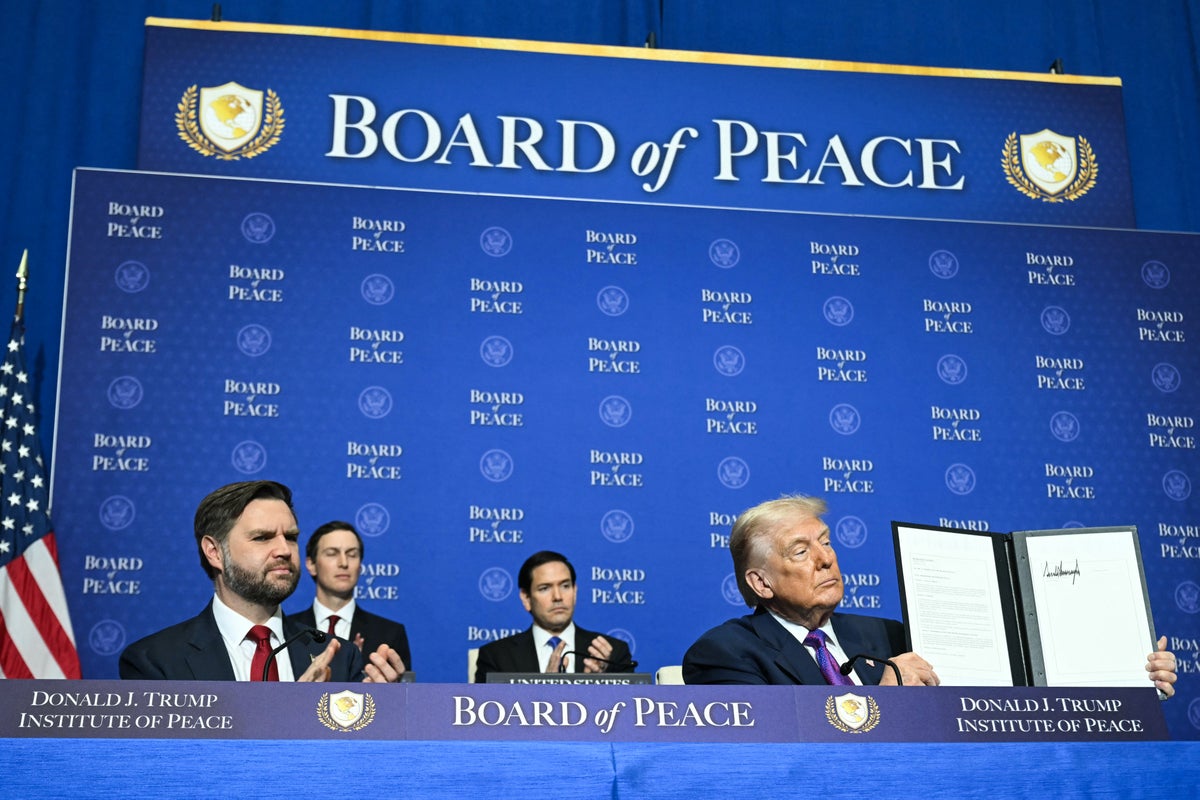
Cover image from independent.co.uk, which was analyzed for this article
Trump announces Hamas agreement on phased disarmament and next phase of Gaza peace, though implementation questions and skepticism remain.
PoliticalOS
Friday, July 31, 2026 — Politics
The core unresolved issue is sequencing: Hamas insists on Israeli withdrawal and aid increases before any disarmament begins, while Israeli officials demand full demilitarization first. Without mutual verification mechanisms that both sides accept, the roadmap remains conditional on steps neither party has yet committed to in public.
What outlets missed
Most coverage omitted the precise 14-day inventory deadline and the explicit prohibition on transferring weapons to any non-Palestinian party. Few outlets detailed the Board of Peace’s seven-member founding executive structure or the estimated 5,000-troop size of the stabilization force. The conditional linkage between each disarmament phase and a corresponding Israeli withdrawal line was mentioned only in passing, leaving readers without the mechanism that makes the deal sequential rather than simultaneous.
Gaza residents face another uncertain turn in a conflict that has displaced nearly the entire population and left reconstruction stalled for months. President Donald Trump announced late Thursday that the U.S.-led Board of Peace had secured an agreement for the complete, phased disarmament of Hamas and other armed groups, with Israeli forces to withdraw incrementally as verification proceeds. The plan would shift day-to-day administration to a technocratic Palestinian National Committee under the Board’s oversight while an International Stabilization Force of roughly 5,000 troops trains and works alongside a new local police service.
Implementation hinges on a strict sequence that neither side fully trusts the other to follow. An inventory of heavy weapons, production sites, depots and tunnels must be completed within 14 days of formal acceptance, after which Israeli troops pull back to designated lines and the international force assumes security roles. Hamas negotiator Ghazi Hamad told multiple outlets that his group will not begin surrendering arms until Israel halts attacks, increases aid flows and completes withdrawals required under the October 2025 ceasefire. Israeli officials have not publicly endorsed the roadmap and have privately stated that no withdrawal will occur until Gaza is fully demilitarized.
The Board of Peace, chaired for life by Trump and including figures such as Tony Blair and Jared Kushner, was established under U.N. Security Council Resolution 2803 to oversee the second phase of the original 20-point plan. The process is expected to take 200 to 320 days if all conditions are met. Several European governments declined to join the Board over concerns about its mandate and U.S. dominance. On the ground, Palestinian health authorities report at least 1,100 deaths from Israeli strikes since the ceasefire took effect, while aid restrictions and continued expansion of the so-called Yellow Line persist. Israeli political sources note that far-right coalition partners oppose any withdrawal and favor new settlements. Verification will be conducted by an international commission whose composition remains unspecified.
More in Politics

Federal Agents Search Omar Home in Ongoing Immigration Probe
Homeland Security agents searched the Minnesota Democrat's DC residence in a criminal probe, prompting accusations of political intimidation from Omar and Democratic leaders. Coverage spans left-leaning outlets like NPR, BBC, and The Guardian alongside right-leaning criticism from The Federalist and Daily Wire.

Trump Diesel Import Plan Draws Pushback Over Russia Ties
The weekend agreement drew bipartisan congressional pushback and criticism from Ukraine's Zelenskyy, with analysts downplaying US fuel price impacts. Right-leaning outlets like National Review, Dispatch, and Washington Examiner questioned its legality and effectiveness.

Independents Test Voter Appetite for Middle Ground in 2026 Midterms
Nearly 200 independents are running in competitive races as voters weigh ballot measures on housing costs in states like Massachusetts. Left-leaning coverage from NYT, NPR, and Guardian highlights turnout and key races while right outlets focus on GOP strategy.
Trump Rallies in Alaska, Ohio to Bolster GOP Senate Candidates
The president rallied in Wasilla for Sen. Dan Sullivan and faced empty seats at an Ohio event amid midterm concerns. Outlets across the spectrum covered the trips as signals of GOP vulnerability weeks before Election Day.
The Compass
You just read five takes on one story.
What's your take? Find your political shape in a few minutes.
Take the test