
Georgia GOP Governor and Senate Races Advance to June Runoffs

Cover image from dailywire.com, which was analyzed for this article
Georgia Republican races for governor and U.S. Senate advanced to June runoffs after Tuesday's primaries. Trump-backed candidates performed strongly while some establishment figures faced setbacks.
PoliticalOS
Wednesday, May 20, 2026 — Politics
Georgia’s Republican primaries produced runoffs for governor and Senate because no candidate reached a majority, leaving Trump-endorsed and establishment-backed contenders to compete further. The outcomes reflect a fragmented field rather than a settled ideological takeover. Voters will decide the nominees on June 16 in a state whose general-election results continue to carry national weight.
What outlets missed
Most coverage omitted precise vote shares that would show whether runoffs reflected broad rejection of incumbents or simply a split field. No outlet supplied county-level turnout data or compared 2026 participation rates to prior primaries. The judicial races received little attention despite their potential effect on pending cases, including review of the state’s six-week abortion law. Details on Democratic primary spending and voter mobilization efforts were absent from nearly every account.
Georgia GOP Runoffs Spotlight Trump Allies and Persistent 2020 Election Doubts
Georgia Republicans sent a clear signal in Tuesday's primaries by advancing candidates aligned with President Donald Trump in key races while eliminating officials who had defended the state's 2020 election process. The results set up June 16 runoffs for secretary of state and governor, along with a contest to challenge Democratic Senator Jon Ossoff, in a state that remains one of the nation's most closely watched battlegrounds.
No Republican secured a majority in the secretary of state primary, forcing a runoff between former Democratic lawmaker Vernon Jones and state Representative Tim Fleming. Jones, who switched parties and positioned himself as a vocal Trump supporter, campaigned on sharp criticism of Georgia's election administration. Fleming has acknowledged what he described as irregularities in 2020 while noting improvements since then. Gabriel Sterling, a former top aide to current Secretary of State Brad Raffensperger and one of the few candidates who actively defended the 2020 results, failed to advance.
Raffensperger himself fared even worse in the governor's race. The term-limited official, who certified Joe Biden's narrow 2020 victory over Trump and faced repeated attacks from the president, finished a distant third behind Lieutenant Governor Burt Jones and healthcare executive Rick Jackson. Jones carries Trump's endorsement, while Jackson poured tens of millions of dollars of his own money into the contest. The two will meet in the runoff.
The pattern extended to the Senate primary, where Trump-backed Representative Mike Collins will face former University of Tennessee football coach Derek Dooley. Dooley received support from Governor Brian Kemp, but both finalists have echoed Trump-aligned messaging on issues such as election security. Ossoff, the Democratic incumbent, faces no primary opposition and holds a substantial fundraising advantage heading into November.
The outcomes reflect a broader shift within the Georgia Republican Party. Candidates who distanced themselves from 2020 election challenges or who had clashed with Trump largely underperformed. Sterling and Raffensperger had both publicly pushed back against claims that the 2020 contest was stolen, positions that drew sustained criticism from Trump and his supporters. Their exits leave the party's nomination contests dominated by figures who have either questioned aspects of the 2020 process or aligned themselves closely with the president's narrative.
Georgia's elections have carried national significance since 2020, when the state flipped to Biden and then delivered two Democratic Senate seats in January 2021 runoffs. Control of the secretary of state's office, which oversees voter rolls, ballot access and certification, has remained a focal point for both parties. Democrats nominated a slate that includes former state Representative Penny Brown Reynolds and attorney Cam Ashling, though their primary results were not finalized in initial reports.
The June runoffs will determine nominees in a state where Republicans have held the governorship and secretary of state's office for more than two decades but where recent elections have grown tighter. Voter turnout in the May primary was modest, and both parties will now focus resources on the remaining contests. Democrats, including former Atlanta Mayor Keisha Lance Bottoms, who won her party's gubernatorial nomination outright, will argue that the Republican field has moved further from the political center.
For Republicans, the results mark a consolidation around Trump-endorsed or Trump-aligned candidates after years of internal tension between the president's wing and officials who resisted pressure over the 2020 outcome. The contests ahead will test whether that consolidation improves prospects in November or whether it narrows the party's appeal in a state that has demonstrated swing-state volatility.
You just read Progressive's take. Want to read what actually happened?
More in Politics
Trump at 32% Approval as Gas Prices Test GOP Midterm Hopes
NYT/Siena polling showed Trump's approval at historic lows around 32 percent with Democrats leading by double digits in key districts. Early voting has surged in battleground states.

Record Early Voting Hits Battlegrounds, Shifting Partisan Shares
AP analysis found hundreds of thousands more early ballots than in 2022 in states including Texas, Ohio, Kansas, Maine, and North Carolina, shifting partisan dynamics.
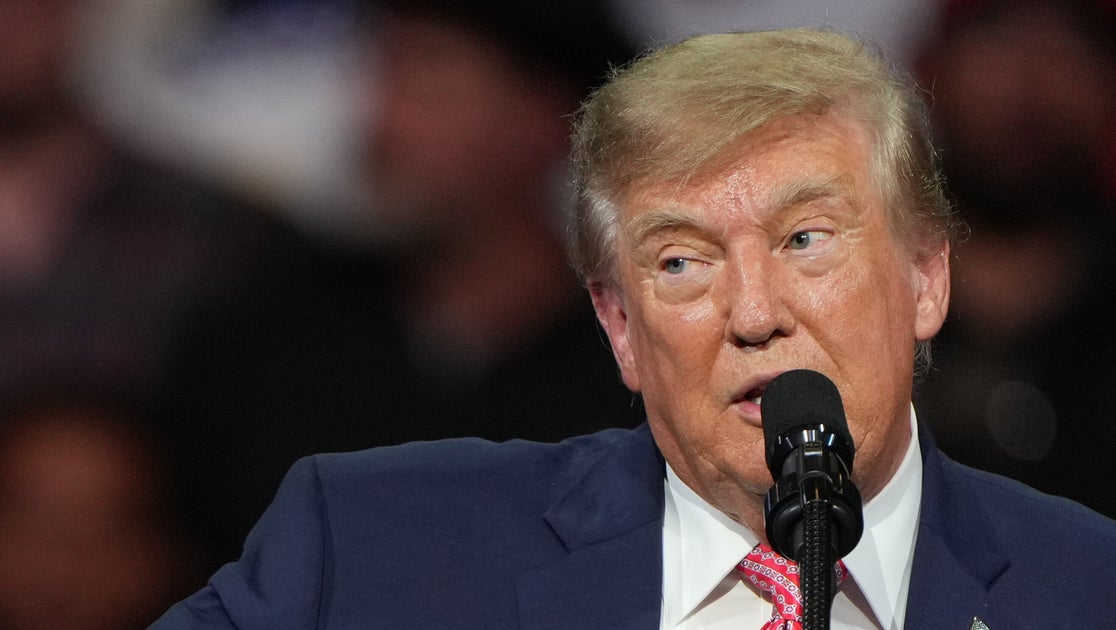
Trump Backs Marshall in Kansas Senate Race Tightened by Farm Costs
President Trump rallied in deep-red Kansas for GOP Sen. Roger Marshall in a competitive race, announcing an $8 billion farm fuel relief program amid high diesel prices. Democrats see an opening to end 94 years of GOP dominance in the state.

Trump Pauses Russia Sanctions Amid Ukraine Tensions and Missile Strikes
Trump waived sanctions on Russia and floated trilateral talks with Putin and Xi as part of ending the Ukraine war, while tensions rose with Zelenskyy over Starlink and arms. Bipartisan senators engaged Zelenskyy amid the shifts.
The Compass
You just read five takes on one story.
What's your take? Find your political shape in a few minutes.
Take the test