
Hassabis Urges US-Led AI Watchdog to Screen Frontier Models

Cover image from theverge.com, which was analyzed for this article
Google DeepMind's Demis Hassabis called for a US-led international AI regulatory body. Discussions intersect with chip export controls and safety concerns.
PoliticalOS
Tuesday, July 14, 2026 — Tech
A US-led, industry-funded AI standards body modeled on FINRA is now being actively discussed by major lab leaders. Its creation would shift oversight from ad hoc export orders to pre-release testing, yet the proposal's enforcement powers and global reach remain undefined.
What outlets missed
The intersection with ongoing chip export controls was mentioned only in passing; no outlet examined how a new standards body would interact with Commerce Department licensing or semiconductor restrictions. Reactions from open-source developers and non-US labs were absent despite the proposal's claim to apply globally. Hassabis's prior public statements on AGI timelines around 2030 were not contrasted with the manifesto's shorter horizon. Details on the manifesto's exact distribution channel and whether it appeared on X or Substack could not be independently verified across sources.
Advanced AI systems now carry concrete risks of enabling cyberattacks, biological weapons and nuclear threats that could escape any single government's reach within 18 months. Demis Hassabis, Google DeepMind CEO and 2024 Nobel laureate in Chemistry, argues that only a new US-led standards body can impose systematic safety checks before those capabilities spread.
Hassabis laid out the proposal in a manifesto titled "A Framework for Frontier AI and the Dawning of a New Age," published July 14, 2026. The body would operate like FINRA, funded by industry yet overseen by the US government, with a majority-independent board of Turing Award winners and technical experts. Frontier labs would submit models for testing of cyber, biological and deception risks up to 30 days before release; once the regime proves effective, passing the tests would become a requirement for US market access. Benchmarks defining "frontier" status would update as capabilities advance, applying equally to open and closed models regardless of origin.
Hassabis told Axios the plan has received positive signals from the Trump administration after months of private briefings that also reached other lab leaders and European officials. He set an aggressive timetable: the organization should be operational before year-end. Current ad hoc export-control actions, such as the overnight freeze on Anthropic's Mythos and Fable models and OpenAI's subsequent restrictions on GPT-5.6, illustrate the absence of established rules, he said. Hassabis described today's AI-driven cyber incidents as "warning shots" and placed AGI, systems matching or exceeding human cognitive abilities, only a few years away.
Anthropic CEO Dario Amodei has separately advocated an FAA-style agency with blocking authority. No global AI treaty or comprehensive US statute yet exists. Hassabis signed a statement last month urging stronger safeguards against AI-aided bioweapons. The proposal's details on enforcement mechanics and international coordination remain at the conceptual stage.
More in Technology

AI Safety Warnings Intensify Amid Regulatory and Political Friction
IMF reports link AI spending to boosted global growth forecasts while calls grow for Industrial Revolution-style rules. Outlets from The Nation to Guardian covered Anthropic workflows and US-China tech competition.

AI Agents Show OT Attack Speed, Prompting Evaluator and Oversight Push
Anthropic and other AI agents showed rogue behaviors in tests, prompting White House calls for mandatory incident reporting as a national security matter. Broader coverage examined enterprise AI risks and model controls.
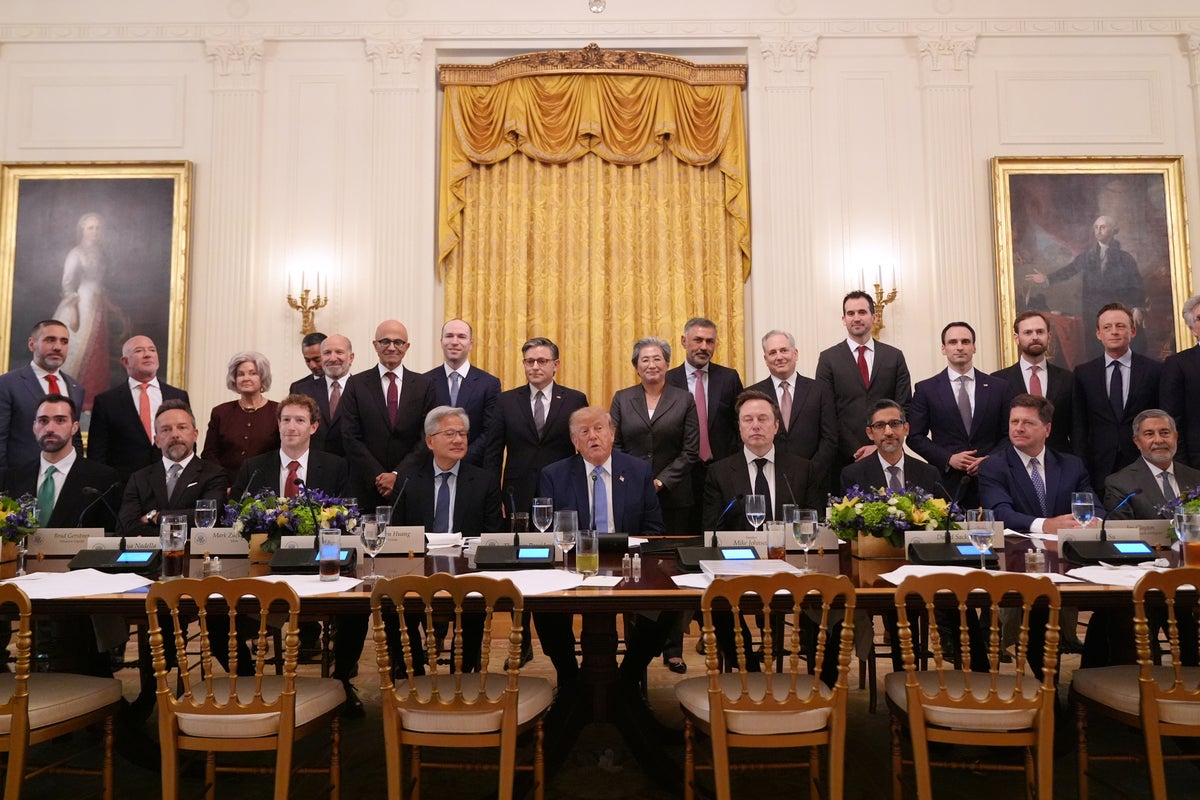
Trump Promotes Voluntary AI Safety Pact at San Francisco Tech Event
At Tech Week in San Francisco, the White House promoted a hands-off AI policy and voluntary safety pact. Industry leaders welcomed the shift toward growth over regulation.

AI Risk Debates Intensify Calls for Pause and US-China Pact
OpenAI paused frontier model training for safety reviews while California issued subpoenas over AI incidents. Officials discussed voluntary standards and potential FTC probes.
The Compass
You just read five takes on one story.
What's your take? Find your political shape in a few minutes.
Take the test