
Hegseth Defends Record $1.5 Trillion Defense Budget in Iran Hearings

Cover image from foxnews.com, which was analyzed for this article
Defense nominee Hegseth testifies on record $1.5T Pentagon budget amid Iran questions and Democrat opposition. Senate GOP urges House reconciliation. Hearings underscore midterm fiscal fights.
PoliticalOS
Tuesday, May 12, 2026 — Politics
The core unresolved question is whether a 43 percent jump in defense spending can be sustained without a clearer strategy for ending the Iran conflict or broader agreement on national priorities. Readers should weigh the documented munitions depletion against partisan claims about waste and necessity.
What outlets missed
Neither outlet supplied the exact FY2026 baseline of roughly $1.05 trillion or adjusted the 43 percent increase for inflation and wartime supplements. Details on specific line items such as $65 billion for the Golden Fleet and $20 billion for Golden Dome appeared only in Fox reporting and were not corroborated elsewhere. The status of stalled U.S.-Iran peace talks and the shuttered Strait of Hormuz received minimal follow-up beyond Trump's public remarks. Long-term questions about how sustained higher defense spending would affect the federal deficit or domestic programs were left unaddressed.
Pentagon Leaders Defend Record Budget Request as Lawmakers Question Spending Priorities
The Pentagon's proposal for a $1.5 trillion defense budget will undergo its initial congressional scrutiny Tuesday when War Secretary Pete Hegseth appears before the House Appropriations Committee's defense subcommittee. The request marks a sharp increase of nearly 50 percent over current levels and arrives alongside proposed reductions in domestic programs, setting up immediate friction over how the federal government allocates resources amid competing national priorities.
Hegseth is scheduled to testify alongside Joint Chiefs Chairman Gen. Dan Caine and Pentagon comptroller Jules Hurst. Their appearances continue a pattern of back-to-back House and Senate hearings that began in April, during which Democratic members pressed the administration on the costs and strategic rationale for ongoing operations related to Iran. The latest round of testimony is expected to revisit those same points as lawmakers examine whether the proposed spending aligns with measurable improvements in military readiness and industrial capacity.
Administration officials have framed the budget increase as essential for replenishing weapons stockpiles depleted by recent conflicts and for expanding the defense industrial base. President Trump has described the goal as building a stronger force capable of deterring adversaries, with particular attention to supply chain vulnerabilities and production shortfalls that have persisted for years. The plan also seeks additional funding to address threats from geopolitical competitors, though specific benchmarks for success remain under discussion.
Democrats on the committee have signaled opposition to the scale of the request, arguing that it shifts resources away from non-defense investments without sufficient justification. Some Republicans have echoed concerns about overall fiscal balance, noting that rapid growth in one area of the budget could constrain flexibility elsewhere. These divisions reflect longer-standing debates over how Congress exercises oversight when defense spending grows faster than other discretionary accounts.
The hearing also coincides with stalled diplomatic efforts involving Iran. Trump stated Monday that the current ceasefire arrangement is under severe strain, with the Strait of Hormuz effectively closed to normal traffic. Lawmakers are likely to probe how military resources would be directed if tensions escalate further and whether the budget request accounts for sustained operational demands in the region.
Previous exchanges between Hegseth and committee members have centered on the administration's military campaign against Iran and its broader strategic objectives. Tuesday's session will test whether the Pentagon can provide clearer metrics on how the additional funds would translate into concrete capabilities, such as increased munitions production or improved logistics support. Congressional appropriators have historically used such hearings to extract detailed spending plans before finalizing allocations, and the size of this proposal increases the stakes for both sides.
The outcome of these hearings will shape negotiations over the full 2027 defense authorization and appropriations bills. With both chambers involved and partisan lines already drawn on the core trade-offs, the process is expected to extend well into the summer as committees reconcile differing views on priorities.
You just read Liberal's take. Want to read what actually happened?
More in Politics
Trump at 32% Approval as Gas Prices Test GOP Midterm Hopes
NYT/Siena polling showed Trump's approval at historic lows around 32 percent with Democrats leading by double digits in key districts. Early voting has surged in battleground states.

Record Early Voting Hits Battlegrounds, Shifting Partisan Shares
AP analysis found hundreds of thousands more early ballots than in 2022 in states including Texas, Ohio, Kansas, Maine, and North Carolina, shifting partisan dynamics.
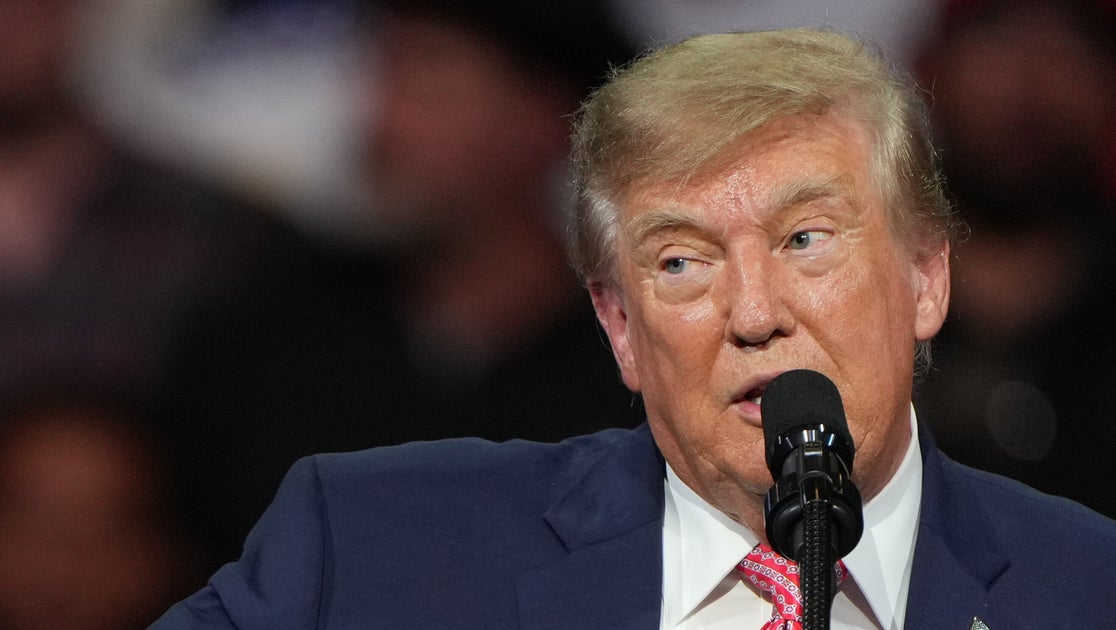
Trump Backs Marshall in Kansas Senate Race Tightened by Farm Costs
President Trump rallied in deep-red Kansas for GOP Sen. Roger Marshall in a competitive race, announcing an $8 billion farm fuel relief program amid high diesel prices. Democrats see an opening to end 94 years of GOP dominance in the state.

Trump Pauses Russia Sanctions Amid Ukraine Tensions and Missile Strikes
Trump waived sanctions on Russia and floated trilateral talks with Putin and Xi as part of ending the Ukraine war, while tensions rose with Zelenskyy over Starlink and arms. Bipartisan senators engaged Zelenskyy amid the shifts.
The Compass
You just read five takes on one story.
What's your take? Find your political shape in a few minutes.
Take the test