
House Passes Bill for Year-Round Daylight Saving Time
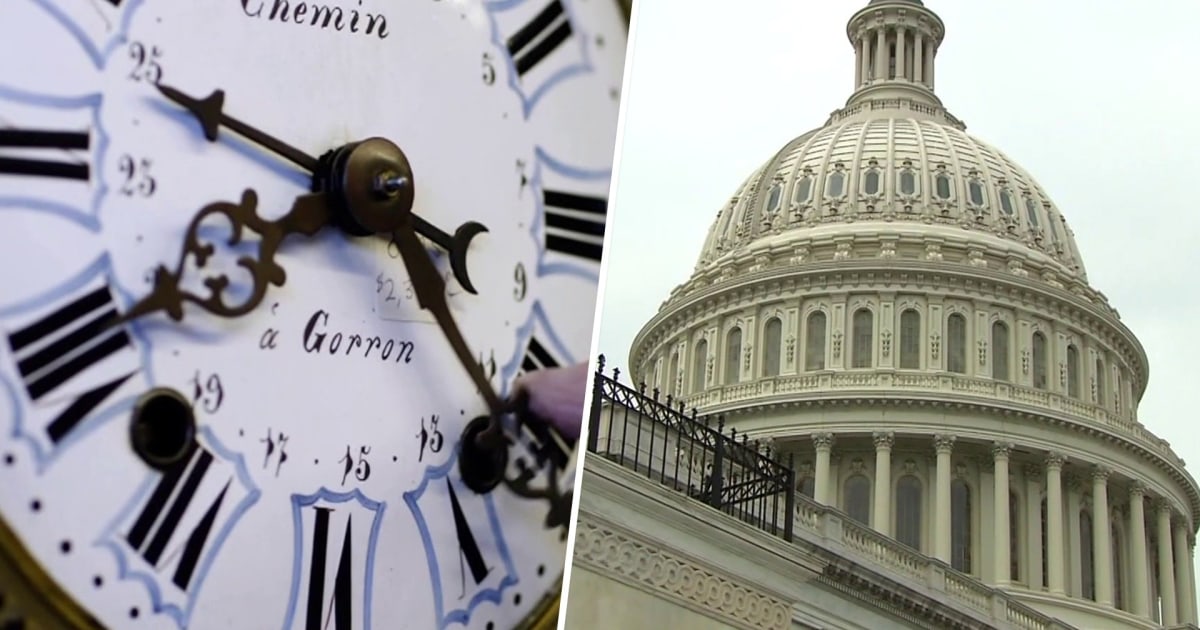
Cover image from today.com, which was analyzed for this article
The House advanced legislation to end seasonal clock changes and make daylight saving time permanent nationwide. The measure is moving forward amid other legislative priorities. Past attempts at year-round DST have faced implementation challenges.
PoliticalOS
Wednesday, July 15, 2026 — Politics
The House has approved permanent daylight saving time, yet the Senate has shown no clear path forward and past attempts collapsed under public pressure over winter darkness. Readers should track whether the upper chamber takes up the measure and what, if any, state opt-out provisions survive.
What outlets missed
No outlet specified an effective date or transition mechanism for the proposed change. Coverage also omitted how many states with pending laws would need to act again if the federal statute passes. The role of the 19 state measures as contingent on congressional approval received uneven attention, leaving readers without a full picture of the federal-state interaction required for implementation.
Americans could stop resetting their clocks twice a year if a new federal law takes effect, yet the change remains far from certain after the House cleared the measure on a 308-117 vote. The bill, known as the Sunshine Protection Act, would lock the country on daylight saving time permanently and eliminate the shift back to standard time each fall.
The legislation advanced through the House on July 14, 2026, with support from both parties. Representative Vern Buchanan, a Florida Republican who introduced the measure in January 2025, argued that the biannual adjustment disrupts daily routines without clear benefit. President Trump has backed the effort, calling the clock changes a needless inconvenience and stating a preference for the extra evening daylight that permanent daylight saving time would provide.
The bill now moves to the Senate, where its path is unclear. Senator John Barrasso, the chamber’s second-ranking Republican, told reporters the upper body would review the House version but offered no commitment. At least one other Republican, Senator Tom Cotton of Arkansas, has previously expressed reservations about the effects of later winter sunrises.
The United States last attempted year-round daylight saving time during the 1973-1974 oil crisis. Congress authorized the trial to conserve energy, but public support dropped sharply after complaints about dark winter mornings and safety concerns for children. Lawmakers repealed the policy after less than two years.
Under current federal rules set by the 1966 Uniform Time Act, most states observe daylight saving time from March to November. Hawaii, most of Arizona, Puerto Rico, the U.S. Virgin Islands, and several other territories remain on standard time year-round. Nineteen states have passed laws that would adopt permanent daylight saving time if Congress changes federal statute.
Advocates say the change would reduce seasonal depression, boost evening commerce, and end the twice-yearly disruption. Opponents, including some sleep researchers, contend that permanent daylight saving time would leave large parts of the country in darkness during winter mornings, potentially affecting school schedules and commuting safety. The Senate has not scheduled action on its companion measure, introduced by Senator Rick Scott of Florida.
More in Politics

Federal Agents Search Omar Home in Ongoing Immigration Probe
Homeland Security agents searched the Minnesota Democrat's DC residence in a criminal probe, prompting accusations of political intimidation from Omar and Democratic leaders. Coverage spans left-leaning outlets like NPR, BBC, and The Guardian alongside right-leaning criticism from The Federalist and Daily Wire.

Trump Diesel Import Plan Draws Pushback Over Russia Ties
The weekend agreement drew bipartisan congressional pushback and criticism from Ukraine's Zelenskyy, with analysts downplaying US fuel price impacts. Right-leaning outlets like National Review, Dispatch, and Washington Examiner questioned its legality and effectiveness.

Independents Test Voter Appetite for Middle Ground in 2026 Midterms
Nearly 200 independents are running in competitive races as voters weigh ballot measures on housing costs in states like Massachusetts. Left-leaning coverage from NYT, NPR, and Guardian highlights turnout and key races while right outlets focus on GOP strategy.

Trump Rallies in Alaska, Ohio to Bolster GOP Senate Candidates
The president rallied in Wasilla for Sen. Dan Sullivan and faced empty seats at an Ohio event amid midterm concerns. Outlets across the spectrum covered the trips as signals of GOP vulnerability weeks before Election Day.
The Compass
You just read five takes on one story.
What's your take? Find your political shape in a few minutes.
Take the test