
Orbán's Fidesz Routed in Hungarian Election as Opposition Claims Majority

Cover image from thedispatch.com, which was analyzed for this article
Hungary's ruling party under Viktor Orban faced a major setback in elections, seen as a blow to his strongman image. Analysts link it to Trump-aligned politics, with implications for Europe. Coverage debates if his ideas persist in the White House.
PoliticalOS
Wednesday, April 15, 2026 — Politics
Voters rejected Orbán after 16 years primarily because of visible corruption, a explosive pardon scandal and accumulated economic grievances, not because they suddenly embraced the liberal international order. The scale of the defeat, enabled by record turnout and an ex-insider challenger, demonstrates that even heavily entrenched populist systems can be overturned when patronage networks alienate their own base. Whether this outcome weakens similar movements in Europe or the United States will depend less on Hungarian rhetoric than on the new government's ability to deliver tangible reforms without repeating the patronage mistakes that brought Orbán down.
What outlets missed
Most coverage underplayed Péter Magyar's deep Fidesz pedigree and the precise mechanics of the 2024 pardon scandal that directly triggered his emergence as opposition leader, including the audio leak and mass protests that drove record 79-80 percent turnout. Outlets also gave short shrift to Hungary's pre-2022 economic expansion and the role of external shocks such as the Ukraine war in recent inflation, instead presenting governance failures as solely the product of internal corruption. The fact that no new election-law changes occurred in 2025-2026, with earlier reforms dating to 2010-2011, received almost no attention, leaving readers with an incomplete timeline of institutional criticism. Finally, Tisza's platform retains several center-right positions on migration and family policy, a nuance that reframes the result as intra-conservative realignment rather than liberal triumph.
Hungarys Nationalist Leader Orban Crushed at Polls as Global Elites Cheer and Trump Carries the Torch
Viktor Orban is out. The Hungarian prime minister who spent nearly a decade and a half building fences against mass migration, defying bureaucrats in Brussels, and refusing to let his country dissolve into the multicultural experiment that has remade so much of Europe was decisively rejected by voters this weekend. The man many on the American right viewed as a model for putting citizens first has been swept from power in what outlets across the spectrum are calling a landslide.
Predictably, the corporate press is treating this like Christmas morning. Leftwing sites such as Crooks and Liars are already drawing ominous parallels to President Trump, suggesting that hyperinflation, elite corruption, and voter exhaustion with strongman rule created the perfect formula to topple Orban. They warn that the same forces could soon devour the American president. The Guardian went further, arguing that while Hungarys strongman has fallen, his ideas about strength through dominance have infected the White House. They portray Trump as a man who confuses cruelty with leadership and grievance with authenticity, all while his vice president meddles in foreign elections and the president himself trades barbs with the new Pope.
Even some neverTrump conservatives at The Dispatch piled on, declaring the decline and fall of Orbanism. They noted how Hungary had become a pilgrimage site for MAGA intellectuals and newright nationalists, the same way Cuba or Sweden once served as fantasy islands for the American left. The comparison is revealing. For years the left ignored the jails and firing squads in Havana while praising the supposed superiority of socialist medicine. Now some on the right are accused of airbrushing away Orban’s flaws in favor of his border policies and unapologetic defense of Hungarian identity. Both impulses deserve scrutiny, but only one is treated as a mortal threat to democracy.
What the victory laps miss is the substance of what Orban actually did. When waves of migrants poured into Europe in 2015, most EU leaders lectured their populations about diversity while crime rates climbed and trust collapsed. Orban said no. He built the barriers, kept the chaos out, and kept Hungary Hungarian. He promoted policies that encouraged native families to have children rather than importing replacement populations. He fought George Sorosfunded NGOs trying to reshape his society through courts and media. These are not abstract theories. They are concrete answers to the very problems now destabilizing France, Sweden, and Britain.
None of that means Orban was flawless. Long tenure in office breeds complacency. Economic pain from inflation and postpandemic recovery clearly weighed on voters, much as the Crooks and Liars piece argues. Governing for sixteen years is a long time. Eventually people want change. But the gloating from liberal commentators reveals their deeper hope: that any politician who prioritizes his own people over globalist norms can be made an example of. They want Orban’s defeat to serve as a warning to Trump and anyone else who rejects open borders, endless foreign entanglements, or the idea that national identity itself is outdated.
That warning looks increasingly hollow in the American context. President Trump continues to pursue an agenda that would be familiar to any Orban supporter: securing the southern border, reshoring manufacturing jobs, and rejecting the notion that America must subordinate its interests to international climate accords or European defense freeloaders. His willingness to pressure Republican holdouts, including the messy primary fights now unfolding in Indiana over congressional redistricting, shows a determination to break the old party cartel. Some Indiana voters, like the retired factory worker interviewed by The Dispatch, resent being called RINOs for opposing middecade map changes. Others see it as the necessary cost of preventing the permanent administrative state from reasserting control.
The truth is that Orban did not invent these instincts. He simply refused to apologize for them at a time when most European leaders were busy surrendering sovereignty to Brussels and Berlin. His fall does not disprove the validity of those instincts. It demonstrates how difficult it is to maintain them against concentrated elite opposition, donor pressure, and the natural desire for political turnover.
Liberal journalists insist true strength lies in empathy, restraint, and institutional deference. Yet the countries that followed that gospel now grapple with no-go zones, suppressed speech, and native populations that feel like strangers in their own lands. Meanwhile the American president mocks popes, pressures allies, and shows no interest in apologizing for putting his own country first. The Guardian calls this weakness. Millions of working Americans call it long overdue.
Hungary will now test whether its new leaders can resist the financial and cultural pressures that come with rejoining the European consensus. If migration surges and social cohesion erodes, voters there may discover too late what they have discarded. For Americans watching from afar, the lesson is simpler. Ideas about sovereignty, border control, and national survival do not vanish when one politician loses an election. They have already taken root here. The same forces that celebrated in Budapest will spend the next two years trying to uproot them in Washington. They failed before. Given the visible results of their worldview in Europe, they are likely to fail again.
You just read America First's take. Want to read what actually happened?
More in Politics
Trump at 32% Approval as Gas Prices Test GOP Midterm Hopes
NYT/Siena polling showed Trump's approval at historic lows around 32 percent with Democrats leading by double digits in key districts. Early voting has surged in battleground states.

Record Early Voting Hits Battlegrounds, Shifting Partisan Shares
AP analysis found hundreds of thousands more early ballots than in 2022 in states including Texas, Ohio, Kansas, Maine, and North Carolina, shifting partisan dynamics.
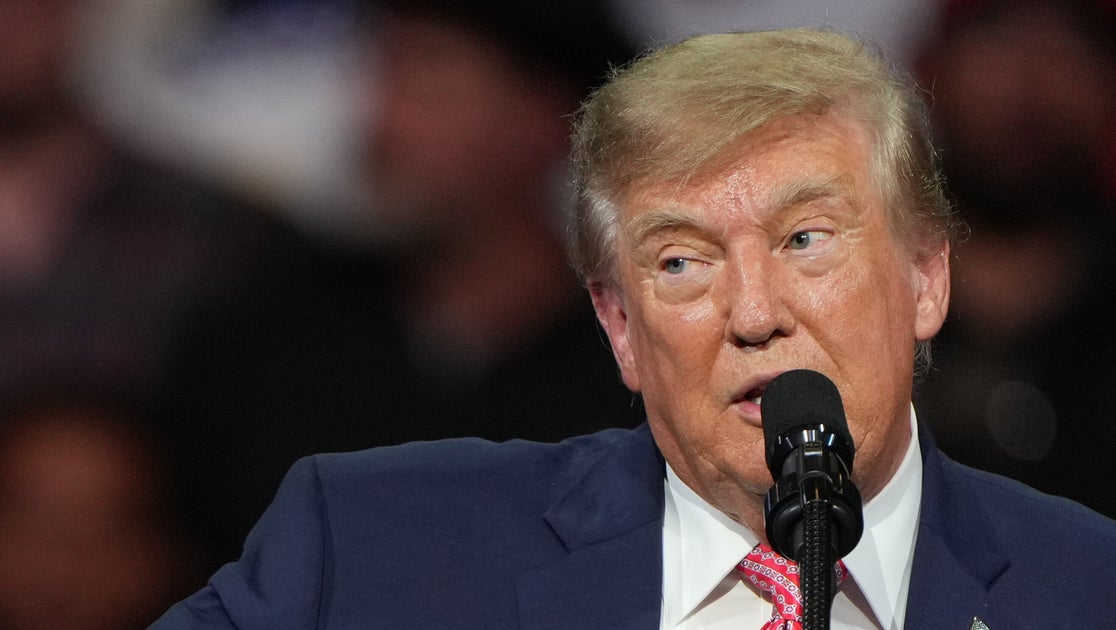
Trump Backs Marshall in Kansas Senate Race Tightened by Farm Costs
President Trump rallied in deep-red Kansas for GOP Sen. Roger Marshall in a competitive race, announcing an $8 billion farm fuel relief program amid high diesel prices. Democrats see an opening to end 94 years of GOP dominance in the state.

Trump Pauses Russia Sanctions Amid Ukraine Tensions and Missile Strikes
Trump waived sanctions on Russia and floated trilateral talks with Putin and Xi as part of ending the Ukraine war, while tensions rose with Zelenskyy over Starlink and arms. Bipartisan senators engaged Zelenskyy amid the shifts.
The Compass
You just read five takes on one story.
What's your take? Find your political shape in a few minutes.
Take the test