
ICE Acting Director Lyons Resigns as Deportation Drive Meets Backlogs and Local Strain

Cover image from chicago.suntimes.com, which was analyzed for this article
Todd Lyons, overseeing Trump's mass deportations, plans to resign by May's end as court battles intensify and application logjams heighten deportation risks for millions. The administration accelerates immigration courts for faster removals. Outlets debate enforcement effectiveness and humanitarian impacts.
PoliticalOS
Friday, April 17, 2026 — Politics
Todd Lyons' resignation caps a year of sharply increased deportations and court acceleration under the current administration, yet the immigration system still contends with massive backlogs in both legal applications and remaining court cases that leave millions in uncertain status. Local communities have absorbed unbudgeted costs from enforcement operations and protests, while asylum grant rates have plummeted and partisan disputes over tactics continue. The single most important reality is that systemic overload predates the current push; reforms have produced measurable enforcement gains but have not resolved underlying capacity problems.
What outlets missed
Most outlets underplayed the pre-existing growth in both USCIS and EOIR backlogs that began well before the current administration, including a doubling of certain pending cases during the prior four years. Concrete data on the criminal versus non-criminal composition of those removed under Lyons received limited treatment, with only partial figures appearing in local or bias analyses. The full scope of legal challenges to EOIR memos, including a pending Fourth Circuit case on judicial independence, went largely unmentioned. Broadview's experience, while covered in depth by one paper, was rarely connected to similar unreimbursed costs reported by a handful of other municipalities hosting federal facilities. Finally, cycles in the USCIS "frontlog" tied to fee changes and filing surges in 2023-2024 were omitted, obscuring whether recent increases reflect policy alone or predictable volume spikes.
Trump Immigration Backlog Leaves Millions in Legal Limbo as Deportation Machine Accelerates
The second Trump administration has engineered a paradox at the heart of American immigration policy: a deliberate slowdown in legal processing that strands millions of applicants in uncertainty while aggressively speeding up removals through transformed courts and leadership changes at enforcement agencies. An analysis of government data by NPR reveals nearly 12 million pending applications for citizenship, work permits and other legal status changes, a backlog that has grown markedly since the start of 2025 and leaves applicants exposed to deportation because they lack even basic confirmation that their paperwork was received.
This is not bureaucratic incompetence alone. It aligns with a broader strategy to constrict legal pathways into the United States, compounding the effects of policy shifts at the immigration courts and within Immigration and Customs Enforcement. While the administration touts record removals, the human cost is measured in families unable to plan their futures, workers trapped without authorization, and local communities suddenly bearing unexpected financial burdens from the enforcement surge.
The numbers are stark. U.S. Citizenship and Immigration Services data show processing times stretching longer across categories, with a notable spike in the first three months of the current administration. Without timely acknowledgment of their applications, immigrants lose the protective documentation that can shield them from enforcement actions. In practice, this means people who followed every rule find themselves in the same precarious category as those without any claim to legal status. The administration has made clear its priority lies elsewhere. Acting ICE Director Todd Lyons, who oversaw more than 475,000 removals and nearly 379,000 arrests in his first year, is stepping down at the end of May. Department of Homeland Security Secretary Markwayne Mullin praised Lyons for jumpstarting an agency that, in the administration's view, had been restrained during the previous four years. His tenure included high-profile deployments of federal agents to Democratic-led cities, moves critics viewed as political retaliation.
That enforcement energy has been matched by institutional changes designed to accelerate deportations. The administration has dismissed more than 100 immigration judges out of roughly 750, according to reporting by The New York Times, targeting those with higher asylum grant rates. The result is measurable: asylum approvals have fallen to 7 percent from about 50 percent under the prior administration. Immigration lawyers report a transformed environment in the courts. One Texas-based attorney told The Daily Wire he has stopped taking cases altogether, believing even strong claims now face near-insurmountable odds. The previous backlog, built during years of record border encounters, had allowed many migrants to remain in the country for years while cases wound through the system. The current approach appears aimed at preventing any similar grace period.
This two-track strategy, slowing legal immigration while turbocharging enforcement, creates cascading effects that reach far beyond Washington. In Broadview, Illinois, a quiet village of 7,900 people west of Chicago, the human and fiscal toll became suddenly visible last fall. An existing ICE facility in the town was pressed into service during the administration's enforcement push, processing thousands of immigrants in what residents described as a storm that arrived without local input or control. The village incurred nearly $400,000 in unexpected costs, equivalent to about 10 percent of its discretionary budget. Unlike jurisdictions that contract with the federal government and often turn a profit on detention, Broadview was left to absorb the hit.
Mayor Katrina Thompson has requested federal reimbursement and floated an ambitious plan to close the facility and convert it into a museum, an idea that speaks to the community's desire to reclaim its identity after being thrust into the national immigration debate. The village, which had only recently stabilized its finances, now finds itself synonymous with contentious protests and federal immigration enforcement. Many residents are reluctant to speak publicly, wary of drawing further attention.
The Broadview example illustrates a larger pattern visible in the data. When federal policy treats legal immigration as an afterthought while prioritizing volume of removals, the resulting friction lands hardest on individuals and communities least equipped to manage it. Immigrants who have built lives here, paid taxes, and followed bureaucratic processes now wait indefinitely for basic acknowledgments from the government. Their limbo is not accidental. It functions as one more lever in a system redesigned to deter both legal and unauthorized migration.
Critics of the approach argue it undermines the very order the administration claims to restore. A functioning immigration system requires clear pathways and timely decisions; without them, the distinction between legal and illegal status blurs in practice even as rhetoric sharpens. The pending applications represent not abstract paperwork but people: families hoping to naturalize, workers seeking authorization, longtime residents trying to secure their place. Each month of delay increases their vulnerability to encounters with an ICE apparatus that has been explicitly retooled for speed.
The resignation of Lyons offers a moment to assess the first year of this strategy. By many of the administration's own metrics, it has succeeded in removing hundreds of thousands of people and dramatically lowering asylum approval rates. Yet the 12 million pending applications tell another story, one of a legal immigration system grinding toward stasis. The human consequences of that stasis, and the local costs it imposes on places like Broadview, suggest the policy may be creating new problems faster than it solves old ones. As the administration moves forward with its chosen successor at ICE, the tension between volume of deportations and functionality of legal processes will likely define the next phase of the nation's immigration reality.
You just read Liberal's take. Want to read what actually happened?
More in Politics
Trump at 32% Approval as Gas Prices Test GOP Midterm Hopes
NYT/Siena polling showed Trump's approval at historic lows around 32 percent with Democrats leading by double digits in key districts. Early voting has surged in battleground states.

Record Early Voting Hits Battlegrounds, Shifting Partisan Shares
AP analysis found hundreds of thousands more early ballots than in 2022 in states including Texas, Ohio, Kansas, Maine, and North Carolina, shifting partisan dynamics.
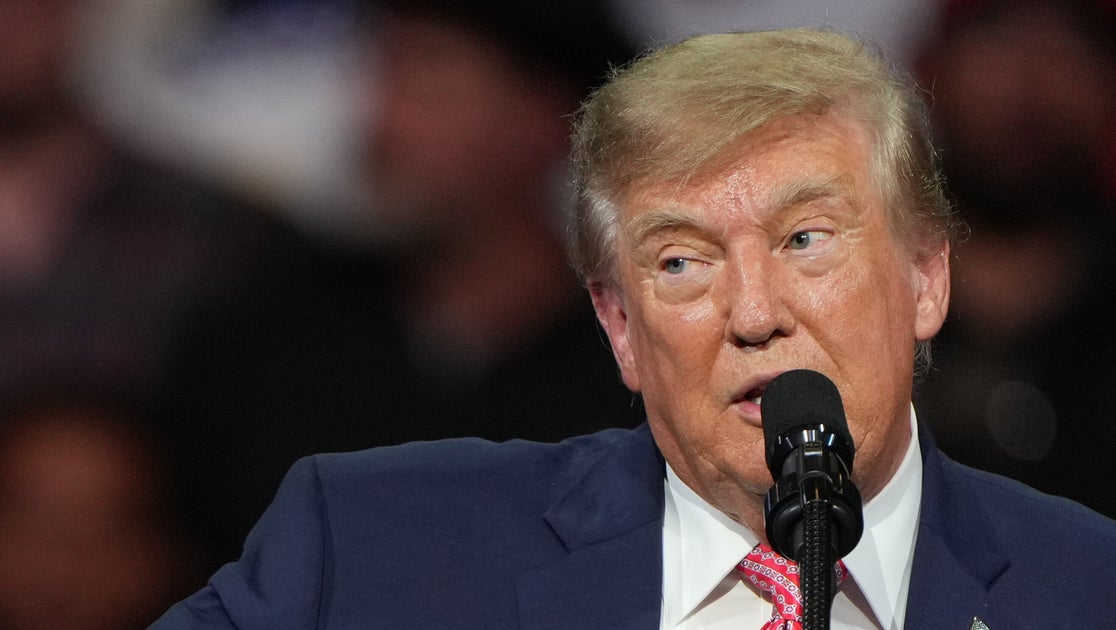
Trump Backs Marshall in Kansas Senate Race Tightened by Farm Costs
President Trump rallied in deep-red Kansas for GOP Sen. Roger Marshall in a competitive race, announcing an $8 billion farm fuel relief program amid high diesel prices. Democrats see an opening to end 94 years of GOP dominance in the state.

Trump Pauses Russia Sanctions Amid Ukraine Tensions and Missile Strikes
Trump waived sanctions on Russia and floated trilateral talks with Putin and Xi as part of ending the Ukraine war, while tensions rose with Zelenskyy over Starlink and arms. Bipartisan senators engaged Zelenskyy amid the shifts.
The Compass
You just read five takes on one story.
What's your take? Find your political shape in a few minutes.
Take the test