
Trump-Backed Feenstra Falls to Outsider Lahn in Iowa Governor Primary
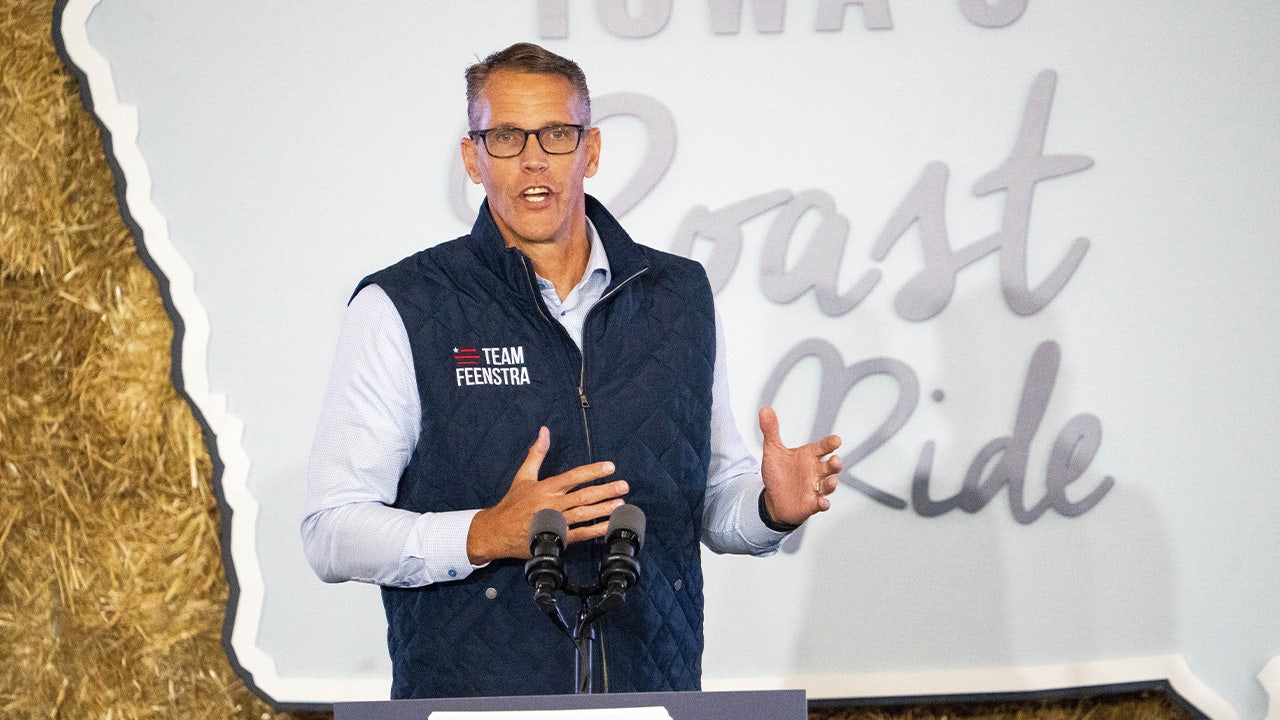
Cover image from foxnews.com, which was analyzed for this article
Trump-endorsed Feenstra lost the GOP governor primary to a MAHA-backed challenger in an upset. Democrats see opportunities in the state for November.
PoliticalOS
Wednesday, June 3, 2026 — Politics
Lahn’s primary victory over the Trump-endorsed candidate creates an open November contest against Democrat Rob Sand in a state Republicans have held since 2011. The result tests whether outsider and MAHA-aligned messaging can consolidate support in a traditionally Republican electorate now rated more competitive by some analysts. Democrats view simultaneous open races as an opening, yet recent statewide voting margins continue to favor Republicans.
What outlets missed
The narrow 1,600-vote margin reported by the Associated Press tracker appeared in only one account and could not be independently verified by other outlets. Lahn’s explicit MAHA Action endorsement and related platform details on agricultural and health issues received uneven coverage, appearing fully in one source and omitted in another. Broader context on nonpartisan race ratings for both the governor and Senate contests was absent from the Democratic-optimism focused piece, leaving structural headwinds unaddressed. Details on Lahn’s prior campaign work in other states and his self-funding approach were mentioned selectively rather than consistently across reports.
Iowa Republican Primary Delivers Surprise Victory for Outsider Candidate
Zach Lahn defeated Trump-endorsed Rep. Randy Feenstra in Iowa’s Republican primary for governor on Tuesday, marking an upset in the race to replace outgoing Gov. Kim Reynolds. Lahn, a farmer and businessman with no prior elected office, secured the nomination with a narrow lead of roughly 1,600 votes after nearly all ballots were counted.
Feenstra, who represents Iowa’s 4th Congressional District, entered the contest as the frontrunner with established name recognition, a fundraising edge, and backing from figures including former Gov. Terry Branstad. President Trump issued a late endorsement just days before the vote, yet it proved insufficient against Lahn’s appeal. Lahn also bested former state Rep. Brad Sherman, former state official Adam Steen, and state Rep. Eddie Andrews.
Lahn campaigned on an “Iowa First” platform that emphasized resistance to career politicians, special interests, and corporate influence. His messaging resonated with voters who have grown skeptical of promises from established Republican figures amid ongoing economic pressures in rural areas. Data on rising farm foreclosures and related hardships have fueled perceptions that policy decisions in Washington and Des Moines have not aligned with local priorities.
The primary outcome reflects a broader pattern in which voters in agricultural states weigh tangible results over endorsements or institutional support. Feenstra’s congressional tenure and party connections did not overcome doubts about whether those advantages translate into policies that protect family farms and small businesses from regulatory and market distortions.
In the general election, Lahn will face Democrat Rob Sand, the current state auditor and the only Democrat holding statewide office in Iowa. Both the governorship and a U.S. Senate seat are open, creating a rare simultaneous contest that has drawn attention from national parties. Democrats have pointed to economic dissatisfaction in rural counties as a potential opening, though Republican voters showed a preference for Lahn’s outsider stance over Feenstra’s established profile.
Lahn’s victory underscores the limits of late-stage national endorsements when local concerns about economic autonomy take precedence. Iowa’s agricultural economy has long depended on individual initiative and market signals rather than centralized planning, a dynamic that appears to have shaped voter choices in this primary. The result leaves the GOP nominee positioned to argue for reduced interference from distant institutions in the November matchup.
You just read Conservative's take. Want to read what actually happened?
More in Politics
Trump at 32% Approval as Gas Prices Test GOP Midterm Hopes
NYT/Siena polling showed Trump's approval at historic lows around 32 percent with Democrats leading by double digits in key districts. Early voting has surged in battleground states.

Record Early Voting Hits Battlegrounds, Shifting Partisan Shares
AP analysis found hundreds of thousands more early ballots than in 2022 in states including Texas, Ohio, Kansas, Maine, and North Carolina, shifting partisan dynamics.
Trump Backs Marshall in Kansas Senate Race Tightened by Farm Costs
President Trump rallied in deep-red Kansas for GOP Sen. Roger Marshall in a competitive race, announcing an $8 billion farm fuel relief program amid high diesel prices. Democrats see an opening to end 94 years of GOP dominance in the state.

Trump Pauses Russia Sanctions Amid Ukraine Tensions and Missile Strikes
Trump waived sanctions on Russia and floated trilateral talks with Putin and Xi as part of ending the Ukraine war, while tensions rose with Zelenskyy over Starlink and arms. Bipartisan senators engaged Zelenskyy amid the shifts.
The Compass
You just read five takes on one story.
What's your take? Find your political shape in a few minutes.
Take the test