
Trump Says Iran Deal Near as Ceasefire Holds After Weekend Strikes
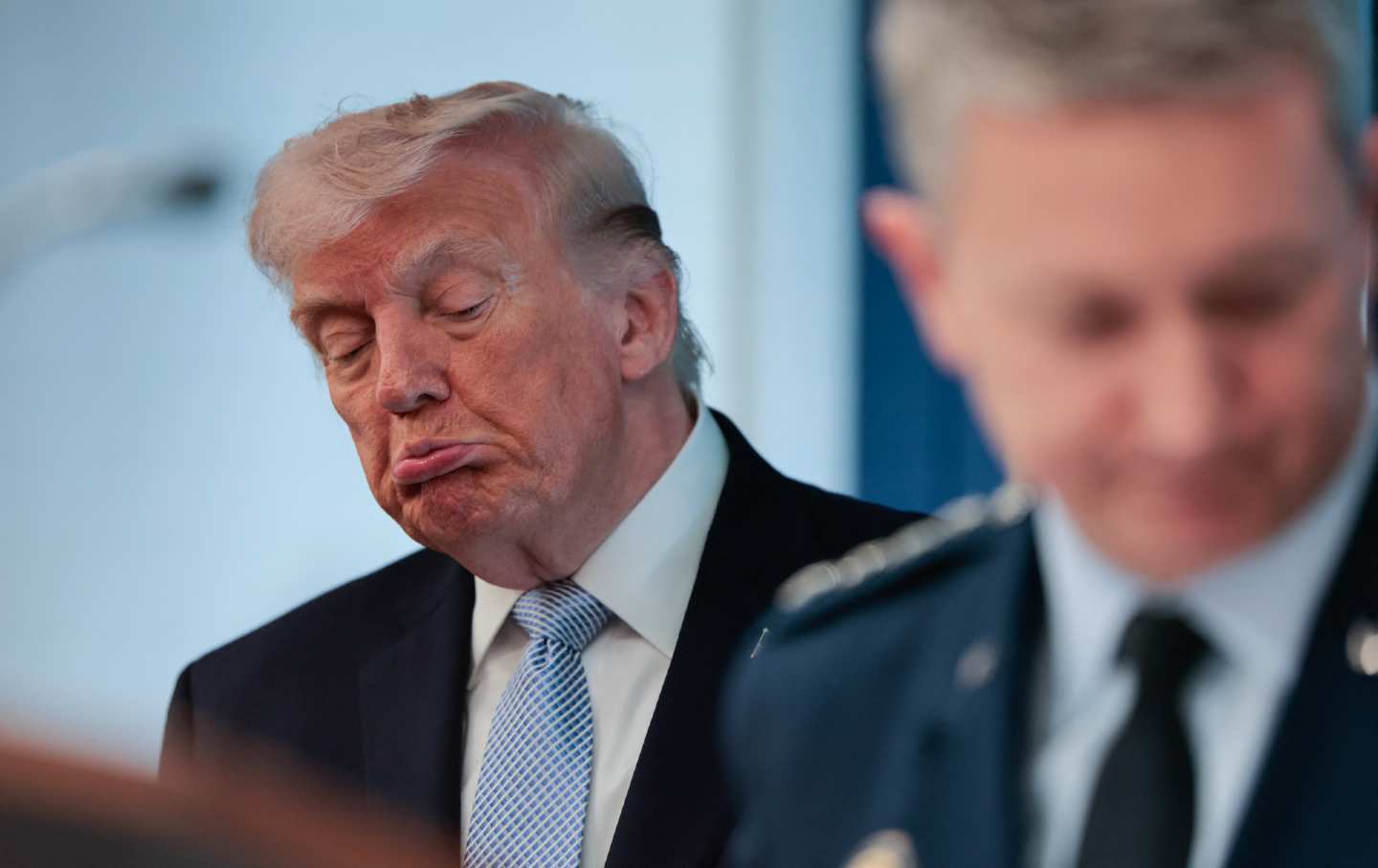
Cover image from thenation.com, which was analyzed for this article
Trump claimed the US is in the 'final throes' of a strong Iran deal as ceasefire holds following recent Israel-Iran flare-ups.
PoliticalOS
Tuesday, June 9, 2026 — Politics
Trump’s public optimism about a quick deal collides with Iranian insistence that core issues remain off the table and with Israel’s continued operations in Lebanon. The ceasefire’s survival now depends on whether Washington can restrain both sides long enough for any agreement to take shape.
What outlets missed
Netanyahu canceled a major planned strike on Iran after Trump’s warning, a sequence reported by Axios and the Times of Israel but omitted from Al Jazeera’s account. Iranian officials explicitly stated that nuclear enrichment and blocked assets remain outside current talks, a position downplayed in coverage focused on U.S. optimism. The U.S. helicopter incident near Oman received only passing mention in several outlets despite occurring the same day as the reported diplomatic exchanges.
Trump's Repeated Iran Deal Predictions Test Credibility Amid Fragile Ceasefire
President Donald Trump has again stated that an agreement to end the conflict with Iran and reopen the Strait of Hormuz could come within days, even as fresh exchanges between Israel and Iranian-backed forces test the April ceasefire. Speaking after an NBA game in New York, Trump described negotiations as entering their final stages for an accord that would bar Iran from nuclear weapons and restore commercial shipping through the vital waterway immediately upon signing. Similar forecasts have been issued more than three dozen times in recent months, with earlier timelines of four to six weeks of fighting now surpassed by more than 100 days of hostilities.
The pattern reflects a common feature of extended military commitments: optimistic projections that outpace observable results on the ground. Iranian forces fired missiles at northern Israel after accusing Jerusalem of violating the truce through strikes on Lebanon, prompting Israeli responses that included attacks on Iranian industrial sites such as the Mahshahr petrochemical complex. Tehran has conditioned any sustained halt on Israeli restraint elsewhere, while Israeli officials maintain that operations against Hezbollah remain separate from US-Iran talks. These crosscurrents underscore how subsidiary conflicts can unravel central agreements when incentives among multiple actors do not align.
Trump has urged Israeli Prime Minister Benjamin Netanyahu to exercise caution to preserve the pause, highlighting tensions between alliance partners over the pace and scope of operations. Public statements from Iranian parliamentary leaders have warned that repeated violations demonstrate insufficient commitment to trust-building, leaving the truce vulnerable to renewed escalation. Past US efforts to contain Iranian nuclear ambitions through economic concessions produced mixed compliance at best, and the current impasse shows how withdrawal from prior frameworks can leave fewer viable paths without renewed concessions that carry their own enforcement challenges.
The economic stakes center on the Strait of Hormuz, through which a significant share of global oil traffic passes. Any prolonged closure raises shipping costs and disrupts energy markets worldwide, effects that compound over time regardless of short-term military objectives. Trump's insistence that pilots downed in a US helicopter incident near the strait received prompt rescue points to ongoing operational risks even as diplomatic channels remain active. Such incidents illustrate the gap between declared timelines and the friction inherent in coordinating air, naval, and diplomatic assets across distant theaters.
Analysts note that Iran's regime has historically used negotiations to extract relief while advancing parallel capabilities, a pattern unlikely to change absent sustained pressure on its revenue sources. Trump's approach emphasizes preventing nuclear breakout while seeking an exit that avoids deeper entanglement, yet the accumulation of unfulfilled deadlines suggests that adversaries calculate differently when they perceive divided US attention or domestic political constraints. The episode aligns with repeated historical cases where initial assumptions about quick resolutions yielded extended stalemates, with costs borne by taxpayers and regional stability left unsettled.
You just read Conservative's take. Want to read what actually happened?
More in Politics
Trump at 32% Approval as Gas Prices Test GOP Midterm Hopes
NYT/Siena polling showed Trump's approval at historic lows around 32 percent with Democrats leading by double digits in key districts. Early voting has surged in battleground states.

Record Early Voting Hits Battlegrounds, Shifting Partisan Shares
AP analysis found hundreds of thousands more early ballots than in 2022 in states including Texas, Ohio, Kansas, Maine, and North Carolina, shifting partisan dynamics.
Trump Backs Marshall in Kansas Senate Race Tightened by Farm Costs
President Trump rallied in deep-red Kansas for GOP Sen. Roger Marshall in a competitive race, announcing an $8 billion farm fuel relief program amid high diesel prices. Democrats see an opening to end 94 years of GOP dominance in the state.

Trump Pauses Russia Sanctions Amid Ukraine Tensions and Missile Strikes
Trump waived sanctions on Russia and floated trilateral talks with Putin and Xi as part of ending the Ukraine war, while tensions rose with Zelenskyy over Starlink and arms. Bipartisan senators engaged Zelenskyy amid the shifts.
The Compass
You just read five takes on one story.
What's your take? Find your political shape in a few minutes.
Take the test