
Trump Says Iran Deal Near as Ceasefire Holds After Weekend Strikes
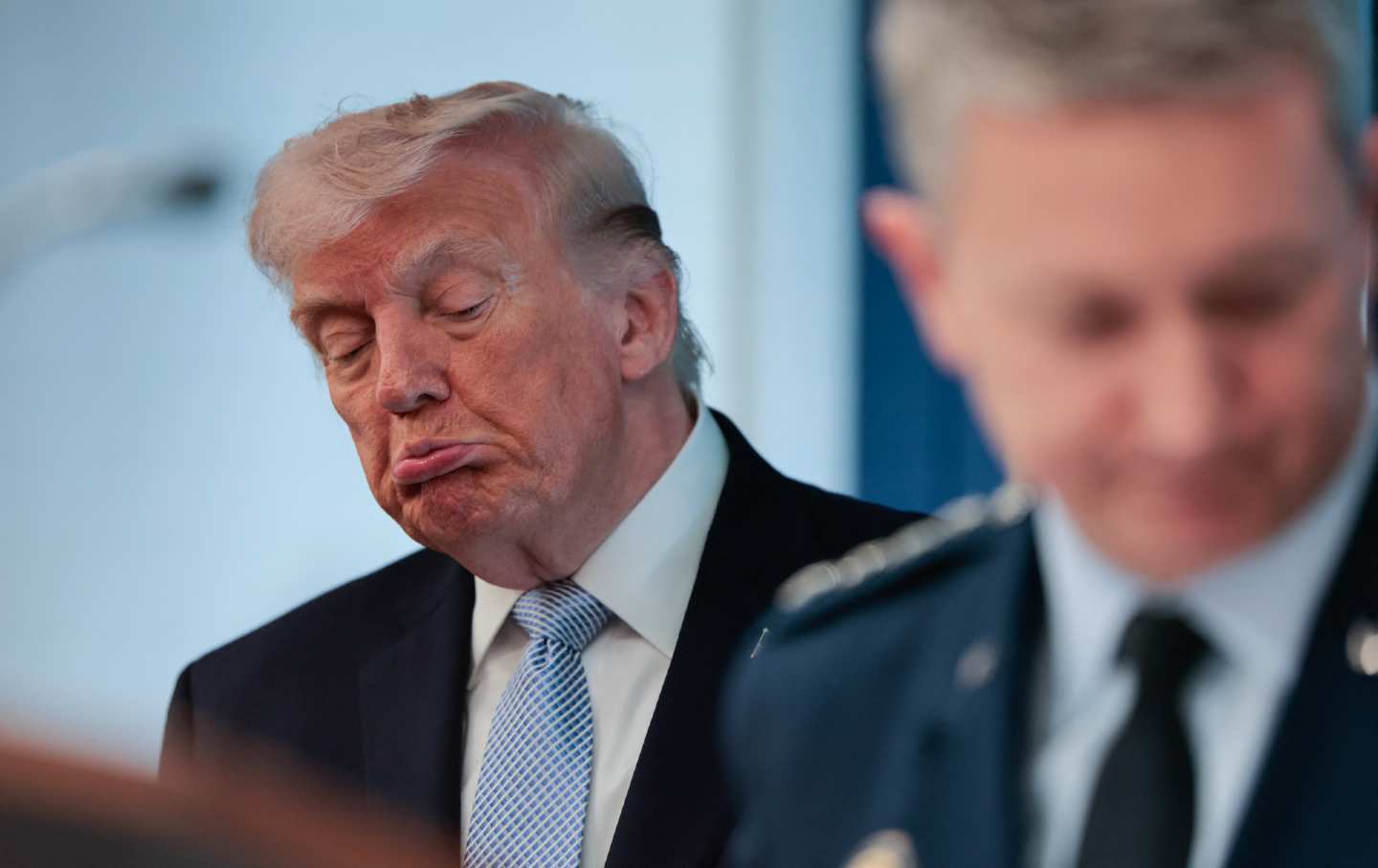
Cover image from thenation.com, which was analyzed for this article
Trump claimed the US is in the 'final throes' of a strong Iran deal as ceasefire holds following recent Israel-Iran flare-ups.
PoliticalOS
Tuesday, June 9, 2026 — Politics
Trump’s public optimism about a quick deal collides with Iranian insistence that core issues remain off the table and with Israel’s continued operations in Lebanon. The ceasefire’s survival now depends on whether Washington can restrain both sides long enough for any agreement to take shape.
What outlets missed
Netanyahu canceled a major planned strike on Iran after Trump’s warning, a sequence reported by Axios and the Times of Israel but omitted from Al Jazeera’s account. Iranian officials explicitly stated that nuclear enrichment and blocked assets remain outside current talks, a position downplayed in coverage focused on U.S. optimism. The U.S. helicopter incident near Oman received only passing mention in several outlets despite occurring the same day as the reported diplomatic exchanges.
Trump Claims Deal With Iran Is Days Away as Ceasefire Frays
President Donald Trump said Tuesday that negotiations with Iran are in their final stages and could produce an agreement within two or three days that would bar Tehran from acquiring nuclear weapons and reopen the Strait of Hormuz to commercial traffic. Speaking to reporters after attending an NBA Finals game in New York, Trump described the emerging accord as “very, very good” and “strong” and said it would take effect immediately upon signing. He has made similar forecasts repeatedly since the conflict passed the 100-day mark on Sunday.
The latest round of public optimism comes as the April ceasefire between Iran and Israel shows renewed strain. Israel conducted strikes on an Iranian petrochemical complex and on Hezbollah targets in Lebanon over the weekend, prompting Iranian missile fire toward northern Israel. Iran’s foreign ministry has said it will halt further attacks only if Israeli operations in Lebanon cease. Trump has privately urged Israeli Prime Minister Benjamin Netanyahu to avoid actions that could collapse the truce, according to people familiar with the exchanges.
The diplomatic channel between Washington and Tehran now operates alongside a parallel and increasingly public disagreement between the United States and Israel. Israeli officials have insisted that operations against Hezbollah remain separate from any nuclear talks, while Iranian parliamentary leaders have warned that continued Israeli strikes demonstrate a lack of genuine commitment to de-escalation. The result is a three-sided set of constraints in which each party’s assurances to its domestic audience undercuts the others’ confidence in the process.
Trump’s insistence that any final agreement will be markedly better than the 2015 nuclear deal he withdrew from in 2018 collides with the military and diplomatic record of the past three months. U.S. and Israeli forces have not achieved the decisive degradation of Iranian capabilities that officials once projected would force rapid concessions. Iranian forces, for their part, have demonstrated an ability to sustain limited but disruptive strikes and to maintain leverage over shipping routes even under intensified pressure. These realities have narrowed the range of outcomes that could plausibly be presented as a clear American victory.
Negotiators are therefore confronting a narrower set of choices than existed before the current round of fighting. A return to the precise terms of the 2015 agreement is no longer available, both because of accumulated distrust and because Iran’s regional posture has been altered by the conflict. Any new framework would likely require additional verification measures or regional side arrangements that Iran has so far resisted and that Israeli officials have already signaled they will view skeptically. The gap between these constraints and the administration’s public rhetoric has grown more visible with each passing prediction of an imminent breakthrough.
The administration’s approach also continues to tie the pace of diplomacy to Israeli military decisions that Washington does not fully control. Netanyahu’s government faces its own domestic incentives to demonstrate ongoing pressure on Iranian proxies, incentives that are not automatically aligned with the timetable Trump has described. The result is a negotiation in which progress on the nuclear file can be interrupted at any moment by actions on the Lebanese front that neither the United States nor Iran can reliably prevent.
Officials in all three capitals continue to describe the present moment as one in which an agreement remains possible. Yet the accumulation of missed deadlines, resumed strikes, and contradictory public statements has left the process dependent on a narrow band of restraint that has already proved difficult to maintain.
You just read Liberal's take. Want to read what actually happened?
More in Politics

Kremlin Signals Openness to Renewed Ukraine Peace Talks
Trump envoys met Putin and Zelenskyy with new proposals for ending the war, including a temporary airstrike pause. Kremlin signals openness to renewed talks.

US envoys meet Putin then Zelenskyy as Ukraine talks resume
US envoys Steve Witkoff and Jared Kushner met Putin in Moscow then traveled to Kyiv for discussions on ending the Ukraine war. Putin ordered a 72-hour ceasefire in Kyiv as part of the push, with talks described as useful but showing no immediate breakthrough.

Trump Super PAC Spends $10M in Tight Texas Senate Race
Republicans face challenges escaping Trump's influence as his super PAC spends heavily in key races like Texas Senate. Democrats highlight economic discontent while both parties focus on voting rules, redistricting, and control of Congress.

US-Iran tanker strikes resume as June ceasefire unravels
US strikes on Iranian oil tankers linked to IRGC follow alleged missile attacks, with Iran vowing reprisals. Coverage examines the months-long conflict's trajectory and economic ripple effects like fuel prices.
The Compass
You just read five takes on one story.
What's your take? Find your political shape in a few minutes.
Take the test