
Trump Extends Israel-Lebanon Ceasefire as Hormuz Blockade Enters Week 8 of Iran War
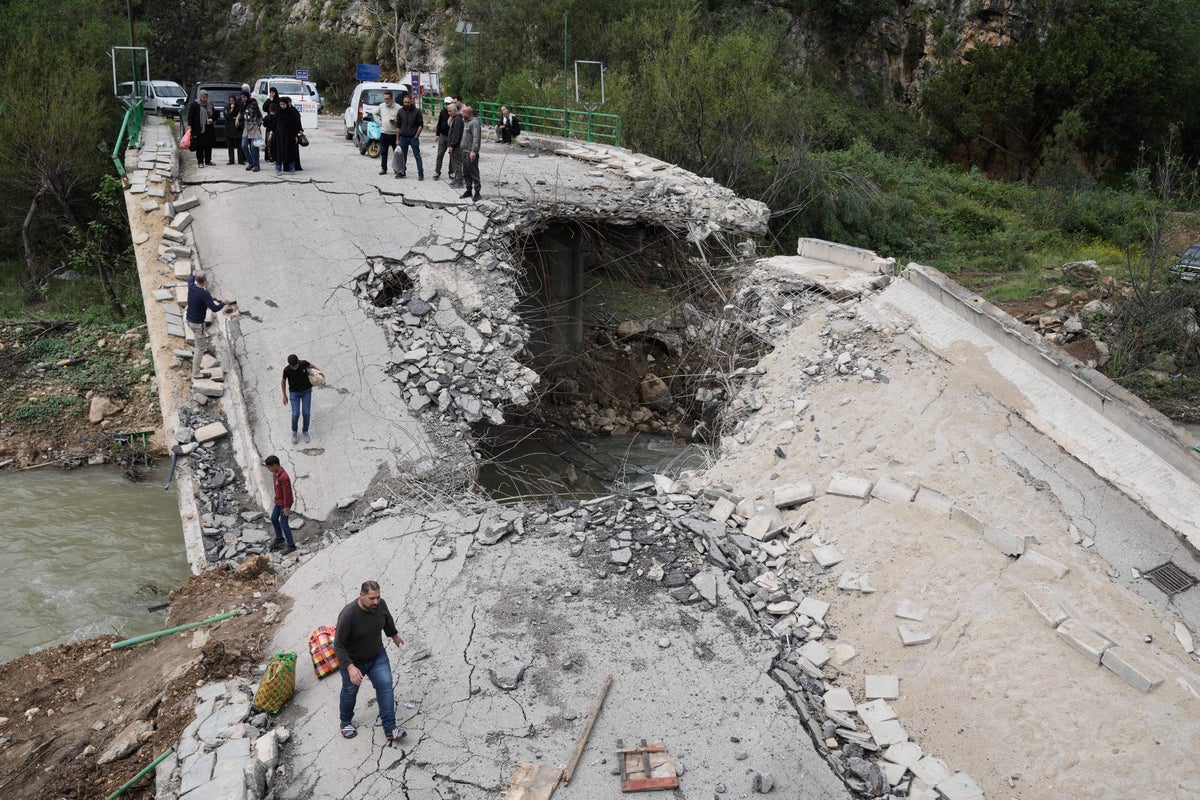
Cover image from independent.co.uk, which was analyzed for this article
President Trump extends the Israel-Lebanon ceasefire amid day 56 of the Iran war, with Hegseth and Caine briefing on 'epic fury' in the Strait of Hormuz including shoot-and-kill orders and minimal shipping. Israeli strikes continue despite truce, as Iran delegation heads to Pakistan for talks. Global allies strain under US pressure.
PoliticalOS
Friday, April 24, 2026 — Politics
The Iran conflict sits in an uneasy pause where the U.S. Hormuz blockade exerts real pressure yet Iran has adapted through higher oil prices, floating storage and willingness to endure longer than Washington may prefer. Diplomatic channels in Pakistan remain active but fragile, while the separate Israel-Lebanon ceasefire is repeatedly tested by strikes and retaliatory fire. The single most important reality is that economic pain is mutual, shipping data is opaque, and any miscalculation risks rapid escalation; readers should track primary military releases and trade-intelligence numbers rather than any single outlet's framing.
What outlets missed
Most coverage underplayed documented U.S. casualties, including six soldiers killed by an Iranian drone on March 1 and the loss of a KC-135 tanker with four crew on March 12, per CENTCOM. Outlets also gave short shrift to Iran's actual oil export revenues rising about 40 percent in March-April due to prices above $90-100 per barrel despite the blockade, with 160-170 million barrels already afloat providing cash flow potentially into August. Iranian mine-laying that tripled before U.S. minesweeping, attacks on energy infrastructure across six Gulf states, and the precise timeline of mutual escalations (Iran closing the strait March 2, U.S. blockade April 13) received uneven attention. Finally, the fragility of the Israel-Lebanon truce was often buried; Israeli strikes killed a journalist and others the day before the extension announcement, while Hezbollah conducted four operations in response.
Trump Advances Aggressive Peace Push as Iran Buckles Under Blockade
President Donald Trump is moving swiftly to reshape the Middle East through a combination of military pressure and direct diplomacy, extending ceasefires while maintaining a punishing naval blockade that officials say is bringing Iran to its knees. As Tehran sends a high-level delegation to Pakistan amid faltering talks with Washington, the administration is projecting confidence that its strategy of decisive action followed by deal-making is working, even as legacy media outlets fixate on timelines and domestic political gotchas.
The latest developments come eight weeks into a conflict that began Feb. 28 with strikes that eliminated Supreme Leader Ali Khamenei and crippled much of Iran’s military capability. Trump extended the current ceasefire Tuesday and has kept up the blockade of the Strait of Hormuz, a critical chokepoint for global oil. In a Truth Social post, the president stated bluntly that Iran is “collapsing financially,” losing roughly $500 million a day, with its military and police complaining about unpaid wages. U.S. forces have seized Iranian tankers and redirected cargo ships, enforcing what the administration calls necessary leverage until Tehran makes serious concessions.
War Secretary Pete Hegseth and Joint Chiefs Chairman Gen. Dan Caine provided updates Friday morning on the operation, which included an intense initial air campaign of roughly 1,000 sorties per day. The briefing emphasized that America has achieved its core military objectives and is now in a holding pattern, using naval power to squeeze Iran’s revenue streams without committing to a prolonged ground war. Trump has made clear he retains the option to “finish it up militarily” if diplomacy fails, and he recently issued orders authorizing U.S. forces to “shoot and kill” Iranian small boats harassing shipping in the strait. That escalation drew predictable bluster from Tehran, where President Masoud Pezeshkian and Parliament Speaker Mohammad Bagher Qalibaf issued coordinated statements insisting there are no internal divisions in Iran, only “revolutionaries” united against outsiders. The unified messaging itself underscored the uncertainty about who actually controls the regime after Khamenei’s death, with a murky mix of civilian politicians and military figures apparently competing for influence.
While the administration presses its advantage, Iran is attempting indirect channels. Senior Iranian Foreign Minister Abbas Araghchi is leading a delegation arriving in Islamabad, Pakistan, either Friday or Saturday. Pakistani and Iranian sources described the trip as tied to ongoing ceasefire discussions, though it remains unclear whether it signals an imminent breakthrough with the United States or simply an attempt by Tehran to find breathing room. The White House has not commented publicly on the Pakistan meetings, maintaining focus on its own leverage through the Hormuz blockade. Al Jazeera and other outlets have openly questioned how long Iran can hold out economically, a telling admission that Trump’s pressure campaign is inflicting real pain on a regime long accustomed to evading sanctions.
Trump’s approach stands in sharp contrast to the endless wars and weak diplomacy that defined previous administrations. Rather than allowing Iran to fund proxies across the region while American families paid at the pump, the president has used targeted force to degrade Tehran’s capabilities and is now dangling the prospect of relief from the blockade in exchange for a genuine deal. That pragmatism was on display Thursday when Trump hosted Israeli and Lebanese ambassadors at the White House, announcing a three-week extension of the ceasefire between those nations and expressing optimism about a broader peace agreement this year. Notably absent from the talks: Hezbollah, the Iran-backed militant group that has spent years destabilizing Lebanon and attacking Israel. Trump made clear the United States will help Lebanon protect itself from the terrorist organization, effectively leaving Hezbollah on the sidelines as Washington brokers terms directly with national governments.
The progress has not shielded Trump from domestic critics. During a press session, NOTUS reporter Jasmine Wright pressed the president on the conflict’s length, noting it had exceeded the administration’s initial four-to-six-week estimate and contributed to higher gas prices. Trump cut her off sharply. “You’re such a disgrace,” he said. “Did you hear what I just said? How many years was Vietnam?” He reminded reporters that the United States had accomplished its primary military goals within the first month and is now positioned to dictate terms rather than bleed resources in another nation-building quagmire. The exchange highlighted a familiar pattern: media figures more interested in catching the president in a timeline violation than in acknowledging the strategic gains or the billions of dollars in oil revenue denied to a terror-sponsoring regime.
Critics of endless Middle East entanglement have long argued America should avoid being drawn into regional conflicts that drain treasure and distract from domestic priorities. Trump’s strategy appears aimed at avoiding that trap. By decimating Iran’s offensive capabilities early, enforcing a blockade that hits the mullahs where it hurts, and pursuing selective diplomacy that sidelines rejectionist groups like Hezbollah, the administration is attempting to force a new equilibrium that puts American interests first. Whether Tehran’s delegation in Pakistan produces movement or more stalling remains to be seen. What is clear is that after years of Iran growing bolder under weak American leadership, a decisive president is using every tool at his disposal to end the threat without repeating the costly mistakes of the past. The coming days will test whether the regime in Tehran recognizes the reality of its weakened position or continues clinging to a revolutionary posture that has left its people isolated and its economy in free fall.
You just read America First's take. Want to read what actually happened?
More in Politics

Trump Defends Ramaswamy Ad Using Estranged Mother in Ohio Race
President Trump defended a GOP nominee's ad featuring a Democratic opponent's estranged mother, calling it powerful, while drawing criticism from some Republicans including Ohio Gov. Mike DeWine. The ad has sparked internal GOP tensions ahead of midterms.
Federal Raid Targets Omar Amid Unresolved Name and Marriage Allegations
Agents searched Rep. Ilhan Omar's DC residence over immigration fraud allegations; she called it bizarre. Reports and commentary questioned her birth name and past marriage details.

Supreme Court Upholds New Hampshire Student ID Voting Ban
The Supreme Court upheld New Hampshire's ban on student IDs as valid voter identification just before midterms, affecting a tight Senate race.
Early Voting Hits 21 Million as Most Trust Midterm Accuracy
Millions have already voted early as parties make final appeals amid $1.4 billion in ad spending; polls show confidence in election accuracy.
The Compass
You just read five takes on one story.
What's your take? Find your political shape in a few minutes.
Take the test