
Israel-Lebanon Ceasefire Tied to Hezbollah Pullback, Iran Talks
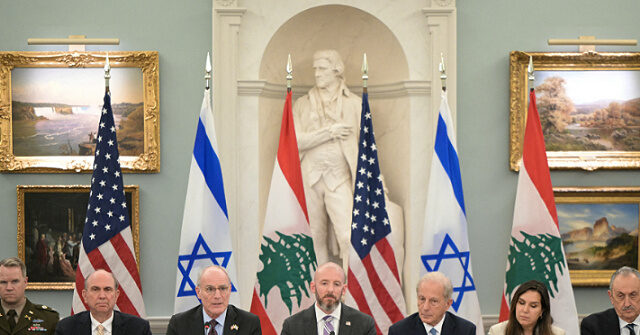
Cover image from breitbart.com, which was analyzed for this article
Israel and Lebanon reached a US-brokered ceasefire framework conditional on Hezbollah halting attacks, though some operations continue.
PoliticalOS
Thursday, June 4, 2026 — Politics
The ceasefire remains conditional and fragile, with both sides continuing limited operations while broader talks on a permanent arrangement and the linked Iran negotiations remain unresolved. Readers should watch whether Hezbollah accepts the withdrawal terms and whether the pilot zones are actually established.
What outlets missed
Most accounts omitted the specific scale of reported Israeli strikes near hospitals in Tebnine and Tyre and the Lebanese health ministry claim that two paramedics were killed in an ambulance attack. The connection between the Lebanon track and the separate U.S.-Iran talks over the Strait of Hormuz received uneven treatment, with some outlets noting Iranian warnings but few detailing the U.S. House resolution pressing Trump to seek congressional approval for continued involvement. Details on the exact size of the proposed pilot zones and the timeline for any Israeli withdrawal from the 600 square kilometers currently held were left largely unaddressed.
Trump Administration Secures Israel Lebanon Ceasefire to Advance Iran Deal
The Trump administration announced Wednesday that Israel and Lebanon have agreed to a new ceasefire framework aimed at halting fighting along their border and removing one obstacle to broader talks with Iran. The deal, reached after four rounds of ambassador level negotiations in Washington, requires Hezbollah to stop all attacks and pull its fighters north of the Litani River in southern Lebanon.
The joint statement from the United States, Israel and Lebanon stressed that the Lebanese army would establish exclusion zones where no non state actors could operate. Those steps are meant to allow progress toward a comprehensive peace and security agreement between the two countries. Officials said the next round of talks is scheduled for June 22.
Despite the announcement, clashes continued into Thursday. Israeli airstrikes hit areas in Nabatieh and the western Bekaa valley, while Hezbollah fired on Israeli positions near the village of Qantara. Israeli Defense Minister Israel Katz made clear that his forces would keep dismantling what he called terrorist infrastructure in the south and would retain freedom of action, backed by Washington, to strike Beirut if attacks on Israeli communities continued. Israeli troops are expected to stay in place to maintain a buffer zone.
Hezbollah, the Iran backed group that has long operated as a state within a state in Lebanon, was not part of the Washington talks. The Lebanese government has been trying to reassert control over its territory and disarm the militia, an effort that has gained urgency as the broader regional conflict with Iran drags on. The agreement explicitly rejects any attempt by outside actors to hold Lebanons future hostage, language widely understood as aimed at Tehran.
For the Trump administration the ceasefire is part of a larger scramble to wind down the war with Iran and stabilize the region. Previous rounds of fighting had threatened to derail those efforts, with Hezbollah rocket and drone attacks on northern Israel drawing repeated Israeli responses. The roughly twenty mile strip south of the Litani River has been the main theater, and clearing it of Hezbollah operatives is viewed as essential to any lasting arrangement.
Israeli officials have welcomed the American role while underscoring that their security requirements remain unchanged. Katz noted that any future comprehensive deal must be decided by the two sovereign governments, not dictated by militias or foreign powers. At the same time, the continued strikes on both sides show how fragile the truce remains only hours after it was declared.
Lebanons state news agency reported Israeli drone activity along roads in the south even as the announcement was being released. Hezbollah, for its part, has signaled it will not easily abandon positions it has held for years. The groups influence inside Lebanon, especially among the Shiite population, has long complicated efforts by the central government to enforce its authority.
The latest development comes against the backdrop of wider negotiations between Washington and Tehran over the regional war and related crises such as shipping through the Strait of Hormuz. Removing Hezbollah as an active front is seen as necessary to keep those talks on track. Yet the pattern of agreements followed by renewed shelling raises questions about whether any paper commitment can hold without decisive enforcement on the ground.
American diplomats have described the pilot zones for the Lebanese army as a practical test of whether Beirut can actually assert control. Success there could open the door to deeper security cooperation and eventually formal peace between Israel and Lebanon. Failure would likely mean more limited truces that leave the underlying threats in place.
The Trump team has positioned the effort as a pragmatic step to protect American interests and avoid deeper entanglement in another Middle East conflict. Officials have stressed that the future relationship between Israel and Lebanon belongs to those two governments alone. Whether Hezbollah and its Iranian backers accept that limit will determine if the current pause lasts or simply sets the stage for the next round of fighting.
You just read America First's take. Want to read what actually happened?
More in Politics

Trump at 32% Approval as Gas Prices Test GOP Midterm Hopes
NYT/Siena polling showed Trump's approval at historic lows around 32 percent with Democrats leading by double digits in key districts. Early voting has surged in battleground states.

Record Early Voting Hits Battlegrounds, Shifting Partisan Shares
AP analysis found hundreds of thousands more early ballots than in 2022 in states including Texas, Ohio, Kansas, Maine, and North Carolina, shifting partisan dynamics.

Trump Backs Marshall in Kansas Senate Race Tightened by Farm Costs
President Trump rallied in deep-red Kansas for GOP Sen. Roger Marshall in a competitive race, announcing an $8 billion farm fuel relief program amid high diesel prices. Democrats see an opening to end 94 years of GOP dominance in the state.

Trump Pauses Russia Sanctions Amid Ukraine Tensions and Missile Strikes
Trump waived sanctions on Russia and floated trilateral talks with Putin and Xi as part of ending the Ukraine war, while tensions rose with Zelenskyy over Starlink and arms. Bipartisan senators engaged Zelenskyy amid the shifts.
The Compass
You just read five takes on one story.
What's your take? Find your political shape in a few minutes.
Take the test