
JD Vance's Loyalty Tested as GOP Questions His Path to 2028
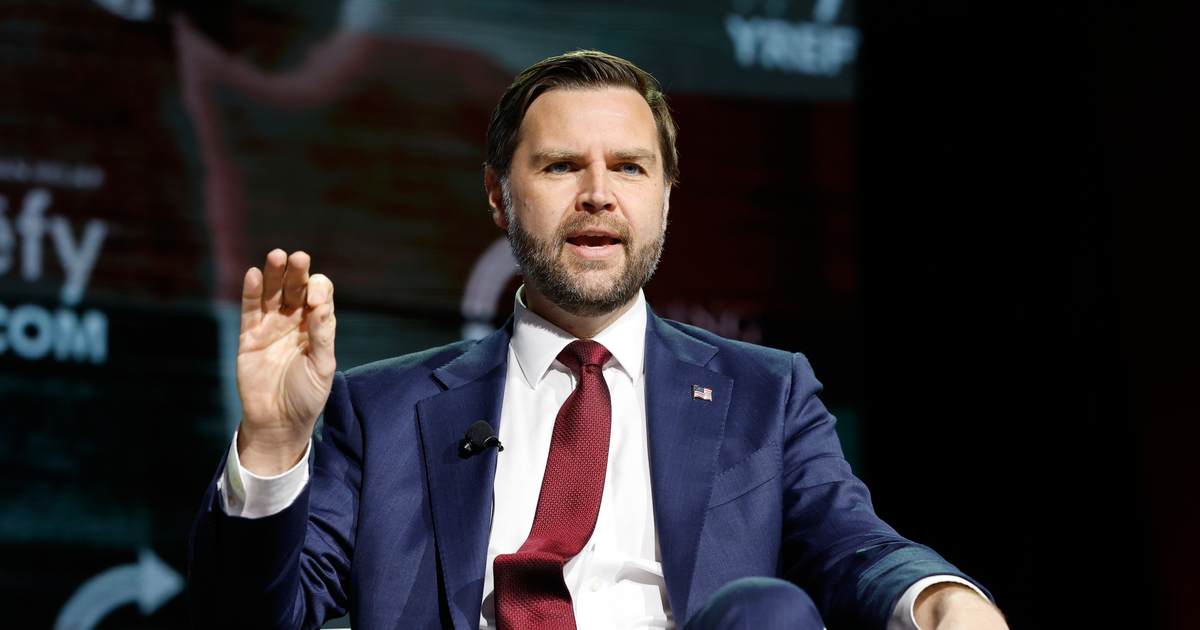
Cover image from townhall.com, which was analyzed for this article
Observers suggest JD Vance must break from Trump soon to rescue his career in a changing GOP landscape. Coverage portrays him as an enigma whose loyalty could determine his viability. Debates reflect broader tensions within Republican ranks.
PoliticalOS
Sunday, April 19, 2026 — Politics
JD Vance's political future depends on balancing demonstrated loyalty to Donald Trump against the need to define his own voice on issues such as Israel policy, religious engagement and foreign interventions. Many dramatic claims about his recent missteps remain unverified across outlets, underscoring the importance of distinguishing opinion from corroborated reporting. In a party still centered on Trump, Vance's adaptability, already evident in his ideological shifts, will likely determine whether he emerges as a unifying 2028 figure or becomes defined by unresolved internal tensions.
What outlets missed
Both analyzed columns leaned heavily on specific anecdotes that could not be independently verified in reporting from PBS, CNN, Forbes or the Times of Israel, including Vance's alleged tarmac comments on Lebanon, his precise role in Islamabad talks, and details of a Turning Point USA event reaction from Ben Shapiro. Coverage across outlets underplayed Vance's documented pro-Israel record, such as his public rejection of claims that Israel exerts undue influence over Trump and his defense of continued aid, as noted in Middle East Monitor and TRT World reporting from late 2025. Multiple pieces omitted granular theological context from Vance's exchange with Pope Leo XIV, in which he referenced truth-telling and historical examples rather than simply telling the Pope to avoid moral commentary on war. The analyses also gave short shrift to corroborated Trump administration outcomes, including early military recruiting successes and reported damage from Iran operations, which supporters argue bolster the case for continuity through Vance.
JD Vance Balances Loyalty and Results as Speculation Grows Over His Future
Vice President JD Vance returned from a high-stakes diplomatic mission this week to face a familiar dilemma: how to serve a president who inspires intense personal loyalty while preparing for political life after him. Recent engagements involving Iran, Hungary, and the Vatican have produced mixed results and sharp criticism, yet they occur against a backdrop of measurable progress under President Donald Trump that complicates any simple narrative of failure.
The vice president’s stop in Pakistan for indirect talks with Iranian officials followed an interview on the tarmac in Hungary. There, Vance addressed the fragile situation in Lebanon and Tehran’s attempts to link a ceasefire to broader regional demands. Iranian representatives pushed back hard. So did voices in Hungary, where local sentiment complicated American messaging on migration and security. A separate exchange with Pope Leo drew mockery from some European outlets. None of these fights were entirely of Vance’s making. Each reflected the administration’s effort to project strength while managing crises inherited from previous years of inconsistent policy.
Left-leaning commentators have seized on these episodes to portray Vance as a fall guy trapped by sycophancy. His favorability ratings have slipped in some surveys. Stories speculate that he must soon break with Trump to preserve his viability for 2028, invoking Roman history about emperors and betrayals. Such framing echoes earlier media portrayals that treated Trump’s first term as an aberration rather than a response to real discontent over borders, trade, and cultural cohesion.
Yet the empirical record of the current administration tells a different story. The stock market has climbed to fresh records, rewarding investors who bet on regulatory restraint and energy development. Tariff policies have delivered substantial revenue while forcing trading partners to reconsider imbalances built up over decades. Iranian military capabilities have suffered documented setbacks, a consequence of clearer American deterrence rather than the diplomatic deference of prior years. Military recruiting has hit targets five months early, suggesting renewed confidence among the young people the armed forces most need. These outcomes align with the priorities that attracted nearly 80 million voters to Trump in 2024, many of whom cast ballots for the man himself, his unfiltered style, and his willingness to accept political combat.
Vance’s own path mirrors larger tensions in American conservatism. A onetime skeptic who once compared Trump to a historical tyrant, he later concluded that elite institutions had failed working-class communities in ways that demanded disruption. His book “Hillbilly Elegy” documented cultural breakdown and family disintegration long before he entered electoral politics. That analysis owed more to empirical observation than ideology, a trait reminiscent of thinkers who insist on judging policies by their results rather than their intentions. Vance’s shift toward stronger immigration enforcement and skepticism of endless foreign commitments reflected the same data-driven evolution. When Trump offered a vehicle for those views, Vance climbed aboard, accepting the trade-offs that come with any real-world alliance.
This flexibility draws predictable scorn from critics who treat past statements as permanent indictments. It also raises legitimate questions inside conservative circles. No successor can replicate Trump’s personal magnetism or his instinct for political combat. Vance’s task is different: to demonstrate that the policy substance can endure beyond one man. Senator Marco Rubio has already signaled he would not challenge Vance in a primary, suggesting a degree of institutional recognition within the party. Yet Vance must still prove he connects with the same voters who respond to Trump’s bluntness and his habit of keeping promises on trade, borders, and national sovereignty.
The speculation about disloyalty feels premature. Trump’s first vice president, Mike Pence, discovered that institutional loyalty has limits when core constitutional questions arise. Trump’s own history shows he can discard allies who diverge at critical moments. But Vance has so far avoided that collision by focusing on execution rather than separation. His public statements continue to emphasize continuity on the issues that produced the current economic and security gains. That choice carries risk. If the administration’s momentum stalls, the vice president will absorb much of the blame. If it continues, he inherits the coalition.
The deeper tension concerns incentives. Political actors respond to the environment around them. A vice president who turns on a sitting president with a still-strong base risks permanent alienation from the very voters he needs for a future national campaign. Conversely, remaining silent in the face of genuine error would betray the empirical standard Vance once applied to his own Appalachian roots. The test is not dramatic betrayal or blind fealty but whether Vance can articulate how the administration’s demonstrated successes, from labor-force participation to adversary deterrence, can be institutionalized without the unique personality that launched them.
Media narratives that dwell on plunging polls and personality clashes often underweight these substantive measures. They prefer palace intrigue to the slower work of assessing whether tariffs actually reshore manufacturing, whether energy dominance strengthens negotiating leverage, or whether military recruiting rebounds when national purpose feels clearer. Vance’s recent travels, however clumsily covered, reflect an administration attempting to apply those lessons abroad. Iran’s economic isolation and the pressure on proxy militias did not arise by accident. They reflect a deliberate shift from the assumptions that guided American policy for much of the post-Cold War era.
For now, Vance remains the logical steward of the political realignment that occurred in 2016 and consolidated in 2024. His challenge is to translate Trump’s disruptive force into durable governing institutions and habits. That project cannot succeed through media approval or clever historical analogies. It succeeds only if the results continue to validate the original wager: that a nation secure in its borders, confident in its culture, and realistic about trade and power can deliver broader prosperity than the alternative on offer. The past week’s controversies have not altered that underlying equation. They have simply made its human costs more visible.
You just read Conservative's take. Want to read what actually happened?
More in Politics

Trump Defends Ramaswamy Ad Using Estranged Mother in Ohio Race
President Trump defended a GOP nominee's ad featuring a Democratic opponent's estranged mother, calling it powerful, while drawing criticism from some Republicans including Ohio Gov. Mike DeWine. The ad has sparked internal GOP tensions ahead of midterms.
Federal Raid Targets Omar Amid Unresolved Name and Marriage Allegations
Agents searched Rep. Ilhan Omar's DC residence over immigration fraud allegations; she called it bizarre. Reports and commentary questioned her birth name and past marriage details.

Supreme Court Upholds New Hampshire Student ID Voting Ban
The Supreme Court upheld New Hampshire's ban on student IDs as valid voter identification just before midterms, affecting a tight Senate race.
Early Voting Hits 21 Million as Most Trust Midterm Accuracy
Millions have already voted early as parties make final appeals amid $1.4 billion in ad spending; polls show confidence in election accuracy.
The Compass
You just read five takes on one story.
What's your take? Find your political shape in a few minutes.
Take the test