
JD Vance's Loyalty Tested as GOP Questions His Path to 2028
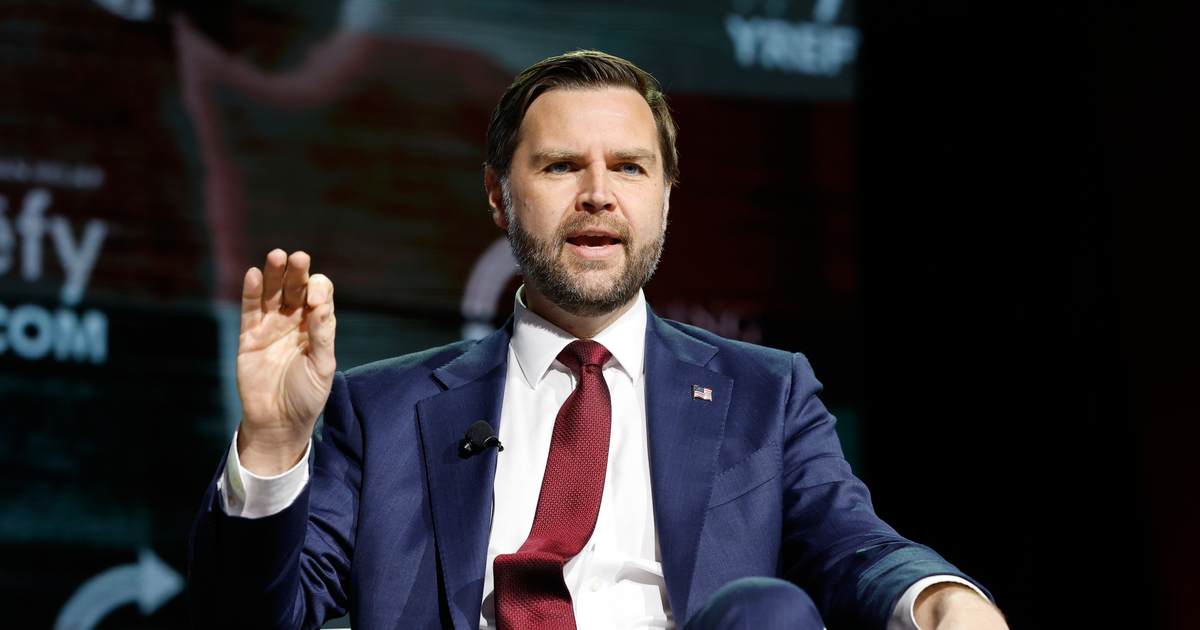
Cover image from townhall.com, which was analyzed for this article
Observers suggest JD Vance must break from Trump soon to rescue his career in a changing GOP landscape. Coverage portrays him as an enigma whose loyalty could determine his viability. Debates reflect broader tensions within Republican ranks.
PoliticalOS
Sunday, April 19, 2026 — Politics
JD Vance's political future depends on balancing demonstrated loyalty to Donald Trump against the need to define his own voice on issues such as Israel policy, religious engagement and foreign interventions. Many dramatic claims about his recent missteps remain unverified across outlets, underscoring the importance of distinguishing opinion from corroborated reporting. In a party still centered on Trump, Vance's adaptability, already evident in his ideological shifts, will likely determine whether he emerges as a unifying 2028 figure or becomes defined by unresolved internal tensions.
What outlets missed
Both analyzed columns leaned heavily on specific anecdotes that could not be independently verified in reporting from PBS, CNN, Forbes or the Times of Israel, including Vance's alleged tarmac comments on Lebanon, his precise role in Islamabad talks, and details of a Turning Point USA event reaction from Ben Shapiro. Coverage across outlets underplayed Vance's documented pro-Israel record, such as his public rejection of claims that Israel exerts undue influence over Trump and his defense of continued aid, as noted in Middle East Monitor and TRT World reporting from late 2025. Multiple pieces omitted granular theological context from Vance's exchange with Pope Leo XIV, in which he referenced truth-telling and historical examples rather than simply telling the Pope to avoid moral commentary on war. The analyses also gave short shrift to corroborated Trump administration outcomes, including early military recruiting successes and reported damage from Iran operations, which supporters argue bolster the case for continuity through Vance.
JD Vance Navigates a Narrowing Path Between Trump Loyalty and His Own Ambitions
WASHINGTON — Three public setbacks in a single week have left Vice President JD Vance in an increasingly uncomfortable spotlight, testing the limits of his carefully cultivated image as the loyal steward of the MAGA movement. Encounters with Iranian negotiators, Hungarian political audiences and the newly elected Pope Leo XIV produced a wave of criticism that has accelerated a decline in Vance’s standing with voters and raised fresh questions about whether the 2028 presidential hopeful can survive another two and a half years as Donald Trump’s political shield.
The episodes, all fought in service of Trump administration positions, come at a moment when Trump’s own approval ratings remain buoyed by tangible successes. The stock market has reached record highs, tariff revenue is pouring into federal coffers, and the armed services have met recruiting goals five months ahead of schedule. Iran is still assessing damage from recent U.S. strikes, a point Vance himself referenced during a stop in Hungary before traveling to Pakistan for indirect talks with Tehran. Yet the vice president’s personal numbers are moving in the opposite direction, according to multiple polls, as voters increasingly associate him with the sharper edges of Trump’s approach rather than the policy wins.
This divergence captures the core tension of Vance’s current role. He entered the administration as a converted skeptic — a man who once warned that Trump could become “America’s Hitler” and who built a public profile as a sharp critic of the former president’s character. That past has never fully disappeared, even as Vance remade himself into an immigration hard-liner who defended Trump’s 2024 campaign claims about Haitian migrants and embraced the cultural grievances that animate the MAGA base. The transformation was complete enough to earn Trump’s endorsement and a place on the ticket, but it has left Vance with an authenticity problem that surfaces whenever he steps onto the international stage.
Interviews and public appearances over the past week underscored the challenge. While standing on the tarmac in Hungary, Vance addressed the fragile Lebanon ceasefire and Tehran’s insistence that any diplomatic track with the United States must address regional conflicts in tandem. The comments drew swift pushback from Iranian officials and prompted mockery from European observers who saw the vice president as merely echoing Trump’s maximalist instincts. Similar criticism followed his handling of a Vatican-related dispute involving the new pope, where Vance’s rhetorical approach landed as both aggressive and clumsy. Hungarian voters, meanwhile, appeared unmoved by his attempt to defend Trump’s broader foreign policy vision during a brief visit.
The pattern is familiar. Vance has repeatedly absorbed blows that were intended for the president, much as other Trump lieutenants have before him. The memory of Mike Pence remains instructive. When Pence refused to overturn the 2020 election results, Trump’s supporters, with the president’s apparent encouragement, turned on him so fiercely that some in the Capitol mob called for his execution. Loyalty to Trump, Vance’s allies concede privately, has never been fully reciprocated. The president has shown a willingness to discard even his most obsequious defenders when political expediency demands it.
Yet Vance’s position is different. At 41, he is widely viewed inside Republican circles as the heir apparent to the MAGA coalition Trump has built. Senator Marco Rubio has signaled he would step aside if Vance runs in 2028, and most other potential contenders are treating the vice president as the default choice. That status only heightens the stakes of his current slide. Some Republican strategists whisper that Vance may ultimately choose “family over country” and forgo a grueling national campaign, though there is little public evidence to support that speculation. More immediate is the growing conversation, even among some Trump allies, about the president’s mental sharpness and stamina. If those concerns intensify, Vance’s role as the ever-present defender could become politically toxic.
The vice president’s defenders argue that his evolution reflects genuine conviction rather than pure opportunism. They point to his writings about the devastation of deindustrialization in the Midwest and his belief that Trump alone channeled the rage of communities left behind by globalization. In this view, Vance’s willingness to absorb criticism is the price of maintaining the coalition that delivered Trump’s 2024 victory. Detractors, including some former acquaintances from his pre-MAGA days, see a more calculating figure — a politician who recognized that the path to power ran through Trump and has subordinated his earlier warnings about authoritarian tendencies to that reality.
For now, Vance continues the balancing act. His recent trip to Pakistan was framed by the White House as serious diplomatic groundwork on Iran, even as it produced the kind of awkward public moments that have come to define his tenure. The deeper question facing him is whether the posture of total loyalty remains sustainable. Trump’s movement was always more about the man than the policies, as Senator Tommy Tuberville noted recently when urging Republicans to pass the SAVE America Act. That personal bond is difficult to inherit.
Vance’s challenge, then, is not simply to defend Trump but to define himself in ways that feel authentic to the tens of millions who voted for the president’s distinctive blend of combativeness, cultural signaling and deal-making. The recent humiliations have made that task harder. If Trump’s second term continues to generate both policy victories and personal controversies, Vance may soon face a choice familiar to many who have served powerful and volatile leaders: remain the loyal lieutenant and risk being dragged down with the administration, or begin to carve out a separate identity while there is still time.
The coming months will test whether Vance possesses the political agility to manage that tension. His past as a fierce Trump critic suggests an independent streak, but the demands of the vice presidency have so far pushed him toward deference. As the president’s fitness becomes a more open topic of discussion in Washington, the incentives for Vance to differentiate himself may grow. For a politician who has already remade himself once, a second reinvention may prove necessary — this time not toward Trump, but away from him.
(Word count: 712)
You just read Liberal's take. Want to read what actually happened?
More in Politics

Trump at 32% Approval as Gas Prices Test GOP Midterm Hopes
NYT/Siena polling showed Trump's approval at historic lows around 32 percent with Democrats leading by double digits in key districts. Early voting has surged in battleground states.

Record Early Voting Hits Battlegrounds, Shifting Partisan Shares
AP analysis found hundreds of thousands more early ballots than in 2022 in states including Texas, Ohio, Kansas, Maine, and North Carolina, shifting partisan dynamics.

Trump Backs Marshall in Kansas Senate Race Tightened by Farm Costs
President Trump rallied in deep-red Kansas for GOP Sen. Roger Marshall in a competitive race, announcing an $8 billion farm fuel relief program amid high diesel prices. Democrats see an opening to end 94 years of GOP dominance in the state.

Trump Pauses Russia Sanctions Amid Ukraine Tensions and Missile Strikes
Trump waived sanctions on Russia and floated trilateral talks with Putin and Xi as part of ending the Ukraine war, while tensions rose with Zelenskyy over Starlink and arms. Bipartisan senators engaged Zelenskyy amid the shifts.
The Compass
You just read five takes on one story.
What's your take? Find your political shape in a few minutes.
Take the test