
King Charles Urges UK-US Alliance Renewal in Historic Congress Address
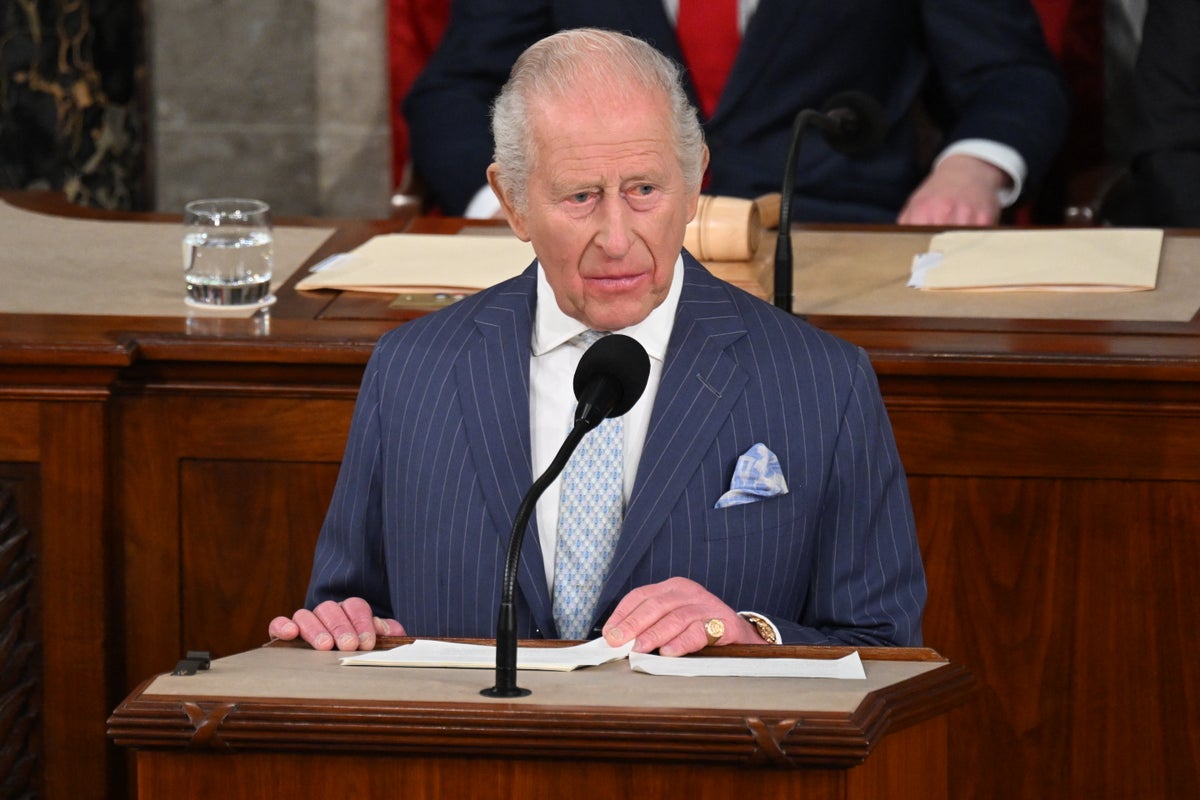
Cover image from independent.co.uk, which was analyzed for this article
King Charles III gave a historic address to a joint session of US Congress, receiving ovations for his call for checks and balances and praise of the UK-US alliance on its 250th anniversary. He and Queen Camilla attended a state dinner hosted by President Trump, featuring toasts to the 'indispensable alliance' and light-hearted moments. The visit continues to New York to honor 9/11 victims.
PoliticalOS
Wednesday, April 29, 2026 — Politics
Despite policy differences over Iran, defense spending and Ukraine, King Charles’s address to Congress and the subsequent state dinner reaffirmed the depth of the UK-US alliance with repeated bipartisan applause, historical references to shared democratic values, and light-hearted exchanges that underscored 250 years of partnership. The visit’s continuation to New York for 9/11 remembrance further emphasized solidarity forged in crisis. Readers should recognize these events as deliberate public diplomacy that signals continuity in transatlantic security cooperation beyond any single administration’s disputes.
What outlets missed
Most coverage downplayed or omitted the speech's explicit references to post-9/11 NATO Article 5 invocation, joint F-35 production, the AUKUS submarine program with Australia, and the precise UK defense spending target of 2.5 percent of GDP by 2027, details carried only in full transcripts from C-SPAN and cross-checked government releases. The full White House guest list's absence of any Democratic lawmakers or liberal Supreme Court justices was reported by the Times but rarely placed in the broader context that state dinners under multiple administrations have historically favored the host's political allies. Few outlets noted the Palace's legal caution against meetings with Epstein-related litigants, or that the King's oblique reference to societal ills was not tied to any specific scandal in verified transcripts. The extension of the trip to Bermuda as Charles's first visit as sovereign to a British overseas territory received almost no attention despite its symbolic weight for Commonwealth ties.
King Charles Warns of Dangerous Era in Bid to Repair Strained Alliance with Trump Administration
King Charles III stood before a joint session of Congress on Tuesday and delivered a carefully calibrated message of unity, urging American lawmakers to recommit to the transatlantic alliance at a moment of deep global instability and visible friction between Washington and London. The monarch, addressing Congress for the first time since his mother did so in 1991, received repeated standing ovations, including one before he even began speaking, in what aides described as a deliberate effort to smooth over tensions exacerbated by the Trump administration’s demands on its European partners.
In a speech that blended historical reflection with subtle policy prescriptions, Charles painted a picture of a world growing more volatile, citing ongoing conflicts from Europe to the Middle East. He emphasized the “indispensable partnership” between the United Kingdom and the United States, quoting Prime Minister Keir Starmer’s recent assertion that the two nations must build on the foundations that have sustained them for 80 years rather than disregard them. The message carried particular weight given recent public criticisms from President Donald Trump, who has pressed Britain to increase defense spending and expressed frustration with what he views as insufficient British support for the joint US-Israeli military campaign against Iran.
Charles was unambiguous about the need to uphold NATO, describing the alliance as essential for “keeping North Americans and Europeans safe from our common adversaries.” He also called for continued backing of “the defense of Ukraine and her most courageous people,” language that appeared aimed at an administration that has often signaled skepticism toward open-ended support for Kyiv. The king acknowledged that the two countries “do not always agree,” a nod to the spirit of 1776 and current policy divergences, but insisted that reconciliation and shared democratic values have repeatedly overcome such differences.
The address came hours before Trump hosted the royal couple at a lavish state dinner at the White House, where both leaders toasted the “unbreakable bond” between their nations. Trump, who joked that Charles had managed to elicit applause from Democrats in a way he never could, described the visit as occurring on the eve of America’s 250th anniversary of independence. He praised Britain as the “mother country” and thanked the United Kingdom for its “richest inheritance.” Charles responded by stressing themes of history, heritage, and a shared determination to face the future together. The president was presented with a gilded bell from the HMS Trump, a British submarine that served in the Pacific during World War II, a gesture clearly designed to appeal to Trump’s well-known affinity for symbols of strength and legacy.
Yet beneath the pomp and cordial toasts, the visit underscored real strains. British officials have been reluctant to fully endorse aspects of the US-Israeli operations in Iran, creating public distance between the Starmer government and the Trump White House. Trump has repeatedly criticized European allies for failing to meet NATO spending targets and has questioned the value of multilateral commitments that he believes disadvantage the United States. Charles’s repeated emphasis on collective security and international institutions read, to some observers, as a polite but firm pushback against isolationist impulses within the current administration.
The speech also touched on domestic concerns. Charles condemned “acts of political violence,” a clear reference to the attempted assassination of Trump at Saturday night’s White House Correspondents’ Dinner. In a striking aside that appeared aimed at addressing recent scandals, he highlighted the “collective strength” of the UK-US partnership in supporting survivors of sexual abuse, an apparent nod to ongoing fallout from the Jeffrey Epstein case that has implicated powerful figures on both sides of the Atlantic.
On Wednesday, the royal couple travels to New York for the first visit by a reigning British monarch to the city since Queen Elizabeth II’s trip in 2010. Charles and Camilla are scheduled to lay a wreath at the National 9/11 Memorial, meeting first responders and victims’ families on the eve of the 25th anniversary of the attacks. The king will also visit an urban farming project working with young people facing food insecurity, while Camilla will deliver a new “Roo” doll to the New York Public Library’s collection of Winnie-the-Pooh artifacts, marking the character’s centenary. Some New Yorkers expressed hope that the royals might venture beyond Manhattan to experience the diversity of the outer boroughs, from Brooklyn’s botanical gardens to the Statue of Liberty.
The visit occurs against a backdrop of deepening political polarization in both countries. The guest list for Tuesday’s state dinner reflected Trump’s inner circle: billionaires such as Jeff Bezos, Marc Andreessen, and David Ellison, Fox News personalities, six Supreme Court justices, and Republican lawmakers. Conspicuously absent were many prominent Democrats, underscoring the partisan nature of the current administration’s approach to traditional alliances.
Charles’s performance was widely praised in the chamber as a display of soft power. He received roughly a dozen standing ovations. Yet the deeper question remains whether royal charm and appeals to shared history can overcome policy divergences on defense spending, Ukraine, Iran, and the broader multilateral order that Britain has long championed. As the king himself noted, the story of the United Kingdom and the United States has always been one of renewal. Whether that renewal can bridge the current gulf will likely depend less on ceremonial visits than on hard negotiations in the months ahead.
The monarch’s willingness to highlight support for NATO, Ukraine, and survivors of abuse, even as he praised the alliance, suggested an awareness that the special relationship is entering a period of genuine stress. In an era of rising authoritarianism and great-power competition, Charles argued that the partnership is “more important today than it has ever been.” How the Trump administration responds to that plea may define the alliance for years to come.
You just read Progressive's take. Want to read what actually happened?
More in Politics

Trump Defends Ramaswamy Ad Using Estranged Mother in Ohio Race
President Trump defended a GOP nominee's ad featuring a Democratic opponent's estranged mother, calling it powerful, while drawing criticism from some Republicans including Ohio Gov. Mike DeWine. The ad has sparked internal GOP tensions ahead of midterms.
Federal Raid Targets Omar Amid Unresolved Name and Marriage Allegations
Agents searched Rep. Ilhan Omar's DC residence over immigration fraud allegations; she called it bizarre. Reports and commentary questioned her birth name and past marriage details.

Supreme Court Upholds New Hampshire Student ID Voting Ban
The Supreme Court upheld New Hampshire's ban on student IDs as valid voter identification just before midterms, affecting a tight Senate race.
Early Voting Hits 21 Million as Most Trust Midterm Accuracy
Millions have already voted early as parties make final appeals amid $1.4 billion in ad spending; polls show confidence in election accuracy.
The Compass
You just read five takes on one story.
What's your take? Find your political shape in a few minutes.
Take the test