
May Day Protests Draw Thousands in Strike Calls Against Trump Agenda and Soaring Energy Costs

Cover image from aljazeera.com, which was analyzed for this article
Protests and calls for a general strike mark May Day, targeting Trump's policies, billionaire influence, and war impacts. Over 600 groups mobilize thousands in a rare red-blue alliance. Demonstrations coincide with economic discontent from high energy costs.
PoliticalOS
Friday, May 1, 2026 — Politics
Widespread economic anxiety over energy prices, education funding and perceived elite capture is real and has mobilized a broad if ideologically uneven coalition for May Day action. Yet legal barriers to general strikes, unverified participation numbers and the historical tendency of such movements to fracture mean symbolic disruption is more likely than immediate structural change. Readers should weigh radical participation and funding sources against mainstream labor's legitimate grievances rather than accept any single outlet's framing of the protests as either salvation or subversion.
What outlets missed
Most coverage omitted the bidirectional triggers of the 2026 Iran conflict: U.S.-Israeli strikes responded to years of Iranian nuclear advances and proxy attacks through Hezbollah and Hamas before Iran retaliated by closing the Strait of Hormuz, which handles one-fifth of global oil and directly caused the energy price surge fueling domestic discontent. Fox News alone detailed Neville Roy Singham's estimated $278 million in funding to aligned groups and the specific participation of the Communist Party USA and Maoist Communist Union, details not corroborated elsewhere and therefore unverified in full. Left-leaning outlets downplayed Taft-Hartley Act prohibitions on sympathy strikes and the 1946 strike wave's role in generating public backlash that led to its passage. Nonviolence commitments required by May Day Strong organizers received almost no attention, softening perceptions of risk. Finally, no single outlet assembled both the pro-labor achievements of the prior Democratic administration and the close margins in recent socialist electoral wins like Zohran Mamdani's New York City mayoral race.
Massive May Day Protests Challenge Trump Agenda and Billionaire Grip on Power
Thousands of workers, teachers, students and union members are expected to flood streets in more than 3,000 actions across the United States on Friday as part of a coordinated May Day boycott of work, school and shopping. Organizers describe the events as a direct rebuke to the Trump administration's policies and what they call the unchecked power of billionaires who have reshaped government to serve private fortunes rather than public needs. The protests build on the momentum of the "No Kings" demonstrations that drew millions earlier this year, signaling a sustained grassroots resistance to an agenda that critics say prioritizes oligarchs over ordinary Americans.
The National Education Association, the country's largest labor union with three million members, is playing a central role. NEA President Becky Pringle told NPR the core message is simple: the nation must focus on workers, not billionaires. From Boston to San Francisco, rallies, marches and teach-ins are planned under the "May Day Strong" banner. Participants are being urged to withhold their labor and consumer spending, echoing demands for an economic blackout against policies that have dismantled worker protections and accelerated automation at the expense of jobs.
This May Day carries deep historical resonance. One hundred and forty years ago, American workers risked everything to demand an eight-hour workday in an era when 12-hour shifts were common and robber barons like JP Morgan and Carnegie ruled both industry and government. The struggle culminated in the Haymarket affair in Chicago, where union organizers were executed after demonstrations turned deadly. That fight eventually forced President Franklin Roosevelt to sign the Fair Labor Standards Act in 1938, establishing the 40-hour workweek. Today's organizers see clear parallels. They argue that a new oligarchy, led by figures like Elon Musk, who has targeted federal agencies protecting workers, and Jeff Bezos, who is reportedly seeking massive funding to speed up automation in manufacturing, is waging a renewed class war. Private equity firms continue to gut hospitals and essential services while working families struggle with rising costs.
The Guardian's reporting captures a widespread sentiment that anger is not limited to Trump and his allies. Many participants are equally frustrated with a Democratic Party establishment they believe abandoned the working class. For years, critics say, Democrats treated unions as mere turnout machines rather than the backbone of any functioning democracy. They point to the party's failure to address the cost-of-living crisis even as it supported policies that many view as disconnected from the daily struggles of ordinary people. This May Day is an opportunity for Democrats to listen, or risk further alienating the very base that once sustained them.
International context adds urgency. Labor groups in Europe, the Philippines, Indonesia and across Latin America are staging their own actions, linking local grievances to global crises. The European Trade Union Confederation has explicitly condemned what it calls Donald Trump's war in the Middle East, warning that working people should not bear the cost of conflict with Iran or the resulting spikes in energy prices. In countries like Argentina, workers have protested harsh labor rollbacks, while Filipino organizers note how fuel price surges are connected to broader geopolitical instability. American participants are drawing these threads together, refusing to let their living standards be sacrificed for militarism and profit.
Labor historian Erik Loomis, interviewed by Mother Jones, placed these events in the longer arc of American resistance. While not technically a nationwide general strike, which carries significant legal barriers and has rarely succeeded in U.S. history, the coordinated walkouts represent a strategic use of worker power. Loomis noted that regular strikes emerge from specific workplaces, but broader actions like these aim to shift political terrain. The inspiration includes last January's Day of Truth and Freedom in Minnesota, where over 70,000 people mobilized against ICE operations. Today's protests, Loomis suggested, show unions and community groups learning to wield collective leverage despite restrictive labor laws that heavily favor employers.
Not everyone views the mobilization favorably. A Fox News investigation highlighted the involvement of more than 600 organizations with combined revenue around two billion dollars, including socialist and communist groups such as chapters of the Democratic Socialists of America and coalitions like the ANSWER Coalition. The report suggested foreign influence through funding tied to Neville Roy Singham, an American-born businessman now based in Shanghai. Organizers dismiss such coverage as an attempt to smear a broad working-class movement by focusing on its most radical participants while ignoring the central role of mainstream unions, teachers, and families who simply want dignity, fair wages and a government that works for them rather than tech oligarchs.
What remains to be seen is whether these protests will translate into lasting political pressure. History shows that sustained organizing, not one-day actions, ultimately forces change. The eight-hour day was not granted out of goodwill but won through sacrifice and refusal to back down. As union members march in New York, teachers walk out in Chicago, and families gather in cities nationwide, the message is unmistakable: working Americans are no longer content to subsidize billionaire rule or endless conflict abroad. They are reclaiming May Day as a day of defiance, demanding that both political parties recognize the power that ordinary people hold when they decide to withhold their consent.
The scale, more than double the number of actions from last year, suggests something deeper is stirring. In an era when private equity strips essential services, automation threatens entire sectors, and federal agencies are dismantled at the whims of unelected billionaires, workers are asserting that enough is enough. Whether this energy can overcome legal obstacles, media skepticism and entrenched power will define the months ahead. For now, on this International Workers' Day, the streets belong to those who build the economy, not those who merely profit from it.
You just read Progressive's take. Want to read what actually happened?
More in Politics
Trump at 32% Approval as Gas Prices Test GOP Midterm Hopes
NYT/Siena polling showed Trump's approval at historic lows around 32 percent with Democrats leading by double digits in key districts. Early voting has surged in battleground states.

Record Early Voting Hits Battlegrounds, Shifting Partisan Shares
AP analysis found hundreds of thousands more early ballots than in 2022 in states including Texas, Ohio, Kansas, Maine, and North Carolina, shifting partisan dynamics.
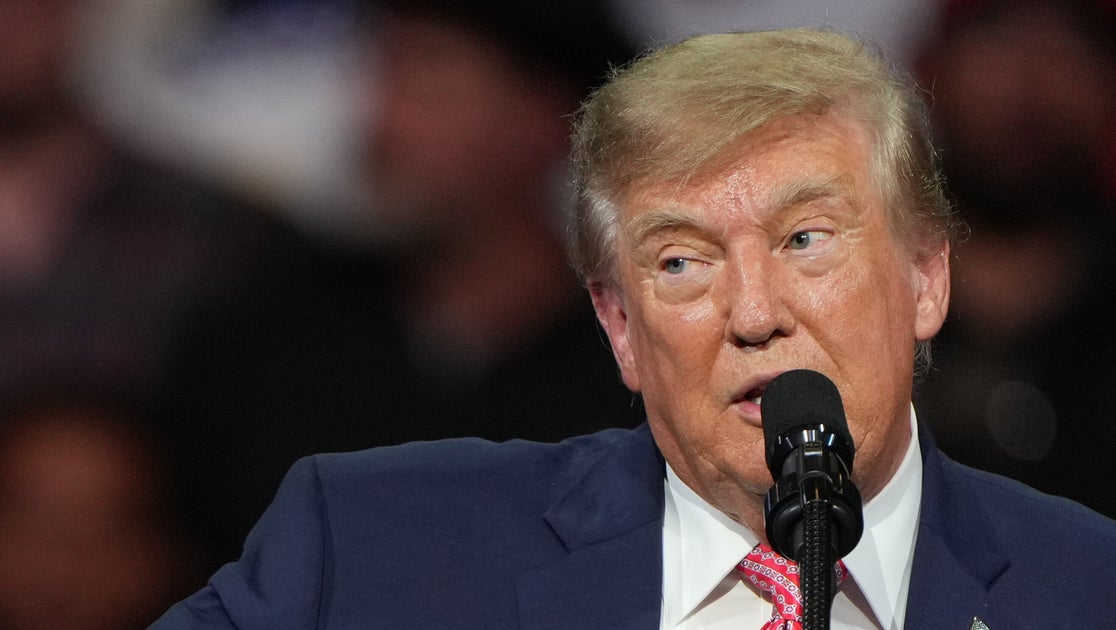
Trump Backs Marshall in Kansas Senate Race Tightened by Farm Costs
President Trump rallied in deep-red Kansas for GOP Sen. Roger Marshall in a competitive race, announcing an $8 billion farm fuel relief program amid high diesel prices. Democrats see an opening to end 94 years of GOP dominance in the state.

Trump Pauses Russia Sanctions Amid Ukraine Tensions and Missile Strikes
Trump waived sanctions on Russia and floated trilateral talks with Putin and Xi as part of ending the Ukraine war, while tensions rose with Zelenskyy over Starlink and arms. Bipartisan senators engaged Zelenskyy amid the shifts.
The Compass
You just read five takes on one story.
What's your take? Find your political shape in a few minutes.
Take the test