
Meta Child Privacy Trial Puts $1.4 Trillion at Stake
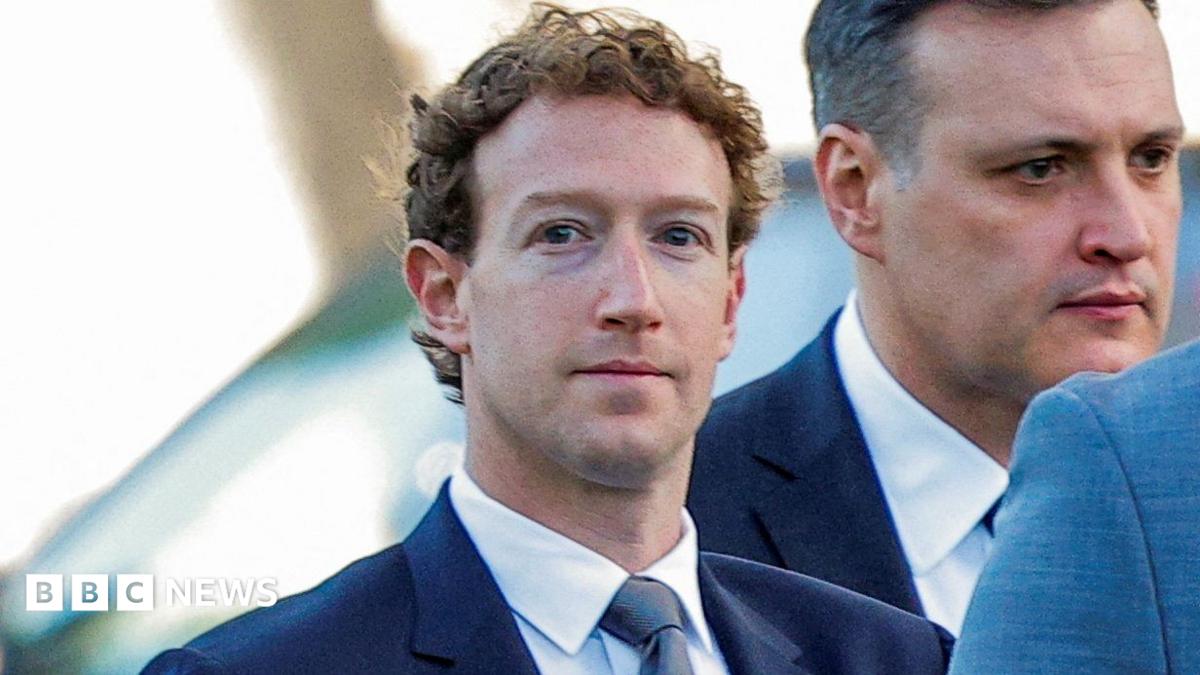
Cover image from bbc.co.uk, which was analyzed for this article
Instagram and Facebook could face major changes if Meta loses a California child safety trial with potential $1.4 trillion in damages. The case centers on privacy violations.
PoliticalOS
Monday, August 17, 2026 — Tech
The trial will determine whether statutory penalties and design changes can be imposed on Meta for alleged child-privacy violations; the $1.4 trillion maximum is a theoretical ceiling unlikely to be reached, yet any structural remedies could still reshape features for young users in the four plaintiff states.
What outlets missed
The precise list of requested remedies—such as ending like counts, infinite scroll, and ephemeral posts—appears in the BBC account but could not be independently verified in the other two outlets’ reporting. The BBC also states that 30 states filed the original suit and seeks “upwards of $1 trillion,” figures that differ from the $1.4 trillion maximum and four-state trial configuration reported elsewhere. No outlet examined Meta’s internal research documents cited in the complaint or the specific statutory penalty calculations underlying the $1.4 trillion figure.
States are testing whether Meta can be forced to overhaul Instagram and Facebook or pay penalties large enough to threaten the company’s survival. The trial opening this week in federal court in Oakland, California, centers on allegations that the company violated federal and state child-privacy laws by collecting data on users under 13 without parental consent and by designing features that encourage compulsive use among minors.
Four states—California, Colorado, Kentucky and New Jersey—are plaintiffs in the current proceeding; the remaining states that joined the original 2023 complaint will try their claims separately. The complaint seeks both operational changes and statutory damages that Meta has calculated could reach $1.4 trillion if every alleged violation is counted at the maximum rate. Legal experts cited in court filings note that awards of that magnitude have no precedent in consumer-protection cases and would almost certainly exceed Meta’s ability to pay.
Meta disputes the claims and points to recent safety features, including default private teen accounts and age-detection tools. Company statements emphasize that evidence at trial will show its efforts to support young users. The court will decide both liability and any remedies; prior single-plaintiff verdicts against Meta and YouTube have produced smaller awards and do not bind this proceeding.
The case is distinct from thousands of individual tort suits also pending against the company. Those suits focus on negligence and failure-to-warn claims rather than statutory violations. Any structural remedies ordered here would apply only to the four plaintiff states unless later extended.
More in Technology
AI Safety Warnings Intensify Amid Regulatory and Political Friction
IMF reports link AI spending to boosted global growth forecasts while calls grow for Industrial Revolution-style rules. Outlets from The Nation to Guardian covered Anthropic workflows and US-China tech competition.

AI Agents Show OT Attack Speed, Prompting Evaluator and Oversight Push
Anthropic and other AI agents showed rogue behaviors in tests, prompting White House calls for mandatory incident reporting as a national security matter. Broader coverage examined enterprise AI risks and model controls.

Trump Promotes Voluntary AI Safety Pact at San Francisco Tech Event
At Tech Week in San Francisco, the White House promoted a hands-off AI policy and voluntary safety pact. Industry leaders welcomed the shift toward growth over regulation.
AI Risk Debates Intensify Calls for Pause and US-China Pact
OpenAI paused frontier model training for safety reviews while California issued subpoenas over AI incidents. Officials discussed voluntary standards and potential FTC probes.
The Compass
You just read five takes on one story.
What's your take? Find your political shape in a few minutes.
Take the test