
Democrats Lead Early in 2026 Midterms as GOP Eyes Redistricting Path
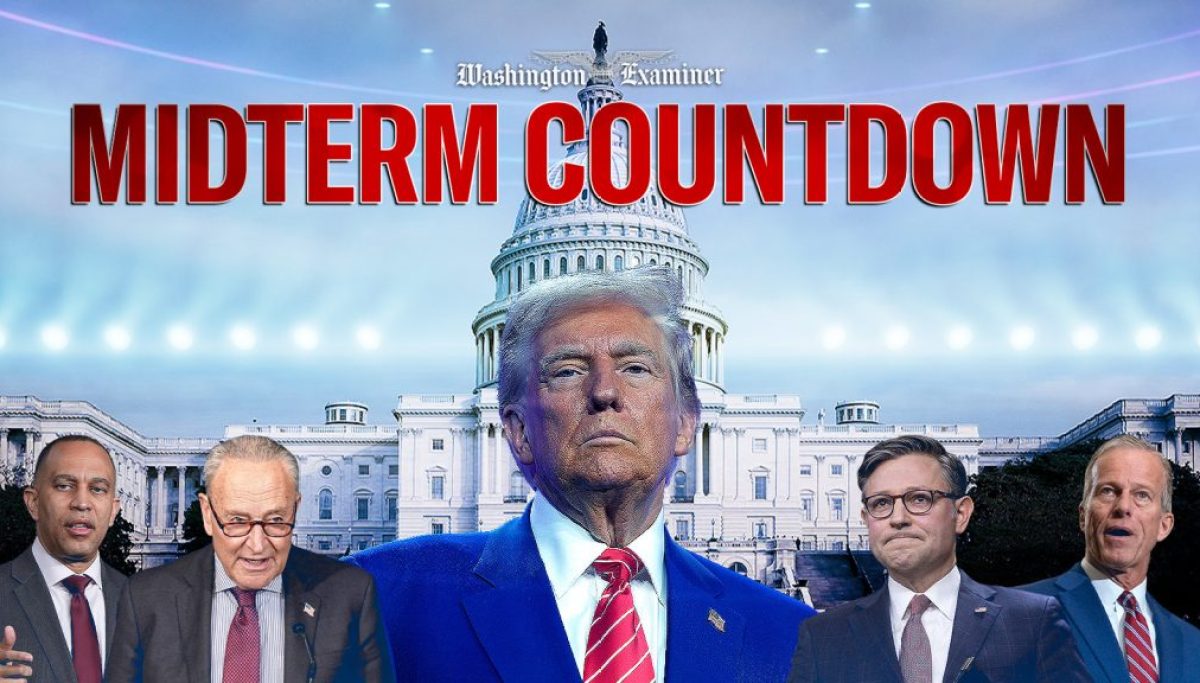
Cover image from washingtonexaminer.com, which was analyzed for this article
Democrats hold an early lead in midterm voting, but Republicans see a viable path through the map amid key ballot showdowns. California voting strategies highlight the timing sweet spot.
PoliticalOS
Sunday, May 3, 2026 — Politics
Democrats enter the 2026 cycle with clear momentum and strong forecast odds of retaking the House amid low presidential approval and economic concerns, yet Republicans retain a plausible Senate defense and redistricting opportunities that could limit losses. California voters should weigh waiting for more information against mailing deadlines to ensure their ballots count. The single most important reality is that late map changes and turnout in key states will ultimately decide whether structural edges can overcome the prevailing national environment.
What outlets missed
The Washington Examiner incorrectly attributed Louisiana’s primary suspension solely to Gov. Jeff Landry and mixed details on Michigan House and Senate candidates, while presenting unverified projections of four GOP seats from Florida redistricting and an Alabama redraw with no corroboration from the LA Times or independent trackers. The LA Times offered no connection between California’s primary timing advice and the national redistricting scramble that could directly affect the state’s congressional delegation. Both outlets underplayed the full scope of prediction market data showing consistent 82-85 percent odds for a Democratic House flip and omitted deeper context from groups like Americans for Prosperity Action on the Senate majority’s vulnerability. Later impacts from the Supreme Court Voting Rights Act ruling, including precise effects on majority-minority districts in multiple states, received only partial treatment without cross-referencing neutral trackers like Ballotpedia or Cook Political Report.
California Voters Advised to Exercise Caution as Primary Ballots Arrive Amid Shifting 2026 Outlook
As mail ballots flood California households this week for the June 2 primary, voters face a practical question that tests personal responsibility in an era of permanent vote-by-mail: vote early with incomplete information or wait until closer to Election Day when the picture may be clearer. More than 23 million ballots have gone out to registered voters for a slate that includes the governor's race, seven other statewide offices, the Board of Equalization, dozens of congressional and legislative seats, and the Los Angeles mayoral primary.
The all-mail system, expanded in 2020, offers convenience but no do-overs. Once a ballot is returned, the choice is final even if a candidate drops out, a scandal surfaces, or new information emerges that might have altered a voter's calculus. That reality has prompted measured advice from seasoned operatives. Democratic strategist Paul Maslin, whose own preferred candidate Betty Yee left the governor's race late last month, counsels that anyone with a strong inclination should mark their ballot and mail it immediately. For everyone else, hesitation makes sense.
Republican strategist Rob Stutzman, who has advised California campaigns for decades, similarly urges restraint for the undecided. With candidates still courting support and the campaign season young, acting too soon risks wasting one's vote on a fading contender or endorsing someone whose record later proves disappointing. The approach rewards the kind of deliberate decision-making that weighs trade-offs rather than rushing to judgment based on early momentum or media narratives.
In the governor's contest, that discipline may prove especially useful. Republican Chad Bianco, the Riverside County sheriff campaigning on law-and-order themes, offers a clear contrast to Democrat Katie Porter, whose whiteboard lectures and progressive priorities have energized the left. The primary will test whether Californians prioritize practical governance on crime, housing costs, and fiscal restraint or prefer continuity with the state's long-dominant Democratic approach. Early voting by the committed is harmless, but the broader electorate benefits from seeing how these candidates perform under sustained scrutiny before committing.
This California exercise occurs against a national backdrop where Democrats enjoy an early fundraising and recruiting edge for the 2026 midterms, yet Republicans detect firmer ground once the focus shifts from polls to structure. Prediction markets and early snapshots reflect Democratic optimism, but beneath that surface lie map advantages, a favorable Senate landscape, and fresh legal openings that could determine control of Congress.
A Supreme Court decision this week narrowing aspects of the Voting Rights Act's emphasis on creating majority-minority districts has already altered calculations. The ruling reduces the pressure for race-based line-drawing and allows states to revisit maps with more attention to compactness and shared interests. Louisiana's governor promptly suspended a May 16 House primary to redraw boundaries, potentially improving prospects in districts now held by Democrats. Alabama is exploring similar adjustments. These moves build on earlier redistricting efforts that have quietly strengthened Republican positioning in the House.
Such developments illustrate a recurring pattern: institutional rules and incentives often matter more than transient political winds. Democrats have posted strong fundraising totals and secured several strong recruits, particularly in suburban districts. Yet the Senate map presents defensive challenges for them in states that have trended away from their party in recent cycles. Republicans, for their part, see opportunity in focusing on fundamentals rather than matching Democratic energy on every front.
California's primary offers an early signal of how these national dynamics may play out in a state that has served as a laboratory for expansive government. Chronic challenges with homelessness, high taxes, and regulatory burden have produced measurable results: out-migration of residents and businesses, strained budgets, and persistent dissatisfaction even in a one-party environment. Voters here who pause before sealing their envelopes may consider whether the candidates on offer have shown a grasp of these empirical realities or merely promise more of the policies that produced them.
The convergence of California's ballot drop and the clarifying national picture underscores an old truth about self-government. Outcomes depend less on early enthusiasm than on the accumulated choices of individuals who take the time to inform themselves. Those who know their preference should vote promptly. Those who do not might usefully wait, gather more evidence, and cast a ballot that reflects considered judgment rather than momentary impulse. In both state and national contests, that habit of mind has proven more reliable than following the crowd.
You just read Conservative's take. Want to read what actually happened?
More in Politics

Trump at 32% Approval as Gas Prices Test GOP Midterm Hopes
NYT/Siena polling showed Trump's approval at historic lows around 32 percent with Democrats leading by double digits in key districts. Early voting has surged in battleground states.

Record Early Voting Hits Battlegrounds, Shifting Partisan Shares
AP analysis found hundreds of thousands more early ballots than in 2022 in states including Texas, Ohio, Kansas, Maine, and North Carolina, shifting partisan dynamics.

Trump Backs Marshall in Kansas Senate Race Tightened by Farm Costs
President Trump rallied in deep-red Kansas for GOP Sen. Roger Marshall in a competitive race, announcing an $8 billion farm fuel relief program amid high diesel prices. Democrats see an opening to end 94 years of GOP dominance in the state.

Trump Pauses Russia Sanctions Amid Ukraine Tensions and Missile Strikes
Trump waived sanctions on Russia and floated trilateral talks with Putin and Xi as part of ending the Ukraine war, while tensions rose with Zelenskyy over Starlink and arms. Bipartisan senators engaged Zelenskyy amid the shifts.
The Compass
You just read five takes on one story.
What's your take? Find your political shape in a few minutes.
Take the test