
Democrats Lead Early in 2026 Midterms as GOP Eyes Redistricting Path
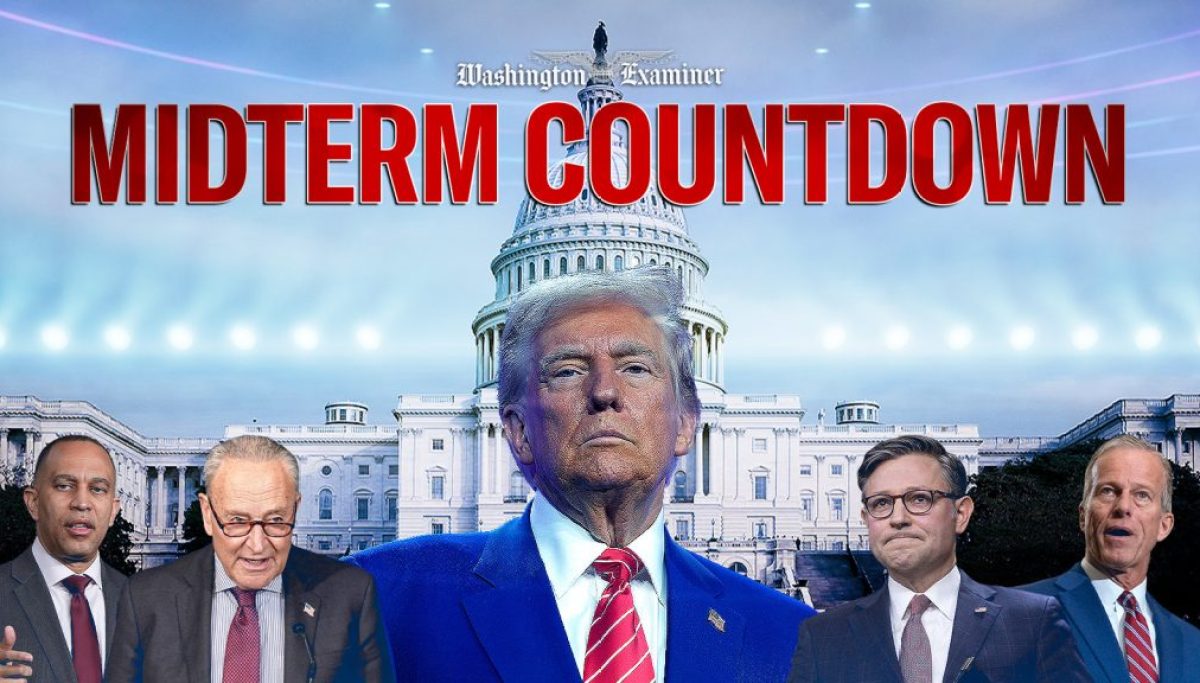
Cover image from washingtonexaminer.com, which was analyzed for this article
Democrats hold an early lead in midterm voting, but Republicans see a viable path through the map amid key ballot showdowns. California voting strategies highlight the timing sweet spot.
PoliticalOS
Sunday, May 3, 2026 — Politics
Democrats enter the 2026 cycle with clear momentum and strong forecast odds of retaking the House amid low presidential approval and economic concerns, yet Republicans retain a plausible Senate defense and redistricting opportunities that could limit losses. California voters should weigh waiting for more information against mailing deadlines to ensure their ballots count. The single most important reality is that late map changes and turnout in key states will ultimately decide whether structural edges can overcome the prevailing national environment.
What outlets missed
The Washington Examiner incorrectly attributed Louisiana’s primary suspension solely to Gov. Jeff Landry and mixed details on Michigan House and Senate candidates, while presenting unverified projections of four GOP seats from Florida redistricting and an Alabama redraw with no corroboration from the LA Times or independent trackers. The LA Times offered no connection between California’s primary timing advice and the national redistricting scramble that could directly affect the state’s congressional delegation. Both outlets underplayed the full scope of prediction market data showing consistent 82-85 percent odds for a Democratic House flip and omitted deeper context from groups like Americans for Prosperity Action on the Senate majority’s vulnerability. Later impacts from the Supreme Court Voting Rights Act ruling, including precise effects on majority-minority districts in multiple states, received only partial treatment without cross-referencing neutral trackers like Ballotpedia or Cook Political Report.
Strategic Timing Matters as California Ballots Arrive for a National Stakes Primary
Ballots are landing in mailboxes across California this week for the June 2 primary, the first significant electoral test of the 2026 cycle. More than 23 million registered voters will receive them, continuing the state’s universal mail-ballot system that has been in place since 2020. The choices range from the open governor’s race to contests for seven other statewide offices, the Board of Equalization, dozens of congressional and legislative seats, and the Los Angeles mayor’s primary. How and when Californians mark those ballots could ripple beyond state borders into a midterm fight for Congress where early momentum sits with Democrats but Republicans see structural openings.
The state’s top contest features a sharp contrast. Democrat Katie Porter, the former congresswoman known for her whiteboard dissections of corporate power, is running to succeed term-limited Gov. Gavin Newsom. On the Republican side, Riverside County Sheriff Chad Bianco is courting voters with a hard-line message on crime and immigration. Several other candidates have already exited, including Democrat Betty Yee, who left the governor’s race at the end of April. That churn illustrates one of the central tensions for voters: information keeps arriving.
Paul Maslin, a longtime Democratic strategist now observing the race as a neutral, offers blunt advice for those with settled preferences. “Don’t mess around,” he said. “If you have pretty good inkling what you want to do, vote.” Returning the ballot promptly removes any risk of postal delays and lets campaigns reallocate resources. California elections allow no do-overs. Once a signature is on the envelope, the choice is final even if a candidate drops out or a scandal surfaces.
Yet many voters are not locked in. Rob Stutzman, a Republican strategist with decades of California experience, has cautioned against rushing if doubts remain. New revelations, late endorsements, or sudden campaign implosions have altered races before. In an era of rapid news cycles, the temptation to wait for more data collides with the finality of mail voting. Campaigns are already urging their most reliable supporters to return ballots immediately while trying to keep undecided voters engaged through May.
These state-level decisions sit inside a larger national contest whose shape is still forming. Democrats enter the 2026 midterms with tangible advantages: stronger early fundraising, a string of recruiting successes, and a political environment that has so far tilted their way. Public polling and early prediction markets reflect that edge. Yet Republican strategists point to countervailing realities that could still deliver them the House or Senate.
The Senate map favors the GOP in several battleground states, giving Republicans a narrower path to a majority even if the national mood remains sour for the party in power. In the House, the picture is more volatile. A Supreme Court decision issued Wednesday weakened key protections of the Voting Rights Act for majority-minority districts. The ruling lowers the bar for states to redraw maps without creating districts that guarantee minority voters an opportunity to elect their preferred candidates.
That legal shift has immediate practical consequences. Louisiana’s Republican governor, Jeff Landry, promptly suspended the state’s May 16 congressional primary to pursue new boundaries. Alabama is exploring similar revisions. Both states now hold two Democratic House seats that could be redrawn to Republican advantage. The decision also caps a longer pattern of successful mid-decade redistricting efforts by GOP-controlled legislatures that have already reshaped competitive terrain in multiple states.
California’s congressional primaries therefore carry extra weight. The state’s delegation remains the largest in Congress, and its outcomes will help determine which party enters the general election with momentum and resources. Redistricting fights elsewhere could cancel out gains Democrats expect from suburban districts. In that sense, the choice facing California voters is both intensely local and structurally national.
The Board of Equalization race, which oversees property tax administration, has drawn less attention but affects millions of homeowners and businesses. Local contests, especially the Los Angeles mayor’s primary, will test whether progressive or more centrist voices dominate California’s largest city. All of these races feed into the same voter file and the same turnout operations that parties will use in November.
Analysts note that mail voting has smoothed participation in California but also concentrated the period when voters must commit. Campaigns now treat the first two weeks after ballots arrive as a critical window. Those who return ballots early give their side more time to chase remaining targets. Those who wait retain flexibility but risk forgetting or misplacing the ballot as daily life intervenes.
The convergence of these dynamics underscores a larger tension in contemporary elections. Structural tools, from redistricting to court rulings, can shape outcomes as powerfully as raw voter preference. Democrats hope their early organizational strength can overcome those barriers. Republicans believe the map, the calendar, and the law still offer them a viable route to controlling at least one chamber of Congress.
For now, the immediate question for millions of Californians is simpler. The ballot is in their hands. They must decide whether the information they possess today is enough or whether they should set the envelope aside and keep watching. In a year when small shifts in timing or turnout could tilt larger battles for power in Washington, that personal calculation carries collective consequences.
You just read Liberal's take. Want to read what actually happened?
More in Politics
Trump at 32% Approval as Gas Prices Test GOP Midterm Hopes
NYT/Siena polling showed Trump's approval at historic lows around 32 percent with Democrats leading by double digits in key districts. Early voting has surged in battleground states.

Record Early Voting Hits Battlegrounds, Shifting Partisan Shares
AP analysis found hundreds of thousands more early ballots than in 2022 in states including Texas, Ohio, Kansas, Maine, and North Carolina, shifting partisan dynamics.
Trump Backs Marshall in Kansas Senate Race Tightened by Farm Costs
President Trump rallied in deep-red Kansas for GOP Sen. Roger Marshall in a competitive race, announcing an $8 billion farm fuel relief program amid high diesel prices. Democrats see an opening to end 94 years of GOP dominance in the state.

Trump Pauses Russia Sanctions Amid Ukraine Tensions and Missile Strikes
Trump waived sanctions on Russia and floated trilateral talks with Putin and Xi as part of ending the Ukraine war, while tensions rose with Zelenskyy over Starlink and arms. Bipartisan senators engaged Zelenskyy amid the shifts.
The Compass
You just read five takes on one story.
What's your take? Find your political shape in a few minutes.
Take the test