
Democrats Lead Early in 2026 Midterms as GOP Eyes Redistricting Path

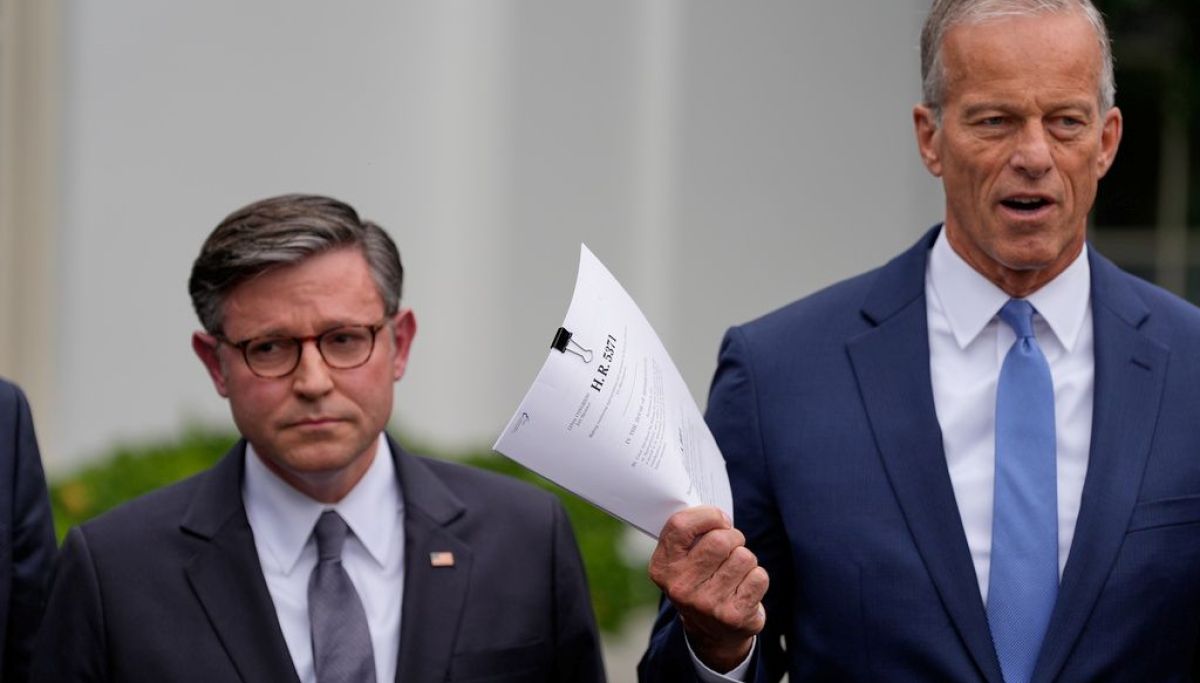
Cover image from washingtonexaminer.com, which was analyzed for this article
Democrats hold an early lead in midterm voting, but Republicans see a viable path through the map amid key ballot showdowns. California voting strategies highlight the timing sweet spot.
PoliticalOS
Sunday, May 3, 2026 — Politics
Democrats enter the 2026 cycle with clear momentum and strong forecast odds of retaking the House amid low presidential approval and economic concerns, yet Republicans retain a plausible Senate defense and redistricting opportunities that could limit losses. California voters should weigh waiting for more information against mailing deadlines to ensure their ballots count. The single most important reality is that late map changes and turnout in key states will ultimately decide whether structural edges can overcome the prevailing national environment.
What outlets missed
The Washington Examiner incorrectly attributed Louisiana’s primary suspension solely to Gov. Jeff Landry and mixed details on Michigan House and Senate candidates, while presenting unverified projections of four GOP seats from Florida redistricting and an Alabama redraw with no corroboration from the LA Times or independent trackers. The LA Times offered no connection between California’s primary timing advice and the national redistricting scramble that could directly affect the state’s congressional delegation. Both outlets underplayed the full scope of prediction market data showing consistent 82-85 percent odds for a Democratic House flip and omitted deeper context from groups like Americans for Prosperity Action on the Senate majority’s vulnerability. Later impacts from the Supreme Court Voting Rights Act ruling, including precise effects on majority-minority districts in multiple states, received only partial treatment without cross-referencing neutral trackers like Ballotpedia or Cook Political Report.
Republicans Weaponize Supreme Court Ruling to Rig House Maps as California Primary Ballots Begin Arriving
As mailboxes across California fill with ballots for the June 2 primary, voters face a familiar question in a high-stakes election cycle: vote now or wait? The answer matters not only for the race to replace term-limited Gov. Gavin Newsom but for the broader battle to control Congress, where Democrats enter the stretch with a clear lead only to confront a Republican Party openly exploiting a fresh Supreme Court decision to dilute minority voting power.
More than 23 million ballots are heading to registered voters in the state’s all-mail system. The choices include a crowded governor’s race featuring Rep. Katie Porter, the Democrat whose whiteboard dissections of corporate greed and economic inequality have made her a progressive favorite, and Riverside County Sheriff Chad Bianco, a Republican whose tough-on-crime rhetoric and alignment with former President Trump appeal to the GOP base. Also on the ballot are seven other statewide offices, Board of Equalization seats that oversee property taxes, dozens of congressional and legislative contests, and the Los Angeles mayor’s race.
Veteran Democratic strategist Paul Maslin, who watched his own candidate Betty Yee exit the governor’s race last month, offers blunt advice to those who already know their preference. “Don’t mess around,” he said. “If you have a pretty good inkling what you want to do, vote.” The recommendation is practical. California ballots must be postmarked by Election Day and arrive within a week; there are no do-overs. Once a voter mails or drops off a ballot, that choice is locked in even if late-breaking scandals or candidate withdrawals occur.
Republican consultant Rob Stutzman, who has shaped California GOP strategy for decades, takes the opposite view for anyone still weighing options. He urges patience. New developments could easily surface in a campaign environment where national headlines often shift daily. The counsel reflects a larger truth about this primary season: many voters are not yet wedded to a single candidate and worry about squandering their voice on someone who fades before June.
Yet the California contest is only one piece of a national puzzle that is rapidly coming into focus. Democrats currently hold the upper hand in the fight for Congress, powered by superior fundraising, stronger recruitment of top-tier candidates, and a political climate that continues to punish the party associated with chaos and extremism. Prediction markets and early polling give Democrats a solid edge in the battle for the House and a fighting chance to expand their narrow Senate majority.
Republicans, however, are not conceding. They see a narrow but plausible route back to power that runs straight through the redistricting process. On Wednesday the Supreme Court issued a ruling that significantly weakens key protections of the Voting Rights Act, watering down requirements to preserve majority-minority districts. The decision has been widely criticized by voting-rights advocates as a gift to mapmakers who wish to crack and pack communities of color, the very voters who form the backbone of the modern Democratic coalition.
The practical effect is already visible. In Louisiana, Republican Gov. Jeff Landry immediately suspended the state’s May 16 congressional primary so lawmakers can redraw the map. Louisiana currently sends two Democrats to the House; those seats are now at obvious risk. Alabama is exploring similar moves. Both states are following a pattern Republicans have perfected: use every available lever of state power to reshape the electorate after the fact. The mid-decade redistricting push, once considered extraordinary, is becoming standard operating procedure for a party that has lost the national popular vote in seven of the last eight presidential elections yet still believes it can maintain congressional majorities through map manipulation.
This is not abstract legal maneuvering. It is a direct threat to representation for Black, Latino, and Asian American communities that have spent decades fighting for a fair say in Congress. The Voting Rights Act was the crowning legislative achievement of the civil rights movement. To see it diluted so close to an election, at the precise moment when Republicans need a structural advantage, invites cynicism about the court’s commitment to equal protection. Progressive voices have long warned that a conservative Supreme Court would eventually clear the way for precisely this kind of retrogressive step. That warning now looks prophetic.
California, for all its Democratic dominance, is not immune to these national currents. The state’s congressional delegation remains a bulwark against Republican House control. Any shift in the state’s own legislative and congressional primaries could ripple outward, especially if progressive turnout lags or if Porter’s brand of unapologetic economic populism fails to excite the broader electorate. Porter’s supporters argue she represents the future of the party: relentless scrutiny of the powerful, clear explanations of policy, and a refusal to accept the status quo that has left working families behind.
The convergence of California’s primary and the national redistricting fight underscores a larger reality. While Democrats enjoy momentum and superior organization, Republicans are betting that institutional loopholes, friendly courts, and aggressive map-drawing can overcome demographic and political headwinds. The GOP path is narrower than it was before the court’s ruling, but it exists.
For voters receiving their ballots this week, the practical choice is straightforward. If you are settled on Porter’s vision of accountability or Bianco’s law-and-order pitch or any of the dozens of other candidates down the ballot, send it back immediately. Democracy works only when people participate. If uncertainty remains, there is still time to watch the race develop, read the debates over redistricting in Louisiana and Alabama, and consider how local choices feed into the larger struggle over who gets to draw the maps that determine representation for the next decade.
Either way, the ballots are here. The choices they contain will help decide not only who leads California but whether the Republican strategy of turning the Voting Rights Act into Swiss cheese succeeds in keeping the House in conservative hands. The moment to engage is now.
You just read Progressive's take. Want to read what actually happened?
More in Politics
Trump at 32% Approval as Gas Prices Test GOP Midterm Hopes
NYT/Siena polling showed Trump's approval at historic lows around 32 percent with Democrats leading by double digits in key districts. Early voting has surged in battleground states.

Record Early Voting Hits Battlegrounds, Shifting Partisan Shares
AP analysis found hundreds of thousands more early ballots than in 2022 in states including Texas, Ohio, Kansas, Maine, and North Carolina, shifting partisan dynamics.

Trump Backs Marshall in Kansas Senate Race Tightened by Farm Costs
President Trump rallied in deep-red Kansas for GOP Sen. Roger Marshall in a competitive race, announcing an $8 billion farm fuel relief program amid high diesel prices. Democrats see an opening to end 94 years of GOP dominance in the state.

Trump Pauses Russia Sanctions Amid Ukraine Tensions and Missile Strikes
Trump waived sanctions on Russia and floated trilateral talks with Putin and Xi as part of ending the Ukraine war, while tensions rose with Zelenskyy over Starlink and arms. Bipartisan senators engaged Zelenskyy amid the shifts.
The Compass
You just read five takes on one story.
What's your take? Find your political shape in a few minutes.
Take the test