
Virginia's Redistricting Vote Ignites National Gerrymandering Clash
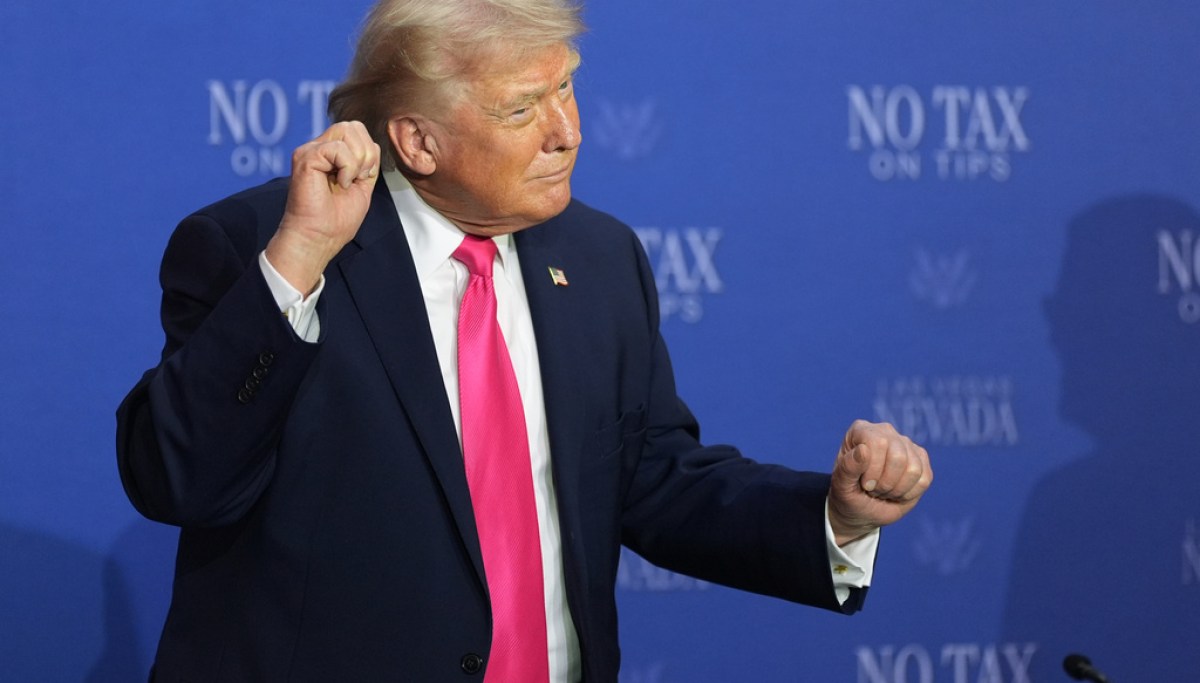
Cover image from washingtonexaminer.com, which was analyzed for this article
Virginia's map ruling amplifies fights over gerrymandering, with Democrats holding edge but GOP pushing back. Midterm implications loom as states rewrite lines. Coverage notes GOP remorse and legal strategies.
PoliticalOS
Thursday, April 23, 2026 — Politics
Virginia's narrow referendum approval has triggered an immediate court block, meaning the projected 10-1 Democratic map is not yet in effect and could still be overturned. This episode reveals gerrymandering as a self-reinforcing cycle in which each party's maximalism invites retaliation, with judges rather than voters likely to set the final boundaries before 2026. The single most important reality is that competing nonpartisan projections leave the net effect on House control uncertain, turning mid-decade map fights into a high-stakes gamble for both sides.
What outlets missed
Most coverage downplayed or omitted the precise mechanics of Virginia's approved amendment, which authorized the legislature to draw maps rather than letting voters directly enact new boundaries. Nonpartisan seat projections showing Republicans potentially netting between one and six House seats overall, even after Virginia and California moves, were rarely integrated; NPR and Cook Political Report analyses suggesting a continued GOP edge received little emphasis outside specialized trackers. The full timeline of parallel legal challenges, including an earlier federal court block on aspects of Texas's maps later partially upheld, was fragmented across outlets, obscuring that both sides' efforts remain provisional. Low turnout below 48 percent and the razor-thin margin were sometimes noted but seldom connected to broader questions about whether the outcome reflected a genuine public mandate for 10-1 partisan skew.
Virginia Redistricting Measure Passes as Democratic Power Grab Exposes GOP Miscalculation
Virginia voters handed Democrats a significant victory Tuesday night by approving a new congressional map that could flip as many as four House seats in the commonwealth to the left. The measure passed narrowly despite late momentum for opponents and despite the state's status as a competitive battleground where neither party has a permanent lock on power. What began as a Republican effort to shore up their slim House majority has now snowballed into a series of retaliatory map changes that appear to be benefiting Democrats more than their opponents.
The Virginia referendum was explicitly designed as a counter to aggressive redistricting moves by Republicans in Texas last summer. At the urging of President Donald Trump, Texas lawmakers redrew their state's congressional boundaries in ways projected to deliver five additional Republican seats in the upcoming midterms. Democrats responded in kind. California voters backed a plan expected to swing five seats their direction. Virginia's move completes the triad and could push the national balance further left at a time when Republicans hold a precarious grip on the chamber.
Virginia's current delegation splits six seats for Democrats and five for Republicans, roughly tracking the state's purple political character. Democrats have won about 51.8 percent of the vote on average in recent presidential elections there. The new map changes that equation dramatically by creating as many as 10 districts that favor Democratic candidates. That represents a ruthless consolidation of power in a state that is not overwhelmingly blue. Republicans now face the prospect of being reduced to a single seat in a state they have fought hard to contest.
The outcome has triggered open recriminations inside Republican circles. Some GOP lawmakers are expressing outright regret about the entire mid-decade redistricting push. California Representative Kevin Kiley, who recently left the party to become an independent but still aligns with Republicans on many votes, told reporters he wishes none of this had happened. Nebraska's Don Bacon was more direct, calling the strategy a mistake in hindsight. "They thought they could just do Texas and nobody else is gonna respond?" Bacon asked. "We started a war, and you've got to play chess, think three or four moves ahead."
North Carolina Representative Richard Hudson, chairman of the National Republican Congressional Committee, offered a more cautious assessment when asked if the original Texas plan was worth the backlash. Others, including Pennsylvania's Brian Fitzpatrick, criticized the arms race itself. "I don't think it's favorable for anybody in America, redistricting," Fitzpatrick said. "It's a race to the bottom."
These comments reveal deeper divisions within the Republican Party about how aggressively to wield political power. For years conservatives argued for neutral rules, limited government, and fair play under the law. The Trump era has tested those commitments. Some voices on the right now ask whether unilateral restraint simply hands Democrats permanent structural advantages. Virginia offers a case study in the risks of that debate. Republicans encouraged map changes in red states only to watch Democrats and their allies use referendums and court pressure to extract even larger gains in purple and blue ones.
Democrats' sudden embrace of aggressive gerrymandering marks a reversal from their previous rhetoric. For years the party positioned itself as the defender of fair maps and democratic norms. That stance appears flexible when power is on the line. The Supreme Court's 2019 decision ruling that federal courts would not intervene in partisan gerrymandering disputes removed one check on both sides. What followed was predictable: raw political calculations dressed up as voter will.
The Dispatch's Kevin Williamson noted that redistricting has always been an inherently political act, whether done by legislatures or through ballot measures. Gerrymandering itself dates back to the earliest days of the republic. Both parties have engaged in it when given the opportunity. Yet the speed and scale of the current cycle should concern anyone who believes voters, not mapmakers, should decide elections. When maps are drawn to guarantee outcomes years in advance, it reduces the incentive for politicians to address the concerns of working families, border security, inflation, or cultural decay. It entrenches a permanent class of insiders who treat districts like personal fiefdoms.
House Republicans now find themselves in a tighter spot heading into midterms. Their majority was already fragile. Trump's concern about facing a Democratic House and the possibility of another impeachment trial was the original motivation for the Texas moves. That strategy has produced the opposite of its intended effect in Virginia and may yet prove counterproductive elsewhere. Internal finger-pointing has already begun. Critics ask why more resources were not devoted to defeating the Virginia referendum and why former Governor Glenn Youngkin and the White House did not engage more forcefully.
Democrats, meanwhile, are poised to capitalize. Their gains in California and Virginia could offset Republican advantages in Texas and potentially expand their influence. The larger casualty in all this is public confidence. When both sides treat redistricting as total war, voters increasingly see the game as rigged regardless of which team is winning on any given day. Maps drawn in back rooms or through expensive ballot campaigns rarely reflect the actual will of the people on the ground. They reflect the will of political operatives who understand how to pack and crack precincts to predetermined ends.
The wheel of redistricting keeps turning. Republicans may yet find ways to fight back in states they control. Democrats have demonstrated they will not be outmaneuvered when the stakes involve House control. For average Americans watching from outside the Beltway, the spectacle confirms a familiar suspicion: the permanent political class cares more about maintaining its own power than about delivering results on the issues that matter most to the country. Whether that realization produces any meaningful reform remains doubtful. Power concedes nothing without pressure, and both parties have shown they prefer the mapmaker's pen to the voters' voice.
You just read America First's take. Want to read what actually happened?
More in Politics
Trump at 32% Approval as Gas Prices Test GOP Midterm Hopes
NYT/Siena polling showed Trump's approval at historic lows around 32 percent with Democrats leading by double digits in key districts. Early voting has surged in battleground states.

Record Early Voting Hits Battlegrounds, Shifting Partisan Shares
AP analysis found hundreds of thousands more early ballots than in 2022 in states including Texas, Ohio, Kansas, Maine, and North Carolina, shifting partisan dynamics.
Trump Backs Marshall in Kansas Senate Race Tightened by Farm Costs
President Trump rallied in deep-red Kansas for GOP Sen. Roger Marshall in a competitive race, announcing an $8 billion farm fuel relief program amid high diesel prices. Democrats see an opening to end 94 years of GOP dominance in the state.

Trump Pauses Russia Sanctions Amid Ukraine Tensions and Missile Strikes
Trump waived sanctions on Russia and floated trilateral talks with Putin and Xi as part of ending the Ukraine war, while tensions rose with Zelenskyy over Starlink and arms. Bipartisan senators engaged Zelenskyy amid the shifts.
The Compass
You just read five takes on one story.
What's your take? Find your political shape in a few minutes.
Take the test