
Virginia's Redistricting Vote Ignites National Gerrymandering Clash

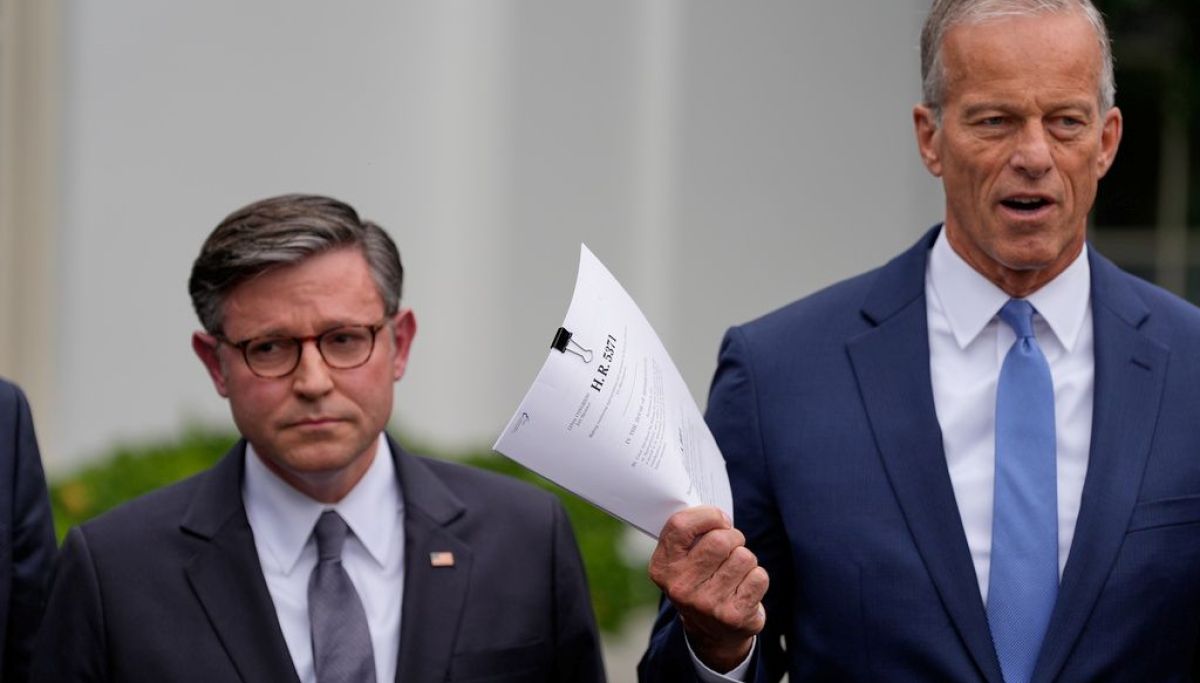
Cover image from washingtonexaminer.com, which was analyzed for this article
Virginia's map ruling amplifies fights over gerrymandering, with Democrats holding edge but GOP pushing back. Midterm implications loom as states rewrite lines. Coverage notes GOP remorse and legal strategies.
PoliticalOS
Thursday, April 23, 2026 — Politics
Virginia's narrow referendum approval has triggered an immediate court block, meaning the projected 10-1 Democratic map is not yet in effect and could still be overturned. This episode reveals gerrymandering as a self-reinforcing cycle in which each party's maximalism invites retaliation, with judges rather than voters likely to set the final boundaries before 2026. The single most important reality is that competing nonpartisan projections leave the net effect on House control uncertain, turning mid-decade map fights into a high-stakes gamble for both sides.
What outlets missed
Most coverage downplayed or omitted the precise mechanics of Virginia's approved amendment, which authorized the legislature to draw maps rather than letting voters directly enact new boundaries. Nonpartisan seat projections showing Republicans potentially netting between one and six House seats overall, even after Virginia and California moves, were rarely integrated; NPR and Cook Political Report analyses suggesting a continued GOP edge received little emphasis outside specialized trackers. The full timeline of parallel legal challenges, including an earlier federal court block on aspects of Texas's maps later partially upheld, was fragmented across outlets, obscuring that both sides' efforts remain provisional. Low turnout below 48 percent and the razor-thin margin were sometimes noted but seldom connected to broader questions about whether the outcome reflected a genuine public mandate for 10-1 partisan skew.
Democrats Net Major Gains in Virginia Redistricting Vote as Republican Strategy Backfires
Virginia voters on Tuesday narrowly approved a ballot initiative to redraw the state's congressional map in a way that significantly advantages Democrats handing their party as many as four additional seats in the House of Representatives. The outcome represents the latest turn in an escalating mid-decade redistricting battle that began when Republicans in Texas at President Donald Trump's urging redrew their own maps last summer to bolster the GOP's slim majority. What was intended as a preemptive strike to shield Republicans from potential losses in the 2026 midterms has instead triggered counteroffensives in Democratic strongholds and left some in the GOP expressing open regret.
The Virginia measure shifts the state's current 6-5 Democratic edge in its congressional delegation to a projected 10-1 or 9-2 split depending on how analysts score the new boundaries. Proponents framed the referendum as a necessary response to Texas's aggressive moves which independent projections suggested could net Republicans five additional seats nationwide. California voters had already approved their own counter-redistricting plan expected to swing five seats toward Democrats effectively neutralizing much of the Texas advantage. Together these maneuvers have transformed what is normally a decennial process tied to census data into an ongoing partisan arms race.
The 2019 Supreme Court decision that federal courts could not intervene in partisan gerrymandering claims removed a key check on such behavior. Trump amplified the stakes by warning that a Democratic House could lead to his third impeachment pushing Republican-led states to maximize every structural lever. Yet the blowback has been swift. In Virginia a state that has voted roughly 52 percent Democratic in recent presidential elections the new map packs Republican voters into fewer districts while spreading Democratic strength across more competitive ones. Turnout on the referendum was modest but the yes vote ultimately prevailed despite a late surge in opposition spending.
Republican lawmakers tasked with defending the House majority are now questioning the wisdom of the original strategy. Rep. Don Bacon of Nebraska told reporters it was a mistake in hindsight arguing that initiating the fight in Texas without anticipating responses showed a failure to think several moves ahead. California Rep. Kevin Kiley who recently became an independent but continues to caucus with Republicans was more direct. I wish none of this had happened. Even Rep. Richard Hudson the North Carolina Republican who chairs the National Republican Congressional Committee declined to defend the approach when asked if it had been worth it. These comments reflect a broader sense of buyer's remorse among House Republicans who privately worried for months that the plan could backfire.
The recriminations have also exposed deeper tensions within the GOP. Some conservatives argue that unilateral disarmament makes no sense when Democrats have shown no hesitation in pressing their own advantages. Virginia's move mirrors what Democrats achieved in other states with independent redistricting processes or direct voter initiatives. Others lament that the episode further erodes public confidence in neutral rules and limited government principles that once defined the party. The Washington Examiner noted that the vote total against the referendum actually exceeded Trump's 2024 performance in Virginia suggesting the outcome was not purely a matter of partisan turnout but reflected unease with overt map manipulation.
Democrats for their part have shifted tactics. Longtime critics of partisan gerrymandering they have increasingly embraced aggressive redistricting when it serves their interests particularly after Republicans gained ground through aggressive map-drawing following the 2010 and 2020 censuses. The Virginia referendum marks a notable evolution in that strategy turning a voter-initiated process into a tool for maximizing partisan outcomes. Proponents celebrated the result as a democratic correction yet the maps themselves rely on the same sort of creative boundary drawing that both parties have denounced when done by the other side.
The net effect remains uncertain but early projections suggest Democrats could emerge from this round with a modest edge rather than the losses they feared after the Texas redraw. That would complicate Republican efforts to maintain control of the House and advance the Trump agenda on issues from immigration to tax policy. Yet the larger picture is one of mutual escalation. As one Republican put it the parties have started a war without adequately preparing for the counterattacks. Independent analysts have warned for years that such cycles degrade the representativeness of districts making them less reflective of the actual distribution of voter preferences and more prone to extreme candidates.
This is not the first time redistricting has dominated American politics. The practice dates back to the early republic and earned its name from a salamander-shaped district approved by Massachusetts Governor Elbridge Gerry in 1812. Both parties have wielded it ruthlessly when in power. What feels different now is the speed and openness of the retaliation enabled by direct democracy tools in some states and the absence of institutional guardrails. Virginia's vote arrives at a moment when trust in electoral machinery is already strained. When each side views the other's mapmaking as existential the incentive to match or exceed the aggression only grows.
For voters the consequence is often less competitive districts and representatives more beholden to primary electorates than to the broader public. In a closely divided country where control of Congress can hinge on a handful of seats these maneuvers carry outsized weight. Republicans in states like Indiana have drawn maps that appear similarly aggressive relative to their state's underlying partisan balance. Democrats counter that they are merely responding in kind. The result is a feedback loop in which institutional norms bend further with each cycle.
Whether this round ultimately favors one party over the other may not be clear until after the 2026 elections. What is already evident is the toll on the broader system. When redistricting becomes another front in perpetual political warfare the losers extend beyond the minority party. They include the principles of fair representation and the idea that electoral rules should transcend the immediate interests of those who happen to hold power at the moment of drawing. As the wheel of redistricting keeps turning both sides risk demonstrating to voters that the game is rigged regardless of who sets the boundaries.
You just read Liberal's take. Want to read what actually happened?
More in Politics
Trump at 32% Approval as Gas Prices Test GOP Midterm Hopes
NYT/Siena polling showed Trump's approval at historic lows around 32 percent with Democrats leading by double digits in key districts. Early voting has surged in battleground states.

Record Early Voting Hits Battlegrounds, Shifting Partisan Shares
AP analysis found hundreds of thousands more early ballots than in 2022 in states including Texas, Ohio, Kansas, Maine, and North Carolina, shifting partisan dynamics.

Trump Backs Marshall in Kansas Senate Race Tightened by Farm Costs
President Trump rallied in deep-red Kansas for GOP Sen. Roger Marshall in a competitive race, announcing an $8 billion farm fuel relief program amid high diesel prices. Democrats see an opening to end 94 years of GOP dominance in the state.

Trump Pauses Russia Sanctions Amid Ukraine Tensions and Missile Strikes
Trump waived sanctions on Russia and floated trilateral talks with Putin and Xi as part of ending the Ukraine war, while tensions rose with Zelenskyy over Starlink and arms. Bipartisan senators engaged Zelenskyy amid the shifts.
The Compass
You just read five takes on one story.
What's your take? Find your political shape in a few minutes.
Take the test