
Virginia's Redistricting Vote Ignites National Gerrymandering Clash
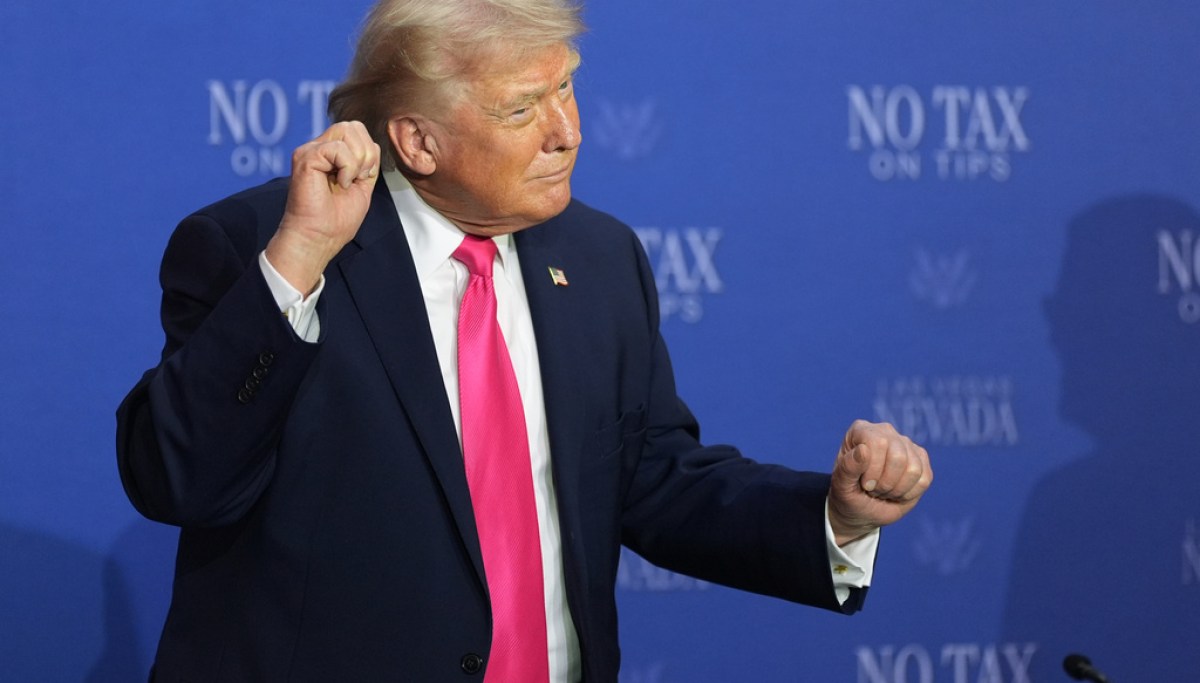
Cover image from washingtonexaminer.com, which was analyzed for this article
Virginia's map ruling amplifies fights over gerrymandering, with Democrats holding edge but GOP pushing back. Midterm implications loom as states rewrite lines. Coverage notes GOP remorse and legal strategies.
PoliticalOS
Thursday, April 23, 2026 — Politics
Virginia's narrow referendum approval has triggered an immediate court block, meaning the projected 10-1 Democratic map is not yet in effect and could still be overturned. This episode reveals gerrymandering as a self-reinforcing cycle in which each party's maximalism invites retaliation, with judges rather than voters likely to set the final boundaries before 2026. The single most important reality is that competing nonpartisan projections leave the net effect on House control uncertain, turning mid-decade map fights into a high-stakes gamble for both sides.
What outlets missed
Most coverage downplayed or omitted the precise mechanics of Virginia's approved amendment, which authorized the legislature to draw maps rather than letting voters directly enact new boundaries. Nonpartisan seat projections showing Republicans potentially netting between one and six House seats overall, even after Virginia and California moves, were rarely integrated; NPR and Cook Political Report analyses suggesting a continued GOP edge received little emphasis outside specialized trackers. The full timeline of parallel legal challenges, including an earlier federal court block on aspects of Texas's maps later partially upheld, was fragmented across outlets, obscuring that both sides' efforts remain provisional. Low turnout below 48 percent and the razor-thin margin were sometimes noted but seldom connected to broader questions about whether the outcome reflected a genuine public mandate for 10-1 partisan skew.
Trump's Redistricting Strategy Unravels After Virginia Voters Approve Democratic Map
Virginia voters dealt a sharp rebuke to Republican congressional mapmaking on Tuesday, approving a ballot measure that redraws the state's districts to heavily favor Democrats and potentially hands them four additional seats in the House of Representatives. The outcome underscores the risks of the aggressive mid-decade redistricting effort launched at President Donald Trump's urging, an initiative that now threatens to erode the very GOP majority it was designed to protect.
The referendum asked Virginians to replace the current 6-5 Democratic edge in the state's 11-member congressional delegation with a map expected to yield 10 Democratic-leaning districts. That shift directly counters gains Republicans secured last summer in Texas, where Trump pressured the GOP-controlled legislature to redraw lines in ways projected to net the party five additional House seats ahead of the 2026 midterms. Democrats responded with countermeasures in California, where voters backed a plan designed to swing five seats their way, and now Virginia.
What began as a calculated power play has left many Republicans expressing open regret. Several GOP lawmakers told reporters the strategy has backfired, creating a cascade of Democratic responses that could leave their party worse off overall. "I wish none of this had happened," said California Rep. Kevin Kiley, who recently left the Republican Party to become an independent but continues to caucus with them. Nebraska Rep. Don Bacon was more direct, calling the effort "a mistake in hindsight" and questioning the failure to anticipate retaliation. "They thought they could just do Texas and nobody else is gonna respond?" Bacon asked. "We started a war, and you've got to play chess, think three or four moves ahead."
Pennsylvania Rep. Brian Fitzpatrick echoed the frustration, describing the entire episode as "a race to the bottom" that serves no one. Even Rep. Richard Hudson, chairman of the National Republican Congressional Committee and the man responsible for defending the party's slim House majority, sounded noncommittal when asked if the strategy was worth it. The public second-guessing reflects months of private skepticism among Republicans, many of whom warned that Trump's fear of a Democratic House leading to another impeachment would provoke exactly the kind of counteroffensive now materializing.
The recriminations extend beyond tactics to deeper questions about political principles. For years, conservatives positioned themselves as defenders of limited government, neutral rules, and institutional restraint. Yet the Trump-era push for maximum partisan advantage has forced a reckoning inside the GOP. Some party voices now argue that if Democrats are willing to draw aggressive maps, as they did in Virginia and elsewhere, Republicans should match that ruthlessness. Others warn that abandoning traditional norms only invites escalation and further erodes public trust. The narrow passage of Virginia's measure, which still drew substantial opposition, highlights how these fights can divide even deep-blue or purple states.
Democrats, who long criticized partisan gerrymandering on principle, have shown a pragmatic willingness to fight fire with fire when it threatens their prospects of retaking the House. The Virginia plan marks a notable evolution in that approach. By framing the referendum as a direct response to Texas's moves, Democrats successfully mobilized voters to offset Republican gains. The net effect, according to early assessments, could tilt the national balance toward Democrats by several seats once California's changes are fully implemented.
This back-and-forth reveals the deeper problem with America's redistricting system. The Supreme Court's 2019 decision barring federal courts from reviewing partisan gerrymandering claims removed a crucial check, effectively greenlighting both parties to maximize political advantage whenever they hold power. Redistricting has always been political, but the frequency and intensity of these mid-decade maneuvers have intensified, turning what should be a decennial administrative exercise into a perpetual partisan arms race.
Republicans in Virginia and nationally are now pointing fingers. Some blame insufficient investment from the national party or the White House. Others question whether former Gov. Glenn Youngkin did enough to oppose the measure. The "no" vote on the referendum actually exceeded Trump's 2024 performance in the state, suggesting the outcome was not foreordained and that better organization might have produced a different result. Yet the larger lesson may be that initiating a redistricting war in a narrowly divided country carries unpredictable costs.
As the 2026 midterms approach, both parties are still fighting over maps in additional states. Indiana Republicans, for instance, have drawn aggressive lines in a state that remains electorally competitive. Democrats continue to press advantages where they control the process. The wheel of redistricting keeps turning, as one observer noted, and neither side shows signs of stepping off.
What is clear is that ordinary voters lose when elected officials treat district lines as disposable tools for entrenching power. Competitive districts decline, extremism rises, and faith in the fairness of elections erodes. Tuesday's vote in Virginia may represent a tactical win for Democrats and a moment of buyer's remorse for Republicans, but it also serves as another data point in a troubling national trend. The redistricting wars are far from over, and the only certain loser remains democratic accountability itself.
You just read Progressive's take. Want to read what actually happened?
More in Politics

Trump at 32% Approval as Gas Prices Test GOP Midterm Hopes
NYT/Siena polling showed Trump's approval at historic lows around 32 percent with Democrats leading by double digits in key districts. Early voting has surged in battleground states.

Record Early Voting Hits Battlegrounds, Shifting Partisan Shares
AP analysis found hundreds of thousands more early ballots than in 2022 in states including Texas, Ohio, Kansas, Maine, and North Carolina, shifting partisan dynamics.

Trump Backs Marshall in Kansas Senate Race Tightened by Farm Costs
President Trump rallied in deep-red Kansas for GOP Sen. Roger Marshall in a competitive race, announcing an $8 billion farm fuel relief program amid high diesel prices. Democrats see an opening to end 94 years of GOP dominance in the state.

Trump Pauses Russia Sanctions Amid Ukraine Tensions and Missile Strikes
Trump waived sanctions on Russia and floated trilateral talks with Putin and Xi as part of ending the Ukraine war, while tensions rose with Zelenskyy over Starlink and arms. Bipartisan senators engaged Zelenskyy amid the shifts.
The Compass
You just read five takes on one story.
What's your take? Find your political shape in a few minutes.
Take the test